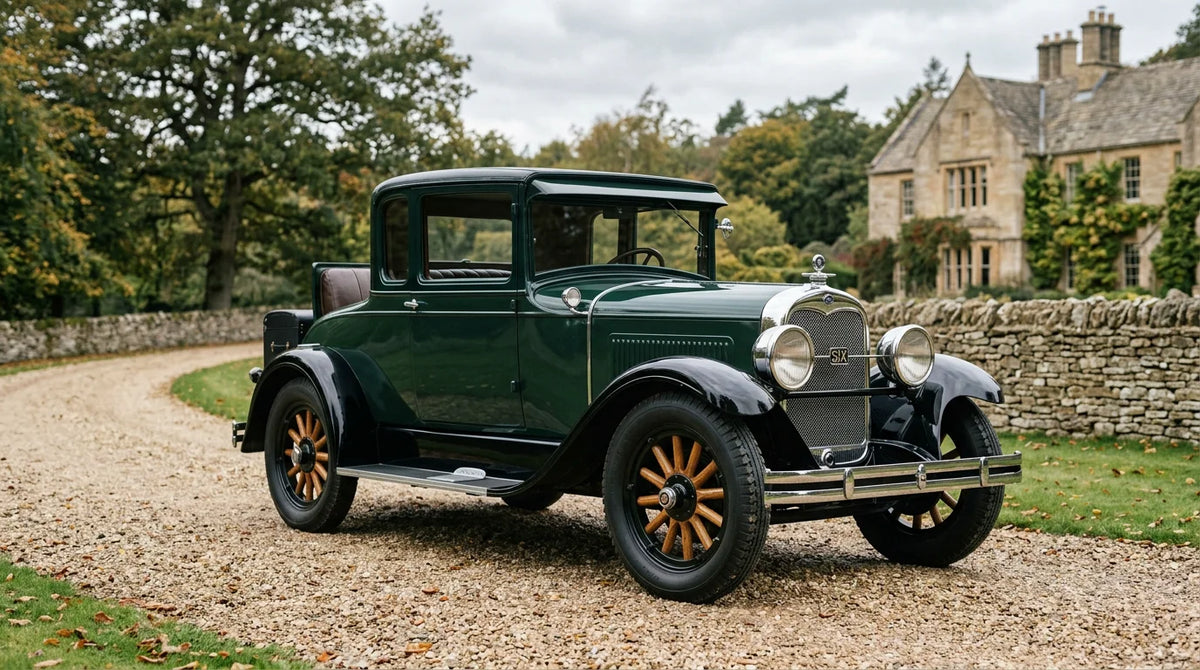
1928 Pontiac: History, Specs and Collector Value Guide
Within twelve months of its 1926 debut, this young General Motors brand had already sold more than 76,000 cars, a remarkable feat for a marque nobody had heard of two years earlier. By the close of the decade, it had reshaped the affordable end of the American market. If you appreciate our coverage of classic cars, this pre-war Pontiac deserves a closer look.
The Series 6-28 arrived at a pivotal moment. According to conceptcarz, Pontiac produced roughly 39,000 vehicles within six months of its New York Auto Show introduction and 76,742 within a year. That momentum set the stage for the 1928 Pontiac to consolidate the brand as a genuine force in the low-priced field.
Why the 1928 Pontiac Matters in Automotive History
General Motors created Pontiac for a clear commercial reason. The brand was introduced in 1926 as a companion make to the pricier Oakland line, sharing the GM A platform used across the corporation. The name honored the Ottawa chief Pontiac and the Michigan city where the cars were assembled.
The 1928 Pontiac Series 6-28 replaced the earlier 6-27, refining a formula that was already winning buyers. Its importance lies in what followed: Pontiac quickly outsold its parent. As the Oakland Owners Club notes, the smaller companion car joined the range in 1926 as one of the lowest-priced sixes on the market, and its popularity steadily eroded Oakland's own sales.
That reversal proved decisive. The parent Oakland marque ceased production by the early 1930s, while Pontiac survived and thrived. Few vintage cars tell such a clean story of a companion brand eclipsing its founder.

Engineering and Specifications of the Series 6-28
What powered this car? At its heart sat a 186-cubic-inch L-head straight-six, a smoother alternative to the four-cylinder rivals that still dominated the affordable segment. For 1928 the engine received meaningful updates. Documentation from the Early Times Chapter records new GMR cylinder heads with convex combustion chambers, a compression bump from 4.8 to 4.9, and rated output raised to 48 horsepower at 2,850 rpm.
The chassis matched the modest ambitions of the pre-war Pontiac. Standard equipment included 12-spoke wooden artillery wheels, with steel disc wheels and wire-spoke wheels offered as options, alongside so-called "six wheel equipment" using dual side-mount spares. A three-speed floor shifter and a torque-tube rear axle completed the driveline.
Security and comfort advanced too. The Blossom Coincidental Lock secured both the ignition and transmission when engaged, an early anti-theft measure. Closed models used ribbed corduroy or mohair upholstery, while open models received leather. The table below summarizes the essential figures.
| Specification | 1928 Pontiac Series 6-28 |
| Engine | 186 cu in L-head straight-six |
| Rated power | 48 hp at 2,850 rpm |
| Transmission | Three-speed manual, floor shift |
| Standard wheels | 12-spoke wooden artillery |
| Compression ratio | 4.9:1 |
Body Styles, Options and Period Pricing
Pontiac offered the model year in several distinct bodies. Buyers could choose coupes, roadsters, two-door and four-door sedans, and sport variants such as the Sport Landau. The most affordable models sat at the entry of the low-priced field, one of the accessible ways to own a six-cylinder car in the late 1920s.
Optional equipment expanded the appeal. Chrome front and rear bumpers, a side-mount spare, and a heater were popular additions. The styling for 1928 was gently modernized, with a narrower radiator shell and crowned fenders that sloped behind the front wheels, giving the classic Pontiac coupe a more contemporary stance than its predecessor.
If you are weighing period body styles against long-term usability, you may find it useful to browse our classic car marketplace to compare how different configurations are presented and valued today.
Collector Value and the Survivor Appeal Today
Where does this car sit in the collector landscape in 2026? Its enduring draw is affordability paired with genuine pre-war character. Unlike blue-chip marques that command relentless attention, the vintage Pontiac six remains one of the more accessible routes into 1920s motoring, valued for mechanical honesty rather than speculative pricing.
Provenance and condition drive value strongly here. Production figures by individual body were never formally recorded, and finished examples are uncommon, which rewards well-documented survivors and honest older restorations. Restoration records for the era show how closely related the late-1928 "New Series" cars were to the 1929 models, a nuance that affects authenticity for serious buyers.
These cars demand patience rather than deep pockets. There are no computers or sensors, and the reward lies in tinkering with straightforward mechanicals. That character makes the pre-war six-cylinder Pontiac an ideal first vintage purchase for enthusiasts who value learning over lap times.

Buying, Restoring and Living With a Pre-War Pontiac
Consider a realistic scenario. A car that has spent years as a static display will start and move, yet it still needs a thorough recommissioning: fresh fluids, a fuel-system flush, and new tires before any meaningful drive. Mechanical brakes and the absence of turn signals mean these machines suit parades and shows far better than highways.
Restoration ambitions vary widely. Some owners chase concours-correct originality, matching nickel plating and nitrocellulose finishes, while others accept sympathetic modernizations for reliability. If you are deciding between a faithful restoration and a subtly upgraded build, our restomod and restoration guidance can help you frame the trade-offs before you commit.
Whatever path you choose, budget for parts scarcity and specialist labor. Sourcing correct trim for a rare body style can take years, so documentation, community contacts, and realistic expectations matter as much as the purchase price itself.
Final Thoughts on a Pre-War Icon
The 1928 Pontiac earns its place in history not through speed or luxury, but through the quiet efficiency with which it established a brand and outlasted its own parent. For collectors in 2026, it offers an honest, affordable, and deeply characterful entry into pre-war ownership. Approach it with patience, verify provenance carefully, budget for recommissioning, and you will own a machine that rewards curiosity far more than it demands. Its appeal lies precisely in that mechanical transparency and historical significance.
Take action with TheArsenale
If a pre-war six-cylinder Pontiac has sparked your interest, the next challenge is finding worthy examples before the wider market does. We understand that serious collectors value both curation and early access to the machines that matter most.

Through our Private Membership, we offer access to vehicles before they are listed publicly, alongside a curated selection of high-end mobility and collectible machines. Explore our curated collection of collectible cars to begin, and reach our sales team at any hour with your enquiry.
Frequently Asked Questions
What engine does the 1928 Pontiac use?
It is powered by a 186-cubic-inch L-head straight-six engine. For 1928 the unit received new cylinder heads and a modest compression increase, raising rated output to around 48 horsepower. It was notably smoother than the four-cylinder rivals of the period.
How was Pontiac related to Oakland?
General Motors launched Pontiac in 1926 as a lower-priced companion make to its Oakland line. The two shared engineering and dealerships, but Pontiac's popularity eventually surpassed Oakland's. The parent marque was discontinued in the early 1930s while Pontiac continued.
Is a 1928 Pontiac practical to drive today?
These cars suit shows and parades far more than modern highways. They rely on mechanical brakes, lack turn signals, and typically ride on wooden spoke wheels. A careful recommissioning of fluids, fuel system, and tires is essential before any regular use.
How rare is the 1928 Pontiac now?
Production figures by individual body style were never officially recorded, and completed, well-restored examples are seldom seen. This scarcity makes documented survivors and honest older restorations particularly desirable. Rarity varies significantly by body configuration.
Where can I find a collectible car like this one?
Specialist marketplaces and vetted dealers remain the most reliable sources. Through our Private Membership, we provide access to curated vehicles before they are listed publicly, which can help you secure sought-after examples earlier. Careful inspection and provenance checks are always advisable.