1930s Cars for Sale: A Collector's Guide to Prewar Classics
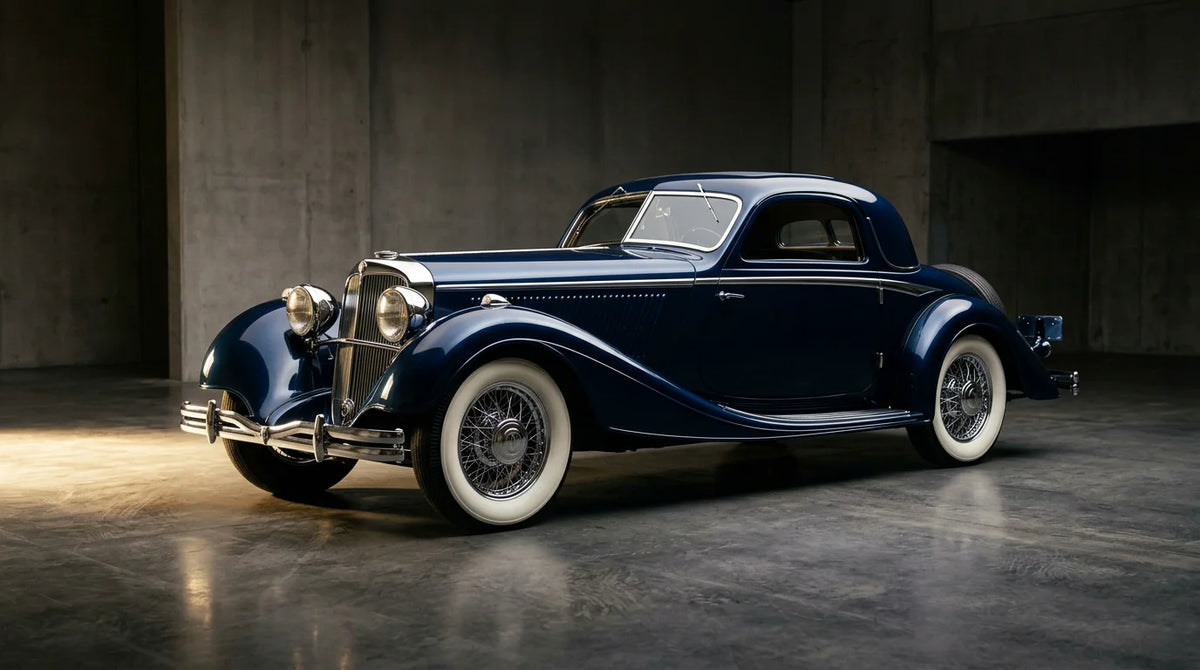
Few decades produced machines as expressive as the 1930s, an era of sweeping fenders, art deco grilles, and the birth of streamlining. If you are weighing the purchase of a 1930s car for sale, you are considering one of the most romantic chapters in automotive history. Before you commit, our guide to the 1935 car for sale offers a useful reference point for values and condition.
The wider collector landscape is shifting beneath your feet. According to automotive history analysis, Hagerty reported in early 2026 that its collector car market rating had fallen to a 15-year low. That does not mean prewar cars are worthless; it means selectivity now rewards patient, informed buyers who understand exactly what they are purchasing.
Understanding the 1930s Classic Car Market in 2026
The market for a vintage 1930's car for sale is defined today by a widening gap between the exceptional and the ordinary. Reporting on 2026 auctions describes the softest areas as average-condition prewar cars, mid-century luxury, and some traditional British classics, largely because their core buyer base is aging.
Context matters, however. The classic car sector remains substantial, with Statista having estimated global market revenue at 31.6 billion U.S. dollars for 2022 and projecting roughly 9.6 percent annual growth toward 2026. Prewar machines represent a specialised, historically weighted slice of that whole.
The practical takeaway is straightforward. A softer market is not a threat if you are a genuine enthusiast; it is an opportunity to acquire a historically significant car at a more rational price than the boom years permitted.

What Drives the Value of a 1930s Automobile
Why do two seemingly similar 1930s cars sell for wildly different sums? The answer lies in provenance, originality, and rarity. Market commentary from 2026 notes that high-quality, rare, and historically significant cars continue to perform well, while over-restored examples with little originality have weakened.
When you evaluate a prewar automobile, weigh these factors carefully:
- Documented history: continuous ownership records and period photographs add real value.
- Matching numbers: an original engine and chassis pairing commands a premium.
- Body style: coupes, roadsters, and convertibles typically outperform sedans.
- Restoration quality: sympathetic, correct work beats flashy but inaccurate refurbishment.
If you are drawn to American icons of the era, our overview of 1936 Ford coupes for sale illustrates how body style and condition translate into asking prices.
Where to Find an Authentic 1930s Car for Sale
Sourcing a genuine prewar car requires patience and access to the right channels. Auctions host the highest-profile transactions, and the 2022 sale of a 1955 Mercedes-Benz 300 SLR Uhlenhaut Coupé for 142 million U.S. dollars, cited in the same Statista study, shows the extraordinary ceiling the top tier can reach. Most 1930s cars, of course, trade far below such figures.
Online platforms have made valuations more transparent than ever, yet transparency is not the same as trust. When you are ready to compare listings and specifications, our classic car marketplace helps you assess authenticity and value with curated context rather than raw volume.
A cooler market rewards the diligent buyer. Rare, original, and well-documented cars retain their appeal even as speculative demand recedes.

The Generational Shift Reshaping Prewar Demand
A quiet demographic change is rewriting the price guide. The postwar generation built the modern market for prewar cars, but their influence is gradually giving way to younger collectors with different tastes. Hagerty's 2026 Bull Market List shifted its focus toward the 1990s and 2000s, framing those cars as the final chapter of the analog era.
This shift carries a nuance worth understanding. According to industry reporting in 2026, Hagerty saw 58 percent of interest in one modern enthusiast model come from buyers under 40. For 1930s cars, thinner competition from younger bidders can mean gentler pricing, favouring committed enthusiasts who value the design and engineering rather than speculative resale.
Comparing Where to Buy a 1930s Classic
Different channels serve different needs. The table below compares the main routes to acquiring a prewar car, with our curated approach included for reference.
| Channel | Best for | Curation level |
|---|---|---|
| Live auctions | Rare, blue-chip examples | Moderate |
| General online classifieds | High volume, broad choice | Low |
| Private sellers | Direct negotiation | Variable |
| Our curated marketplace and Private Membership | Verified, high-end machines with early access | High |
Through our Private Membership, you are able to access vehicles before they are listed publicly, which is valuable when the finest 1930s examples appear infrequently and sell quickly.
Practical Advice Before You Buy
Imagine finding the perfect prewar roadster, only to discover a replaced engine after purchase. A disciplined process prevents such regret. Commission an independent inspection, verify chassis and engine numbers, and request the full history file before making any offer.
Budget realistically for the total cost of ownership. Prewar cars demand specialist maintenance, appropriate storage, and patient sourcing of period-correct parts. A softer market gives you room to negotiate, so resist emotional bidding and let condition and documentation guide your ceiling.
Final Thoughts on Buying a 1930s Classic
Purchasing a 1930s car for sale in 2026 is a rewarding pursuit for the informed buyer. The market favours authenticity, originality, and provenance over speculation, which means a cooler climate protects patient collectors rather than penalising them. Focus on documented history, commission proper inspections, and prioritise correct restoration over cosmetic gloss. Approached with discipline, a prewar classic delivers historical significance and driving character that few modern machines can match.
Take action with TheArsenale
Sourcing a genuine prewar classic is demanding, and the finest 1930s machines rarely stay available for long. If you are ready to move from research to acquisition, we help you cut through unverified listings and focus on authentic, well-documented cars worthy of your collection.

As a luxury mobility marketplace, we curate high-end and collectible machines, and our Private Membership grants access to vehicles before they are listed publicly. Explore our curated cars for sale to begin your search with confidence and expert context. We usually reply in less than 30 minutes.
Frequently Asked Questions
Are 1930s cars a good investment in 2026?
Rare, original, and well-documented 1930s cars continue to hold their value, while average-condition examples have softened. Treat a prewar car primarily as a passion purchase, and view any appreciation as a secondary benefit rather than a guarantee.
How much does a 1930s car cost?
Prices vary enormously with make, body style, and condition. Entry-level restored models can be surprisingly accessible, while rare coachbuilt examples command six or seven figures. Always benchmark against recent comparable sales before committing.
What should I check before buying a prewar classic?
Verify matching engine and chassis numbers, review the complete history file, and commission an independent inspection. Originality and provenance influence value more than a glossy but inaccurate restoration.
Where can I find authentic 1930s cars for sale?
Live auctions, online classifieds, and private sellers each serve different needs. Our curated marketplace and Private Membership offer verified machines and early access, which is valuable when exceptional prewar cars appear infrequently.
Why are prewar car prices softening?
The traditional buyer base for prewar cars is aging, and younger collectors are gravitating toward modern classics from the 1990s and 2000s. This generational shift eases competition, creating opportunities for dedicated enthusiasts.