1932 Ford Roadster Project For Sale: A Buyer's Guide
The 1932 Ford is the single most celebrated foundation in American hot rodding, and demand for an unfinished example remains intense. Whenever a credible 1932 Ford roadster project for sale surfaces, buyers move quickly, because a genuine Deuce body and frame are increasingly scarce. If you are weighing your first purchase, you may wish to study a real listing such as our 1932 Ford roadster project for sale to understand what a serious platform looks like.
Why does an affordable family car from the Great Depression now attract this level of attention? The Legacy of the 1932 Ford explains that a quality Deuce roadster can fetch six figures at auction, remarkable for a car that was originally inexpensive transportation. Understanding that gap between origin and value is the first step toward a confident acquisition.
Why the 1932 Ford Roadster Still Commands Attention
The 1932 Ford earned its nickname, the "Deuce," from the second digit of its model year. It arrived at a pivotal moment. According to Aldan American, the Deuce was the world's first popularly priced car offered with a V8 engine, which turned an ordinary production model into the definitive canvas for performance builders.
That flathead V8 mattered enormously. Ford's first affordable eight-cylinder powerplant delivered roughly 65 horsepower to ordinary drivers, and its combination with distinctive styling created the foundation of hot rod culture. The flathead V8 remains the defining detail collectors look for on any period-correct project today.
Scarcity reinforces the appeal. Roughly 275,000 units were built in that single model year, yet the Deuce now commands prices that exceed those of far rarer vehicles. When you search for a vintage Ford roadster restoration, you are competing for a shrinking pool of genuine steel bodies and original frames.
What Separates a Genuine Deuce Project From a Replica
Not every car advertised as a Deuce is built on Henry Ford steel. The market includes many fiberglass-bodied reproductions, titled as 1932 Fords, alongside authentic examples. Both can make excellent drivers, but they occupy entirely different value tiers, so identifying which you are buying is essential.

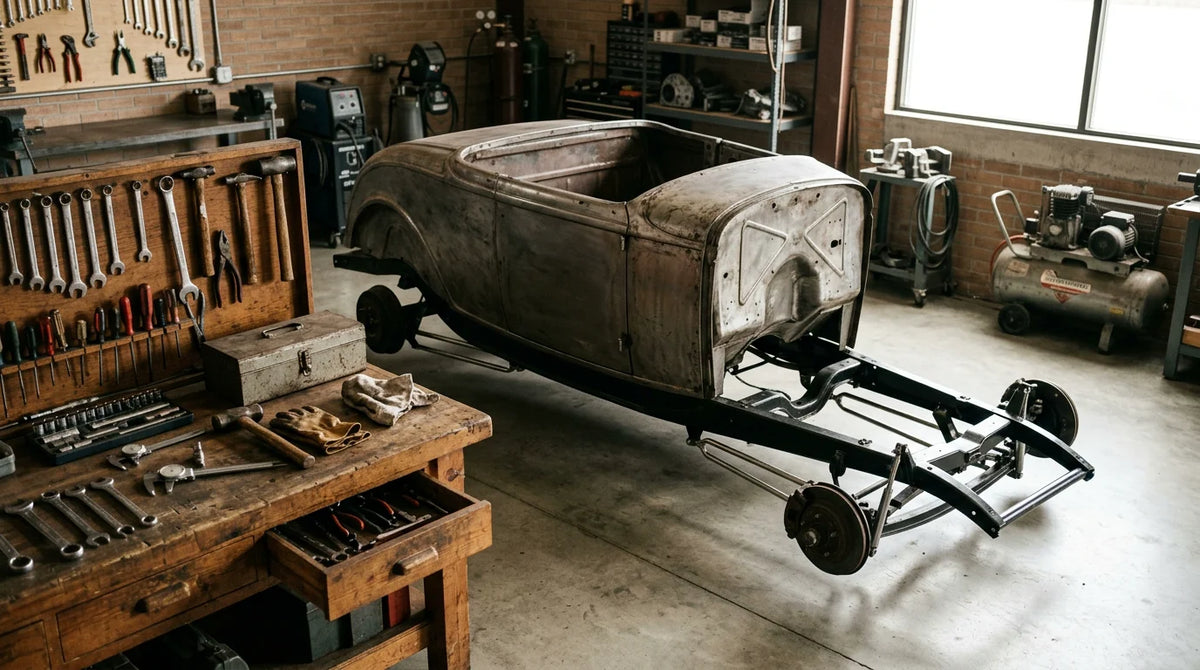
Focus your inspection on the structural pieces that cannot be faked cheaply. A genuine unmolested frame with its original K-member, front crossmember, and rear crossmember signals an authentic Henry Ford chassis. An original heavy front axle, an uncut grille shell, and stock rolling gear are equally telling, because reproduction parts rarely match the fit and character of the real components.
Documentation is where value is often won or lost. A frame that lacks its original 18-prefix chassis number can complicate titling, and as Sports Car Market notes, such a car may be classed alongside a reconstructed roadster rather than a fully documented original. Verify the paperwork before you verify the sheet metal.
How to Evaluate a Project Before You Commit
Imagine two listings at similar prices. One is a running, driving steel car with a 59A flathead and a period transmission. The other is a bare fiberglass shell with no drivetrain. The advertised figure tells you almost nothing until you break the car down into its components.
Work through a disciplined checklist before making any offer:
- Body material and condition: confirm steel versus fiberglass, and inspect any patch panels for professional fitment.
- Frame authenticity: check the crossmembers, the K-member, and any chassis numbering.
- Drivetrain status: establish whether the flathead runs and whether the transmission is period-appropriate.
- Completeness: list what is missing, from headlamps and wiring to floors and interior kits, because each gap adds cost.
- Brakes and safety: note conversions, such as later hydraulic "juice" brakes, that affect drivability.
Sound listings are transparent about exactly these points. When you browse our cars for sale, prioritize sellers who describe the frame, the engine, and what remains to be finished rather than those who lean only on styling photographs.
What a 1932 Ford Roadster Project Costs
Price expectations must account for both the platform and the finished build. A completed Deuce roadster commonly trades between roughly 35,000 and 90,000 dollars, and exceptional cars climb well beyond that. Projects sit below those numbers, but the gap between a project price and a finished value is the budget you must supply in parts and labor.
At the very top, authentic period hot rods with genuine provenance occupy their own market. Sports Car Market reports that major collectors will pay 200,000 dollars and more for documented cars built by legendary rodders and eligible for the historic hot rod classes at premier concours events. Most buyers will never touch that tier, but it anchors the ceiling of what a real steel Deuce can be worth.
| Project type | Typical relative cost | Key consideration |
|---|---|---|
| Fiberglass-bodied project | Lowest entry point | Great value driver, limited collectibility |
| Genuine steel running project | Mid to upper range | Original frame and drivetrain add value |
| Documented period hot rod | Six figures and above | Provenance and event eligibility |
| Curated listings via our marketplace | Verified and transparent | We detail authenticity before you buy |
Before committing capital, benchmark comparable sales. Our classic cars marketplace gives context on how condition, authenticity, and completeness move real-world prices for cars of this era.
Provenance, History, and Long-Term Value

A documented ownership chain can transform an ordinary car into a landmark one. Sports Car Market has profiled cars whose known history stretches back more than sixty years, tracing individual owners across decades of hot rod culture. That kind of continuous record is rare, and it is precisely what elevates certain projects above others of similar mechanical specification.
The cultural weight of the Deuce is real. In 2014, the United States Postal Service honored the model with a limited-edition Hot Rod stamp featuring two illustrated roadsters, a rare public tribute to a single car. That recognition helps explain why demand has stayed durable across generations of enthusiasts.
If you intend to hold the car as an appreciating asset, keep every receipt, photograph the build, and preserve original components. When the time comes to sell, our online car marketplace rewards sellers who can prove authenticity with clear documentation.
Final Thoughts Before You Buy
Acquiring a 1932 Ford roadster project is a rewarding pursuit, provided you buy with discipline rather than enthusiasm alone. Separate steel from fiberglass, verify the frame and drivetrain, and price the finished build honestly before you commit. The Deuce has held its cultural and financial value for nine decades, and a well-chosen project protects that legacy. Inspect thoroughly, document everything, and let authenticity guide your decision.
Take action with TheArsenale
Sourcing an authentic Deuce platform takes patience, verification, and access to serious sellers. If you are ready to move from research to acquisition, we can help you evaluate genuine projects and finished cars with the transparency this market demands.

As a curated luxury mobility marketplace available in Monaco, Dubai, Doha and online, we connect discerning buyers with high-end collectible machines and offer Private Membership access to vehicles before they are listed publicly. Browse our curated vehicles for sale and reach our sales team any time; we usually reply in under thirty minutes.
Frequently Asked Questions
What does "project" mean for a 1932 Ford roadster?
A project is an unfinished car sold as a platform for restoration or a hot rod build. It may be running and driving or merely a rolling body and frame. The buyer completes the remaining work, from wiring and floors to final assembly.
How do I tell a genuine steel Deuce from a fiberglass replica?
Inspect the body material directly and examine the frame for an original K-member and crossmembers. Genuine steel cars carry original components such as the heavy front axle and uncut grille shell. Fiberglass reproductions are titled as 1932 Fords but occupy a lower value tier.
How much should I budget for a project overall?
Finished Deuce roadsters commonly trade between roughly 35,000 and 90,000 dollars, with documented period cars reaching six figures. A project costs less upfront, but you must budget the difference for parts and labor to reach that finished value.
Why is frame documentation so important?
A frame lacking its original chassis number can complicate titling and reduce a car's standing among collectors. Continuous ownership history and correct numbering elevate value. Always verify paperwork before assessing the sheet metal.
Where can I find verified projects for sale?
Look for sellers who describe the frame, engine, and remaining work transparently rather than relying on styling photos alone. Our classic cars marketplace curates listings with authenticity details so you can compare projects confidently. Private Membership also provides early access before public listing.