Finding a 1935 Ford for Sale: A Complete Buyer's Guide
In 1935, Ford built more than 820,000 cars in a single model year, a staggering figure for a country still climbing out of the Great Depression. That volume means survivors still surface at auctions and dealers today, yet condition and authenticity vary enormously. If you are studying the market, our 1935 Ford car listings offer a useful reference point for what genuine examples look like.
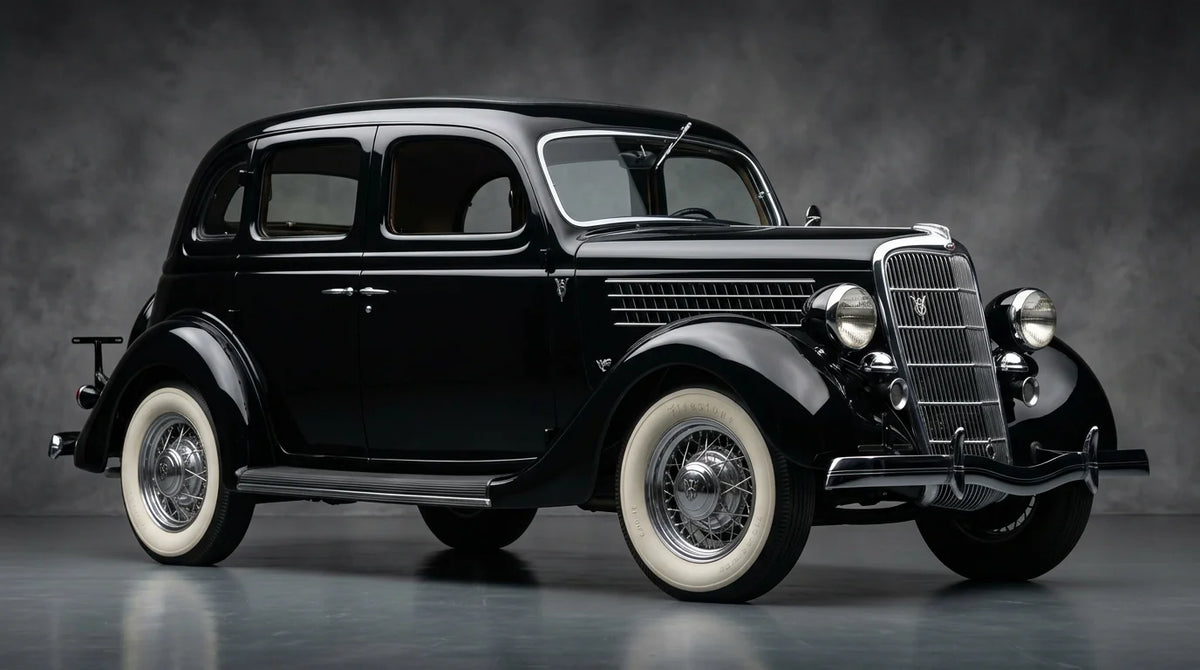
The appeal is easy to understand. The 1935 Ford Model 48 introduced modern styling and the legendary flathead V8 to a mass audience. Anyone weighing a 1935 ford for sale today is really evaluating three things at once: which body style suits you, what condition the car is in, and whether the price reflects the current collector market. This guide addresses each in turn.
Why the 1935 Ford Remains a Collector Favorite
The 1935 model year marked a genuine leap forward for Ford. The four-cylinder Model A engine was retired, leaving a single 221 cubic inch flathead V8 to power every car and truck in the range. That decision gave even the most affordable Ford a level of performance rivals struggled to match at the price.
The commercial result was decisive. According to Classic Driver, the 1935 Ford's blend of price, practicality, and styling pushed the company past rival Chevrolet for the sales crown that year, with roughly 820,000 units sold. For collectors, that heritage combines with clean art deco lines and a robust, tunable engine that remains the backbone of American hot rod culture. These qualities explain why the flathead V8 continues to attract restorers, rodders, and originality purists alike.

Body Styles and Trims You Should Know
Before you compare prices, you must understand what was actually built. The range split into a Standard line and a better-equipped Deluxe series, offered as roadster, coupe, sedan, convertible, and "woody" station wagon. Ford also produced pickup versions on the same platform.
Production volumes shaped today's rarity. According to Conceptcarz data, the Standard Tudor sedan was the runaway favorite at 505 dollars, finding 237,833 buyers, while the open Deluxe Convertible Sedan and Station Wagon each sold fewer than 5,000 examples. That gap matters: closed sedans are plentiful and affordable, while open body styles command a premium because so few survive.
| Body Style (1935) | Original Price | Approx. Units Sold | Rarity Today |
| Standard Tudor Sedan | 505 dollars | 237,833 | Common |
| Deluxe Fordor Sedan | 660 dollars | 105,157 | Moderate |
| Three-Window Deluxe Coupe | — | 31,513 | Sought after |
| Convertible Sedan / Wagon | up to 755 dollars | fewer than 5,000 each | Rare |
What a 1935 Ford Costs in Today's Market
Prices span an unusually wide range, so a single "value" figure is misleading. A sedan needing full restoration can change hands well below a professionally finished coupe or a rare open car. Sorting comparable sales by body style and condition is the only reliable way to gauge fair value.
The extremes illustrate the point. According to CLASSIC.COM records, the highest documented result was 220,000 dollars for a 1935 Ford Custom Roadster in January 2025, while the lowest recorded sale was 7,150 dollars for a Deluxe Coupe in 2021. Most driver-quality cars sit between these poles, and reviewing a broad classic car marketplace helps you benchmark asking prices against real transactions rather than optimistic listings.
How to Evaluate Condition, Originality, and Provenance
Consider two cars advertised at similar prices: one a numbers-matching survivor, the other a steel-bodied street rod fitted with a modern V8. Both are legitimate, but they serve different buyers and appreciate differently. Deciding which you want should precede any negotiation.
Originality carries a premium for purists, yet quality restomods and period-correct hot rods have their own devoted following. When you inspect any classic Ford V8, verify the engine and drivetrain against the build, check for structural rust in the frame and floors, and confirm that panels are steel where authenticity is claimed. Ask for restoration invoices, ownership history, and photographs. Strong provenance and honest documentation protect resale value far more than fresh paint. Because these are 90-year-old machines, a pre-purchase inspection by a marque specialist is always money well spent.

Where to Search for a Genuine Example
Buyers today draw from three channels: live auctions, established classic dealers, and curated online platforms. Each has trade-offs. Auctions create urgency and public price records, dealers offer inspected inventory, and online listings widen your geographic reach. Casting a broad net across all three shortens the search for the right car.
For international buyers in particular, a well-organized online auto marketplace removes borders and centralizes vetted vehicles in one place. If you prefer to explore beyond a single model, our all vehicles collection presents a curated selection where provenance and presentation are front and center, which is exactly what a considered classic purchase demands.
Bringing Your Search Together
Locating the right 1935 Ford is less about finding any survivor and more about matching body style, condition, and price to your intentions. Decide early whether you want an original numbers-matching car or a modernized driver. Study comparable sales so your budget reflects the real market, and never skip a specialist inspection. With that discipline, a 90-year-old flathead V8 becomes a rewarding, historically significant machine rather than a costly gamble. Patience and documentation are your strongest allies throughout the process.
Take action with TheArsenale
Once you understand values and body styles, the practical challenge is access to genuine, well-presented cars without endless searching. That is precisely where we position ourselves as a luxury mobility marketplace, curating high-end and collectible machines for discerning buyers who value provenance and presentation.

Through our Private Membership, you may access selected vehicles before they are listed publicly, and our sales team is available around the clock, usually replying in under 30 minutes. When you are ready to move from research to acquisition, we invite you to browse our curated vehicles for sale and explore what is available in Monaco, Dubai, Doha, and online.
Frequently Asked Questions
How much should I expect to pay for a 1935 Ford?
Prices vary widely by body style and condition. Restoration projects can start near 15,000 dollars, while pristine or rare open cars have reached well over 200,000 dollars at auction. Driver-quality closed cars typically fall between these extremes.
What engine does the 1935 Ford use?
Every 1935 Ford car and truck used the 221 cubic inch flathead V8. The four-cylinder Model A engine was discontinued that year, making the V8 the sole powerplant across the entire range.
Which 1935 Ford body style is the most collectible?
Open cars such as the roadster and convertible sedan are the most sought after because so few were built and survive. Three-window Deluxe coupes are also highly desirable, while standard sedans remain the most affordable entry point.
Should I buy an original car or a restomod?
That depends on your goals. Numbers-matching originals appeal to purists and preserve historical value, while restomods offer modern drivability and reliability. Decide before you shop, and verify the build honestly against the seller's claims.
Where can I find genuine 1935 Ford listings?
Live auctions, specialist dealers, and curated online platforms are the main sources. We maintain a curated selection where provenance is emphasized, which helps international buyers compare vetted vehicles in one place rather than searching scattered listings.