1942 Ford GPW for Sale: A Practical WWII Jeep Buyer’s Guide
A 1942 Ford GPW can look convincing before you inspect its identity, structure, and mechanical history. If you are searching for a 1942 ford gpw for sale, compare the vehicle’s documentation with its visible details, and review our classic cars for broader collector context.
Price signals also require caution. On September 8, 2026, a Classics on Autotrader snapshot showed a 1942 Ford GPW advertised at $39,950, but an asking price does not establish market value. The vehicle’s condition, originality, title, location, and inspection history remain decisive, as shown by the Autotrader snapshot.
What are you actually buying?
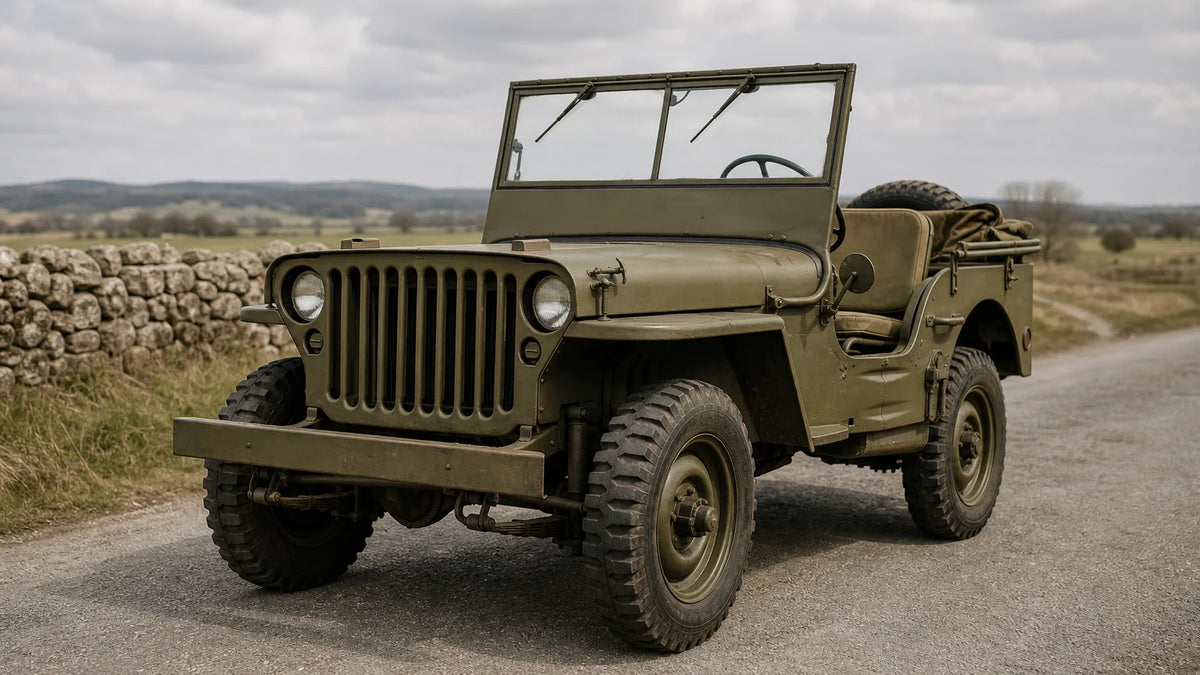
The Ford GPW is a wartime military utility vehicle closely related to the Willys MB. Ford produced GPWs during the Second World War under government contracts, and the model used a compact four-cylinder engine, manual transmission, four-wheel-drive system, folding windshield, and simple body construction.
A 2024 auction description stated that approximately 280,000 GPWs were built at several Ford plants during the war. That figure explains why the model is historically important, but it does not mean every surviving Jeep has equal collector value. A replacement body, mixed drivetrain, reproduction data plate, or later engine can materially change the vehicle’s significance. For historical context, compare a 2024 BaT record.
- Ford identity, supported by frame markings, data plates, and period components.
- Mechanical completeness, including the engine, transmission, transfer case, axles, and steering system.
- Body integrity, especially the tub, floor panels, frame mounts, fenders, grille, and windshield.
- Documentation, including title history, restoration invoices, photographs, and ownership records.
What should the asking price tell you?
One recent result illustrates the upper end of a documented transaction without establishing a universal value. A 1942 Ford GPW sold through Bring a Trailer for $40,000 on July 21, 2026. The vehicle had a 134.2 cubic inch inline four, a three-speed manual transmission, a dual-range transfer case, military-style equipment, and a Michigan title describing it as a 1942 model.
That sale should be treated as a reference point, not a guarantee. Auction results can reflect presentation quality, buyer competition, seller reputation, location, reserve terms, and unusual provenance. The same model can command a different figure when it has a replacement tub, uncertain serial numbers, incomplete paperwork, non-original mechanical parts, or extensive rust. Review the 2026 auction result for an example of how a listing presents these details.
For a fair comparison, separate the advertised price from the likely ownership cost. Transport, inspection, registration, insurance, storage, mechanical sorting, and replacement parts can significantly affect the final budget. A lower purchase price may represent a project rather than a saving.
Which identity checks matter most?
Begin with the frame and title, not the paint. Ask the seller for clear photographs of the frame stamping, data plates, body number, engine stamping, and transmission markings. Compare those details with the title, registration, restoration invoices, and any military or civilian ownership records.
Originality is rarely absolute. Many surviving GPWs contain Willys components, replacement engines, reproduction tubs, later electrical systems, or restored hardware. The important question is whether the seller describes those changes accurately and whether the price reflects them.
Pay particular attention to:
- Frame condition around the front crossmember, spring mounts, and body supports.
- Matching or documented serial numbers, with no unexplained alteration.
- Body panels that are repaired, replaced, or heavily covered with filler.
- Correct placement and condition of Ford-related markings.
- Title language that identifies the vehicle consistently across documents.
- Restoration photographs that show the condition before paint and assembly.

How should you inspect the mechanical condition?
A running engine is only the starting point. Inspect cold starting, oil pressure, exhaust smoke, coolant condition, charging performance, clutch engagement, gear selection, braking, steering play, and four-wheel-drive operation. A road test should include low-speed turns, braking from several speeds, and operation of the transfer case where conditions permit.
The period drivetrain commonly includes a flathead four-cylinder engine, a three-speed manual transmission, and a dual-range transfer case. These systems are mechanically understandable, but age, storage, poor repairs, and incorrect parts can create expensive problems. Listen for bearing noise, gear clash, axle whine, transfer case leaks, and driveline vibration.
Inspect the underside before making an offer. Look for fresh undercoating that may hide rust, welded frame sections, distorted body mounts, leaking seals, cracked spring brackets, and brake components that have not been properly rebuilt. A professional inspection is particularly important when the vehicle is being purchased remotely.
Should you choose a restored Jeep or a project?
A restored GPW can provide a faster route to shows, events, and recreational driving, but restoration quality varies widely. A project can offer a lower entry price and greater control over the final specification, while also requiring more time, storage, specialist knowledge, and parts research.
A listing published for a restored 1942 Ford GPW in Michigan described a 134 cubic inch inline four, manual transmission, removable top, folding windshield, and side-mounted tools. It was advertised at $26,900 and sold as is, which demonstrates why you should distinguish seller description from an independent assessment. See a dealer listing for the type of information that should be verified.
Choose a restored example when documentation, usability, and predictable completion matter most. Choose a project when you want to control the restoration and can evaluate hidden structural work. In either case, confirm whether the vehicle is an authentic Ford GPW, a Willys MB with Ford parts, or a recreation marketed using mixed terminology.
What changes when you buy internationally?
International buyers must evaluate more than the vehicle itself. Confirm the seller’s title or registration documents, export eligibility, chassis identification, tax treatment, transport arrangements, insurance, and registration requirements in the destination country.
Right-hand-drive examples can have an important regional history, but they may require different registration or equipment checks in your market. A recent United Kingdom advertisement described a 1942 GPW with British Army history, a three-speed manual transmission, and extensive restoration work. The advertisement was later removed, so it also illustrates why buyers should confirm availability before arranging travel or payment. Review a recent UK advert as an example of the detail such listings may include.
Before sending a deposit, request a live video inspection, a copy of the title, photographs of all identification marks, a cold-start video, and a written sales agreement. Use an independent inspection service when you cannot see the vehicle personally. For cross-border purchases, confirm the transport route and import process with qualified local professionals.
How can a specialist marketplace simplify the search?
Finding a suitable GPW often requires comparing rarity, condition, provenance, and design rather than simply filtering by year. Our classic car marketplace provides a broader setting for exploring unusual collector vehicles and mobility objects, while direct assistance can help clarify what is actually available.
If your search expands to related military, utility, or historic vehicles, our vintage vehicles collection can help you compare different forms of collectible mobility. The right approach is not to chase the most attractive photograph. It is to define your preferred level of originality, intended use, location, budget, and tolerance for restoration work.
Make the purchase a documented decision
The best 1942 Ford GPW purchase is the one you can explain clearly after the transaction. Confirm the identity, inspect the structure, test the drivetrain, review the title, and price the work that remains. A historically meaningful vehicle does not need to be perfect, but its condition and history should be transparent.
Take action with TheArsenale
If your search has expanded from one military Jeep to the wider world of collectible mobility, a curated marketplace can save time and improve the quality of your comparisons. You can review unusual vehicles, assess different design approaches, and request assistance when the right machine requires a more personal search.

At TheArsenale, we connect collectors and enthusiasts with rare, design-led mobility objects across land, sea, and air. Explore our classic vehicles marketplace to continue your search with access to curated machines and personalized guidance.
Frequently Asked Questions
What is the difference between a Ford GPW and a Willys MB?
Both vehicles served as wartime military utility vehicles and share many mechanical similarities. A Ford GPW should be evaluated through its frame markings, data plates, body details, and documented history rather than its appearance alone.
How much does a 1942 Ford GPW usually cost?
Prices vary according to originality, restoration quality, mechanical condition, documentation, and location. Published listings and auction results can provide reference points, but an advertised figure is not a guaranteed valuation.
What should I inspect before buying one?
Prioritize the frame, body tub, identification numbers, title, engine, transmission, transfer case, axles, brakes, steering, and electrical system. Request an independent inspection when the seller is far away or the vehicle has limited documentation.
Can I buy a 1942 Ford GPW from another country?
Yes, but you should confirm export documents, import rules, taxes, transport insurance, title validity, and registration requirements before paying. A professional inspection and written purchase agreement are especially valuable for an international transaction.
Can TheArsenale help me find a vintage military vehicle?
Our curated marketplace focuses on rare and distinctive mobility objects, and our team can assist with discovery and sourcing inquiries. Availability, pricing, condition, and acquisition terms depend on the individual vehicle and seller.