1954 Mercedes-Benz 300 SL Price: Values and Buying Guide
The answer to the 1954 Mercedes-Benz 300 SL price question begins with the individual car, not the model name alone. A documented early Gullwing with original components can command a substantially different result from a modified or incomplete example. For a wider view of Mercedes-Benz collecting, you can also explore our Mercedes 190 SL Roadster reference.
In 2026, recent 1954-specific sales show a market centered around more than $1 million, with exceptional examples reaching considerably higher levels. The most useful valuation approach is therefore comparative and evidence-led, combining recent results with a close inspection of authenticity, condition, history, equipment, and sale costs.
What is a 1954 Mercedes-Benz 300 SL worth in 2026?
A realistic starting point is the recent auction evidence for genuine 1954 Gullwing coupes. A specialist price-history record lists a 2026 market value of $1,462,250, with a median recorded sale of $1,462,500 across seven 1954 auction results. Its listed results include sales at approximately $1.30 million, $1.33 million, $1.46 million, and $1.60 million in different years, showing why no single number can represent every car. See the 2026 price history for the underlying model-year records.
These figures describe observed transaction results, not a guaranteed asking price. A car offered privately may carry a different figure from one sold at auction. Buyer premiums, currency, taxes, transport, inspection costs, and restoration requirements can also change the total acquisition cost.
For a collector evaluating a specific car, the most useful conclusion is that a sound 1954 Gullwing should be assessed within the seven-figure market rather than against ordinary classic-car pricing. The price rises when the car combines early production significance, correct factory specification, strong documentation, and mechanical integrity.
Why does the first production year matter?
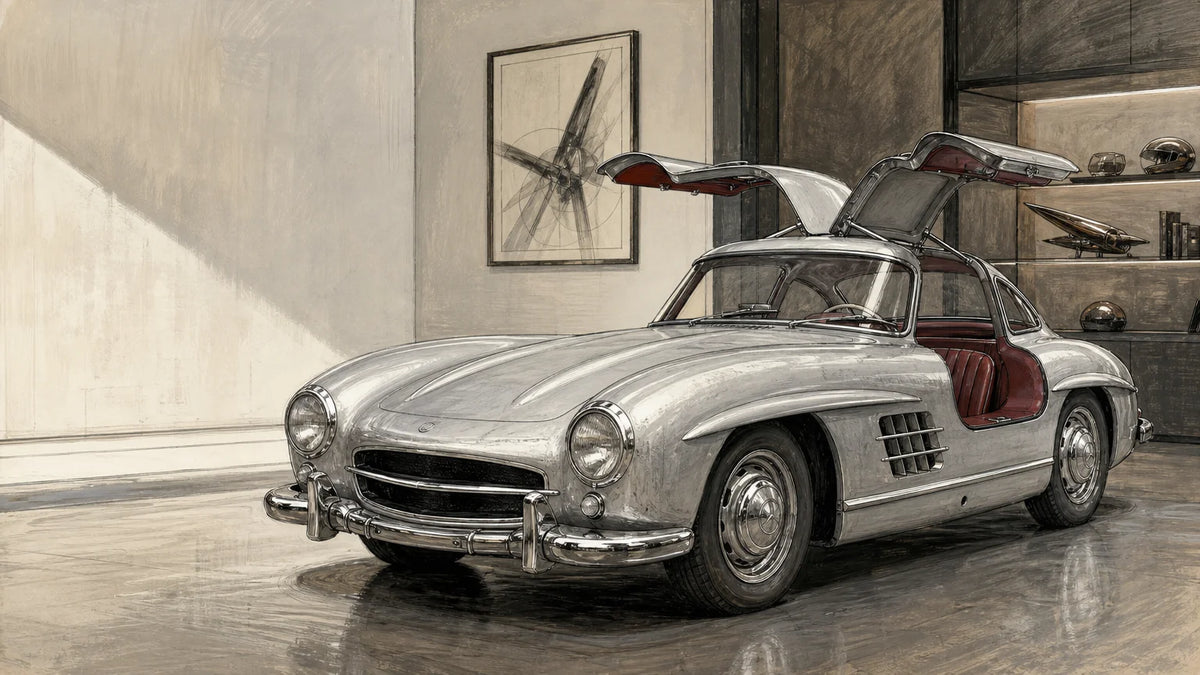
The 1954 model year represents the beginning of the road-going Gullwing story. Early cars attract attention because they preserve the design, engineering decisions, and production details that established the 300 SL as a landmark performance coupe.
Mercedes-Benz's own factory history records an original German price of DM 29,000 for the 300 SL coupe. That historical figure highlights how exclusive the car was when new, although the modern collector market is driven by rarity, condition, authenticity, and demand rather than by inflation alone.
Early examples can contain details that changed during the production run. These may include dashboard components, trim, upholstery, body features, mechanical parts, and factory-installed equipment. Such details matter only when they are correctly identified and supported by documentation. A car described as an early 1954 example should therefore be checked against its data card, chassis number, engine number, and known production characteristics.
The first-year designation is valuable, but it is not automatically decisive. A later Gullwing with exceptional originality, notable history, or rare factory equipment may be more desirable than an early car with extensive undocumented modifications. The year creates the starting point for the analysis, not the final valuation.
Which details move the 1954 Mercedes-Benz 300 SL price?
Two cars with the same model year can have very different values. The following criteria usually explain the largest differences in collector pricing.
| Valuation factor | What supports a stronger price | What requires caution |
|---|---|---|
| Identity and numbers | Matching chassis, body, engine, gearbox, axles, and documented factory identity | Replaced major components, unclear stampings, or incomplete records |
| Condition | Sound structure, correct mechanical operation, high-quality restoration, or genuine preservation | Corrosion, unfinished work, hidden repairs, or poor-quality restoration |
| Originality | Original paint, interior, equipment, wheels, tools, and factory details | Color changes, non-period parts, reproduction items, or altered interiors |
| Provenance | Continuous ownership records, period use, respected collections, and supporting photographs | Large gaps in ownership history or claims without documentation |
| Specification | Rare factory colors, performance equipment, Rudge wheels, luggage, or special-order details | Unverified options or equipment added after production |
Matching numbers are especially important because they connect the present car with its original identity. However, matching numbers do not prove that every component is untouched or that the car has never been restored. The inspection should establish which parts are original, which were rebuilt, and which were replaced.
Restoration quality also requires careful interpretation. A concours-level restoration may justify a premium when it is accurately documented and mechanically sound. Conversely, a highly polished car can conceal incorrect parts, excessive filler, replaced panels, or an inaccurate color combination.
Original preservation has become an important collector preference. A car with aged but authentic paint, an untouched interior, and a complete history may attract strong interest even when it does not present like a freshly restored example. The right buyer may value evidence of survival more than cosmetic perfection.
How do provenance and specification affect value?
Provenance becomes more valuable when it is specific, consistent, and independently supported. Factory build documents, period registration records, restoration invoices, photographs, competition history, and long-term ownership can all strengthen the story of a car.
A famous owner can add interest, but a name alone does not replace technical verification. The strongest provenance links a documented person or event to the actual chassis and supports the connection with period evidence. A claim that cannot be tied to the car should not be treated as a pricing fact.
Factory specification is equally important. Original colors, upholstery codes, equipment, axle ratios, wheels, luggage, and performance options can distinguish one 300 SL from another. The market generally rewards rarity when it is authentic and desirable, not when it is merely unusual.
Collectors should also separate a steel-bodied Gullwing from an alloy-bodied example. These are different categories with different levels of rarity. A 1954 aluminum car can command a distinct valuation, while an ordinary steel-bodied coupe should not be priced by applying an alloy benchmark.
How do sale conditions change the final price?
The same car can produce different results depending on where and how it is sold. A major auction can create competitive bidding, but it also introduces buyer premiums, transport deadlines, public estimates, and the possibility that the car fails to meet its reserve.
A private transaction may offer more discretion and a slower inspection process. It can also reduce the competitive pressure that sometimes pushes exceptional cars beyond their initial estimates. The seller's documentation, the buyer's confidence, and the quality of the inspection become particularly important in that setting.
Condition can also change the meaning of a valuation benchmark. For example, a specialist aluminum valuation places a good-condition 1954 aluminum Gullwing around $1.15 million with average specification. That figure applies to a specific body material and condition assumption, so it should not be transferred directly to every steel coupe.
Currency matters for international collectors. A result published in euros, pounds, or dollars should be compared using the exchange rate at the time of the transaction, while taxes, import duties, registration, and shipping may remain outside the headline sale price. The final ownership cost can therefore exceed the winning bid by a meaningful amount.
What should you inspect before buying?
A serious inspection should begin before any price discussion. Request clear photographs of the chassis plates, engine bay, underside, suspension, floor structure, door hinges, wheel arches, interior, luggage, tools, and any areas showing repair or corrosion.
Prioritize a specialist inspection that separates visible condition from structural and mechanical condition. The report should identify the state of the tubular frame, body panels, fuel injection system, engine, gearbox, suspension, brakes, steering, electrical system, and cooling system.
- Confirm the chassis identity and compare all major numbers with factory documentation.
- Check whether the body, paint, interior, wheels, and equipment match the documented specification.
- Inspect the chassis and body for corrosion, accident repairs, distortion, and replacement panels.
- Review restoration invoices, ownership records, photographs, and service history.
- Calculate the total purchase cost, including buyer fees, taxes, shipping, and immediate mechanical work.
Our classic car marketplace is designed for collectors who want to explore unusual vehicles through a curated luxury mobility environment. When the purchase involves a rare and high-value machine, our acquisition support can help organize the questions that matter before you commit.
Where can collectors source a 1954 Gullwing?
Availability is limited, and the most desirable cars often circulate through specialist networks before appearing publicly. Collectors should prepare a concise acquisition brief covering preferred condition, originality, specification, location, documentation, and intended use.
That brief helps distinguish between a preservation example, a restored touring car, a concours candidate, and a project requiring substantial investment. It also makes it easier to evaluate whether the asking price reflects the car itself or simply an ambitious description.
We provide high-value acquisition advice for collectors seeking rare mobility machines. Our network brings together more than 250 builders, designers, and brands, and TheArsenale has completed more than 11,000 transactions since 2017. These figures describe our marketplace experience, while each vehicle still requires its own inspection and documentation review.
If your priorities later broaden to another classic Mercedes model, you can also review our 190 SL Mercedes for sale selection. The 190 SL is a different car with a different market position, so it should not be used as a direct price substitute for a 300 SL Gullwing.
What the price ultimately reflects
The 1954 Mercedes-Benz 300 SL price reflects far more than age or styling. In 2026, the strongest values belong to cars that combine authentic first-year identity, matching components, excellent condition, credible provenance, correct specification, and complete documentation. Before making an offer, compare recent results carefully, verify every major claim, and calculate the full cost of ownership rather than relying on a headline figure.
Explore a 1954 Mercedes-Benz 300 SL Coupe
Finding the right Gullwing requires patience, technical judgment, and access to credible opportunities. If you are evaluating a purchase or seeking a rare machine internationally, our specialists can help connect your requirements with the right collector vehicle.

Explore the 1954 Mercedes-Benz 300 SL Coupe and contact our team for tailored assistance with availability and acquisition details.
Frequently Asked Questions
What is the typical price of a 1954 Mercedes-Benz 300 SL Gullwing?
A genuine 1954 Gullwing generally sits in the seven-figure collector market in 2026. The final price depends on originality, condition, provenance, specification, and sale terms.
Are all 1954 Gullwings worth the same amount?
No, values can differ substantially between preserved, restored, modified, incomplete, and heavily documented examples. Matching numbers and factory correctness can materially affect the result.
Is a 1954 model more valuable than a later Gullwing?
Early production can increase desirability because of rarity and historical importance. However, a later car with exceptional originality, specification, or provenance may be more valuable than a weaker early example.
What documents should you request before buying?
Request the Mercedes-Benz data card, chassis and engine records, ownership history, restoration invoices, service records, and photographs of major work. A specialist inspection should confirm that the documentation corresponds to the actual car.
Can TheArsenale help source a rare 300 SL?
Yes, we provide high-value acquisition advice and access to a curated luxury mobility marketplace. Our team can discuss your requirements and help you evaluate suitable opportunities, subject to availability and individual vehicle verification.