1955 Chevy Suburban: History, Specs, and Buying Guide
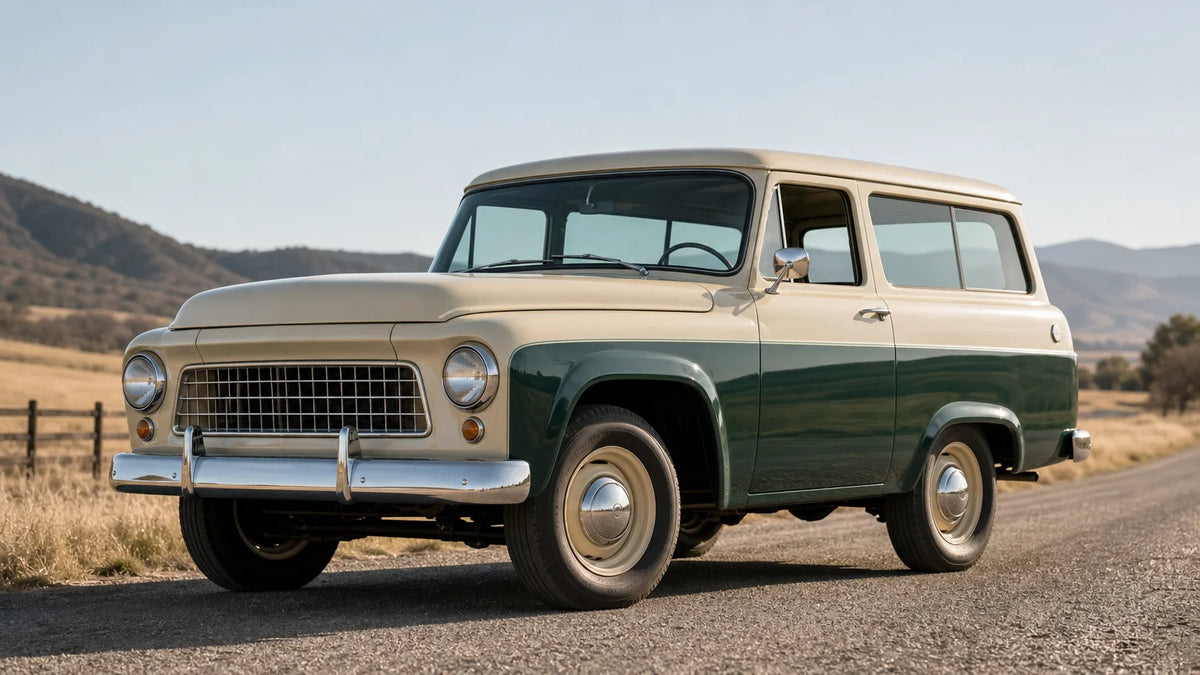
The 1955 Chevy Suburban marks a pivotal moment in Chevrolet truck history. Introduced during the Task Force era, it brought a flatter hood, integrated front fenders, and a trapezoid grille to the long-running Suburban Carryall. If you want to compare its design with later generations, our our 1960s Suburban provides useful historical context.
It is also a vehicle that requires careful identification. The 1955 model year included both the passenger-carrying Suburban Carryall and a related GMC pickup using the Suburban name. Understanding the difference between these vehicles is essential when you evaluate specifications, restoration quality, provenance, or a potential purchase.
What makes the 1955 Chevy Suburban distinctive?
Begin with the date. Chevrolet introduced its redesigned 1955 truck range during the model year, creating what is commonly called the second-series Task Force design. The styling was more integrated than the earlier Advance Design trucks, with front fenders that sat flush with the body and a distinctive trapezoid grille.
The Chevrolet specifications identify the passenger models as the 3106 with rear panel doors and the 3116 with a tailgate. Both used a 116-inch wheelbase and measured approximately 196.62 inches in overall length. The listed curb weight was approximately 3,740 pounds, while payload was rated at 1,050 pounds with the specified equipment. These figures come from the official 1955 specifications.
Power depended on configuration and equipment. Chevrolet’s truck range used inline six-cylinder engines as well as small-block V8 options during this period. Transmission choices included manual gearboxes, while automatic transmission availability depended on the specific vehicle and equipment package.
The result was not an early sport utility vehicle in the modern sense. It was a commercial-frame carryall designed to move people, tools, luggage, or equipment. That combination explains why the model appeals to both collectors seeking period authenticity and owners who want a classic vehicle with practical proportions.
Which 1955 Suburban are you actually viewing?
Look closely at the body style before you assess a vehicle. The Chevrolet Suburban Carryall was a two-door passenger vehicle with a truck chassis, while the GMC Suburban Pickup was a separate pickup concept related to the Chevrolet Cameo. The two names are often confused in listings, photographs, and informal conversations.
General Motors describes the 1955 GMC Suburban Pickup as a model with fiberglass rear fenders attached to a steel cargo box. Its equipment could include a Deluxe Cab, chrome bumpers, a V8 engine, and a four-speed Hydra-Matic transmission. GM also states that the GMC Suburban Pickup was produced from 1955 through 1957, with total production close to 1,000 units. The details appear in the GM Heritage record.
A genuine Chevrolet Carryall should therefore be judged by its enclosed body, passenger seating, rear access arrangement, and model identification. The 3106 used rear panel doors, while the 3116 used a tailgate configuration. Both formats can be desirable, but they suit different restoration goals and loading requirements.
Interior layout is another defining feature. The period design used a front bench seat and removable or adaptable rear seating. This allowed the vehicle to serve families, tradespeople, rural users, and commercial operators without losing its basic truck utility.

What should you inspect before buying one?
Start with the body shell because structural condition usually matters more than cosmetic shine. Inspect the roof edges, floor sections, rocker panels, door openings, rear quarters, and areas around the windshield. A freshly painted body can conceal previous repairs, so you should examine seams, panel alignment, and the quality of any replacement metal.
Next, verify the identity of the vehicle. Check the body tag, chassis numbers, engine casting information, transmission type, and production details where available. Matching numbers can support originality, although a correctly restored truck with documented upgrades may be more useful than an incomplete vehicle retaining only its original drivetrain.
The frame also deserves close attention. Look for cracks, poorly executed repairs, distortion around suspension mounting points, and evidence of prolonged exposure to moisture. Original steering and braking components may require rebuilding even when the vehicle appears to run correctly.
Mechanical inspection should include the engine, cooling system, fuel system, clutch or automatic transmission, driveshaft, differential, steering, and brakes. If the vehicle has been upgraded, ask whether the changes were engineered as a complete system. A modern engine without corresponding improvements to braking, cooling, wiring, and suspension can create practical problems.
Documentation adds value beyond the purchase price. Old registrations, restoration photographs, invoices, factory literature, and ownership history can clarify whether a truck is an authentic Chevrolet Suburban Carryall, a modified example, or a vehicle assembled from multiple donor trucks.
How does it compare with later classic Suburbans?
Consider the 1955 model as a design transition rather than an isolated classic. It retains the compact, upright character of earlier carryalls while introducing the cleaner Task Force appearance that shaped Chevrolet trucks for the rest of the decade.
Later vehicles offer different proportions and mechanical expectations. A 1960s Suburban typically presents a more modern cabin, revised suspension design, and a stronger connection to the emerging sport utility format. Our our 1966 Chevy Suburban offers a useful reference point for understanding how the concept evolved by the middle of the following decade.
The comparison becomes particularly important when you are choosing a vehicle for driving rather than display. A 1955 truck rewards period-correct restoration and careful maintenance, while a later model may provide easier access to replacement components or more familiar road manners.
Parts availability should also influence your decision. Our our 1960s pickup trucks for sale content can help you compare the broader design language of Chevrolet’s classic truck range without assuming that every component transfers directly between model years.
What does the collector market reveal?
Condition, specification, and presentation usually matter more than the simple model year. A complete, structurally sound Suburban with credible documentation can attract a different audience from a heavily modified project truck, even when both vehicles share the same body style.
Market research should begin with completed sales rather than optimistic asking prices. Bring a Trailer maintains a dedicated category for Chevrolet Suburbans from 1955 to 1959, giving collectors a place to review auction listings, photographs, equipment details, and bidding history. You can consult its 1955 to 1959 Suburban archive for broader market context.
That archive should not be treated as a universal price guide. Auction outcomes vary according to originality, location, documentation, mechanical work, body quality, and the timing of the sale. A restored truck with non-original power may appeal to a driver, while a mostly original example may attract a collector focused on authenticity.
Before making an offer, compare several vehicles with similar body configurations. Record the condition of the frame, floors, trim, interior, glass, engine, transmission, and electrical system. This approach helps you separate a genuine opportunity from a visually attractive truck that requires extensive hidden work.
Is a 1955 Suburban right for your collection?
Imagine using the vehicle on modern roads, not only displaying it at events. The 1955 Suburban can provide a distinctive driving experience, but its age demands realistic expectations about braking, steering response, cabin noise, weather sealing, and highway performance.
It may suit you if you value historic design, practical utility, and a clear connection to early American truck culture. It may be less suitable if you need effortless daily transportation, modern safety systems, climate control, or readily available service support in every location.
For international buyers, logistics deserve special attention. Confirm export documentation, import requirements, local registration rules, parts availability, and the ability of a qualified workshop to support the vehicle. A collector marketplace can simplify discovery, but the final decision should still include an independent mechanical inspection.
Our our classic truck marketplace can support the discovery stage when you are comparing unusual historic vehicles and evaluating which examples deserve closer attention. The right purchase is not necessarily the most expensive or most restored truck. It is the one whose condition, history, specification, and intended use align with your expectations.
Why the 1955 Suburban still matters
The 1955 Chevrolet Suburban combines early carryall practicality with the sharper styling of Chevrolet’s Task Force era. Its model codes, body configurations, truck-based construction, and surviving documentation make careful identification essential. If you approach the vehicle through structure, provenance, mechanical condition, and intended use, you can judge its collector value more accurately and choose a restoration path with confidence.
Take action with TheArsenale
A historic truck deserves to be considered alongside the wider world of collectible mobility. Whether you are researching a 1955 Suburban, comparing later Chevrolet designs, or expanding a private collection, a curated selection can help you evaluate distinctive vehicles with greater context.

At TheArsenale, we bring together unusual machines and collector-focused mobility objects through a global marketplace supported by sourcing assistance and personal sales guidance. Explore our selection of classic cars to continue your search for a vehicle with character, history, and lasting visual appeal.
Frequently Asked Questions
What is the difference between a 1955 Chevrolet Suburban 3106 and 3116?
The 3106 used rear panel doors, while the 3116 used a tailgate arrangement. Both were two-door Suburban Carryall models built on a truck-based platform.
Was the 1955 Chevy Suburban a pickup truck?
The Chevrolet Suburban Carryall was an enclosed passenger and cargo vehicle rather than a conventional pickup. A related GMC Suburban Pickup used the name for a separate open-bed body style.
What engine came in a 1955 Chevy Suburban?
Engine equipment could include a Chevrolet inline six-cylinder or a small-block V8, depending on the vehicle and specification. Because many surviving examples have been modified, you should verify the engine against the vehicle documentation.
What should you check first when buying one?
Inspect the frame, floors, roof edges, rocker panels, body seams, and rear body structure before focusing on paint or trim. You should also verify the model code, title history, mechanical condition, and quality of previous repairs.
Can TheArsenale help me find a classic Suburban?
Our marketplace is designed to help collectors discover rare and distinctive mobility objects, while our sales team can assist with high-value acquisition inquiries. Availability, pricing, and sourcing options depend on the individual vehicle and its documentation.