1966 C10 Buyer’s Guide: Specs, Value, and Ownership Tips
A 1966 C10 remains one of the most recognizable classic American pickups, but its appeal depends on choosing the right specification. If you are comparing listings, our guide to 1960s pickup trucks for sale provides useful context for evaluating period design, condition, and collector appeal.
The final first-generation C/K trucks are attractive because they balance vintage character with relatively straightforward mechanical systems. The right example can deliver strong visual presence, broad parts support, and an engaging driving experience. The wrong one can hide corrosion, incomplete restoration work, or expensive drivetrain and body repairs beneath fresh paint.
What makes the 1966 C10 a distinctive classic?
The 1966 C10 belongs to Chevrolet’s first-generation C/K series, produced from the 1960 through 1966 model years. The C10 designation identifies a two-wheel-drive, half-ton pickup, while K10 identifies the corresponding four-wheel-drive model. The 1966 truck is therefore not a second-generation C/K, despite its mature styling and improved equipment.
Chevrolet introduced a dedicated truck platform for this series, with a lower cab, drop-center frame, and independent front suspension on C-series models. This engineering approach helped the C10 feel more settled than earlier pickups. It also established the comfortable, road-oriented character that makes the model attractive to collectors and restomod builders.
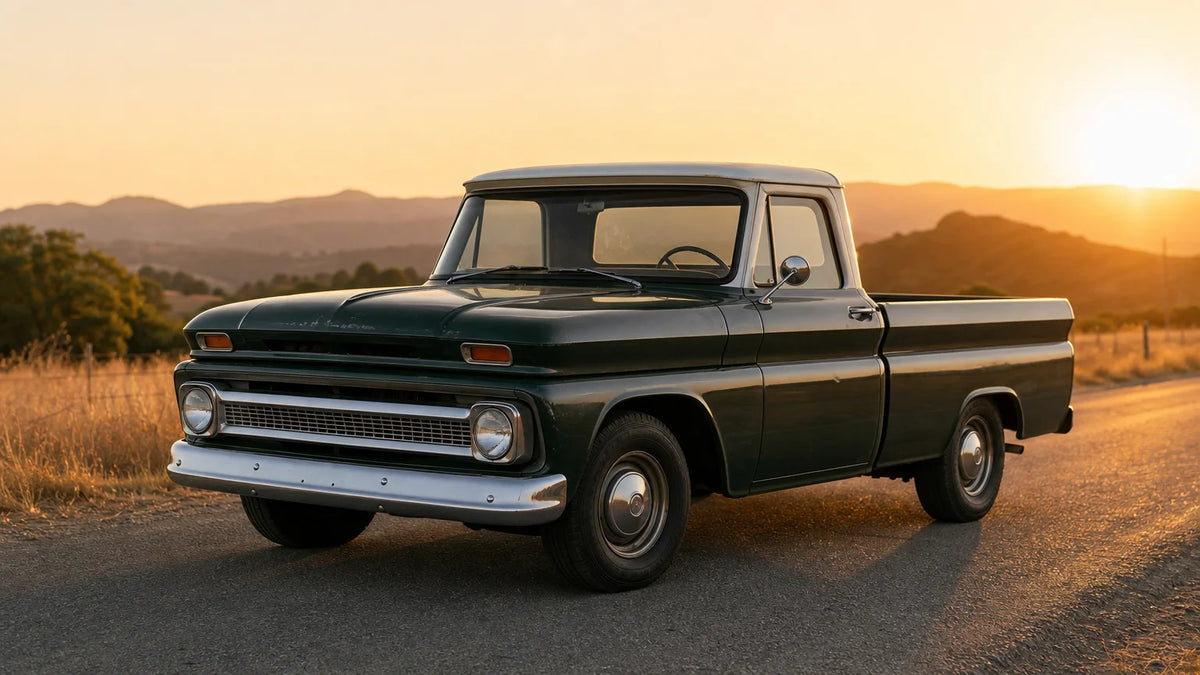
For identification, the 1966 model shares its basic body with the 1964 and 1965 trucks. The grille, emblems, trim details, and serial information are more reliable than general appearance alone. A useful C10 identification guide also highlights how closely the final two model years resemble each other.
The body was available as a smooth-sided Fleetside or a fendered Stepside. Short and long beds offered different proportions, while regular-cab construction kept the truck visually simple. A short-bed Fleetside often attracts strong collector interest, but originality and condition matter more than bed style by themselves.
TheArsenale’s editorial coverage of adjacent trucks, including our 1963 Chevrolet Stepside, can help you understand how body details and earlier first-generation specifications evolved before 1966.
Which engines, transmissions, and configurations were available?
A typical 1966 C10 was powered by a 250-cubic-inch inline six producing 155 gross horsepower. The 283 V8 remained available, while the 327 V8 became an important late-series option. Engine availability depended on the series, body, axle, and factory equipment selected by the original buyer.
Factory documentation is the safest reference when verifying a claimed original specification. The 1966 Chevrolet truck archive helps distinguish factory equipment from later engine swaps, transmission conversions, and aftermarket upgrades.
| Area | 1966 C10 details |
|---|---|
| Drive layout | Rear-wheel drive for C10 models |
| Payload class | Nominal half-ton, 10-series rating |
| Common engines | 250 inline six, 283 V8, optional 327 V8 |
| Transmissions | Three-speed manual, four-speed manual, Powerglide automatic, and available Turbo-Hydramatic depending on configuration |
| Bed styles | Fleetside or Stepside, with short and long-bed variations |
| Suspension | Independent front suspension and coil-sprung rear suspension on typical light-duty C10 models |
The inline six is generally the most economical route into ownership. It offers useful low-speed torque and simpler service requirements, although it will not provide the acceleration of a V8-powered truck. A factory-correct 283 or 327 can improve collector appeal, but an undocumented engine change should not automatically command a premium.
Transmission choice also affects how the truck feels in modern traffic. A manual gearbox offers a more mechanical experience, while an automatic can make local driving easier. Examine the transmission, rear axle ratio, cooling system, and braking equipment as one system rather than judging the engine alone.
How should you judge originality and restoration quality?
Consider two 1966 C10s with similar paint and asking prices. One may retain its original body panels, factory-style interior, and documented drivetrain. The other may have fresh paint over repaired rust, mixed-year trim, and a replacement engine with unknown history. Their visual similarity does not make them equivalent purchases.
Originality is not automatically superior to tasteful modification, but it creates a clearer basis for valuation. Look for consistent casting dates, correct emblems, period-correct wheels, matching body details, and evidence of coherent restoration work. A modified truck can still be desirable when the work is documented, professionally executed, and suited to the intended use.
Inspect the cab floor, rocker panels, cab corners, inner fenders, lower doors, windshield channels, and bed supports. Rust repair is often more expensive than mechanical work because it can involve fabrication, disassembly, paint matching, and panel alignment. Uneven gaps, bubbling beneath paint, and thick undercoating deserve close attention.
Pay particular attention to the frame around suspension mounts and crossmembers. A truck that carried heavy loads may show cracks, distorted mounting points, or poorly repaired sections. Check whether the bed sits squarely on the frame and whether the doors, hood, and tailgate close without excessive force.
Interior condition can also reveal how a truck was used. A clean bench seat and restored dashboard are appealing, but they should not distract from worn steering components, tired drum brakes, leaking wheel cylinders, or an outdated wiring harness. Mechanical inspection should always follow the visual appraisal.
What is a 1966 C10 worth in 2026?
Value varies substantially by condition, body style, drivetrain, documentation, and restoration quality. For a specific 2-door Fleetside short-bed configuration with the 250 inline six, 2026 market data from Hagerty places a Good Condition guide range at approximately $16,733 to $25,167 in its July 2026 update. That figure is a guide, not a guaranteed selling price.
You can review the detailed 1966 C10 valuation before comparing a listing with similar examples. The guide shows why a truck’s exact configuration matters. A short-bed Fleetside, a documented factory V8, a sound body, and a high-quality restoration can move the price well above an ordinary project truck.
At the lower end of the market, incomplete projects may appear attractive because their purchase price is modest. However, missing trim, damaged cab structures, seized brakes, and poor previous repairs can quickly exceed the initial saving. A solid truck with a weaker engine is often a better starting point than a shiny truck with extensive hidden corrosion.
At the upper end, buyers should distinguish professional restoration from cosmetic presentation. Inspect photographs of the underside, engine bay, floor pans, and frame. Request invoices, previous ownership records, title documentation, and details of any replacement body panels or drivetrain components.
Our classic truck marketplace offers another way to frame the search. Rather than focusing on the lowest advertised price, compare provenance, specification, workmanship, and how closely the truck matches your intended use.
What should you inspect before buying and owning one?
Before you commit, begin with the identity and paperwork. Confirm the VIN, title status, model designation, engine number where available, and the relationship between the advertised specification and the truck’s actual components. International buyers should also verify import, registration, and transport requirements before purchase.
- Check the structure: inspect the frame, cab mounts, suspension crossmembers, floor pans, and bed supports for corrosion or repairs.
- Assess the drivetrain: verify cold-start behavior, oil pressure, compression where appropriate, transmission engagement, differential noise, and cooling performance.
- Test the chassis: look for steering play, uneven braking, worn bushings, leaking wheel cylinders, damaged tires, and incorrect ride height.
- Review the restoration: request invoices, photographs, paint records, parts receipts, and documentation for engine or transmission changes.
- Match the truck to your use: decide whether you want originality, a reliable driver, a show vehicle, or a restomod platform before negotiating.
Parts support is one of the model’s practical strengths. Mechanical components, seals, suspension parts, brake items, and many reproduction trim pieces remain available through the specialist restoration market. Year-specific grille parts, interior details, glass, and correct emblems may require more patience.
Ownership still requires realistic expectations. A 1966 C10 has drum brakes, carbureted fueling, manual steering in many examples, and limited insulation compared with a modern truck. It can be enjoyable for weekend driving, but a modernized cooling system, electrical inspection, fresh brake components, and carefully chosen tires can improve confidence without changing its character.
The first-generation family also included utility models with shared mechanical ideas. Our feature on the 1966 Chevy Suburban provides useful context for buyers interested in the broader design language of Chevrolet’s truck-based vehicles from the same period.
Is the 1966 C10 still a sensible classic?
The 1966 C10 remains a compelling classic when you choose condition and specification carefully. Its final-year status, straightforward mechanical layout, distinctive body styles, and strong parts support create a useful balance between collectibility and usability. In 2026, the safest purchase is rarely the cheapest truck or the most heavily modified one. Prioritize a solid structure, credible documentation, coherent restoration work, and a specification that suits how you plan to drive and maintain it.
Take action with TheArsenale
Finding the right vintage pickup requires more than recognizing an attractive grille. You need a clear view of condition, provenance, specification, and the level of work required after purchase. That process becomes easier when you can review carefully selected vehicles through a specialist mobility marketplace.

At TheArsenale, we curate distinctive machines for collectors and enthusiasts seeking unusual automotive design and character. Explore our selection of classic cars to continue your search, or contact our team when you need guidance locating a vehicle that matches your preferences and intended use.
Frequently Asked Questions
Is the 1966 C10 part of the first-generation C/K series?
Yes. The 1966 model year is the final year of Chevrolet’s first-generation C/K pickup series, which began in 1960. The next major body redesign arrived for the 1967 model year.
What does C10 mean on a 1966 Chevrolet pickup?
The C identifies a two-wheel-drive configuration, while the 10 indicates the nominal half-ton series. A four-wheel-drive half-ton truck from the same family is generally identified as a K10.
Which engine is most common in a 1966 C10?
The 250-cubic-inch inline six is a common specification, rated at 155 gross horsepower. The 283 V8 and optional 327 V8 are also important factory engine choices, although availability depended on the original configuration.
Are parts easy to find for a 1966 C10?
Many mechanical, brake, suspension, seal, and service parts remain available through the classic truck restoration market. Correct year-specific trim, glass, emblems, and interior components may take longer to locate and can cost more.
Can TheArsenale help me find a classic pickup?
Our marketplace connects collectors and enthusiasts with curated mobility objects, including distinctive automotive machines. You can browse available vehicles or contact our team for assistance with a high-value acquisition or a more specific sourcing request.