1983 Rolls-Royce Corniche Convertible Collector’s Guide
Why does a 40-year-old grand tourer still attract collectors? The answer lies in its combination of hand-finished materials, imposing proportions, and relaxed open-air character, qualities shared by the most desirable luxury convertibles.
The 1983 Rolls-Royce Corniche Convertible belongs to an important period in the model’s history. It combines a large V8, traditional coachbuilt detailing, and a spacious cabin with the engineering changes introduced during the late Silver Shadow era. For an international collector, the challenge is not simply finding a car. It is identifying an example with honest history, correct specification, and manageable ownership needs.
What defines the 1983 Rolls-Royce Corniche Convertible?
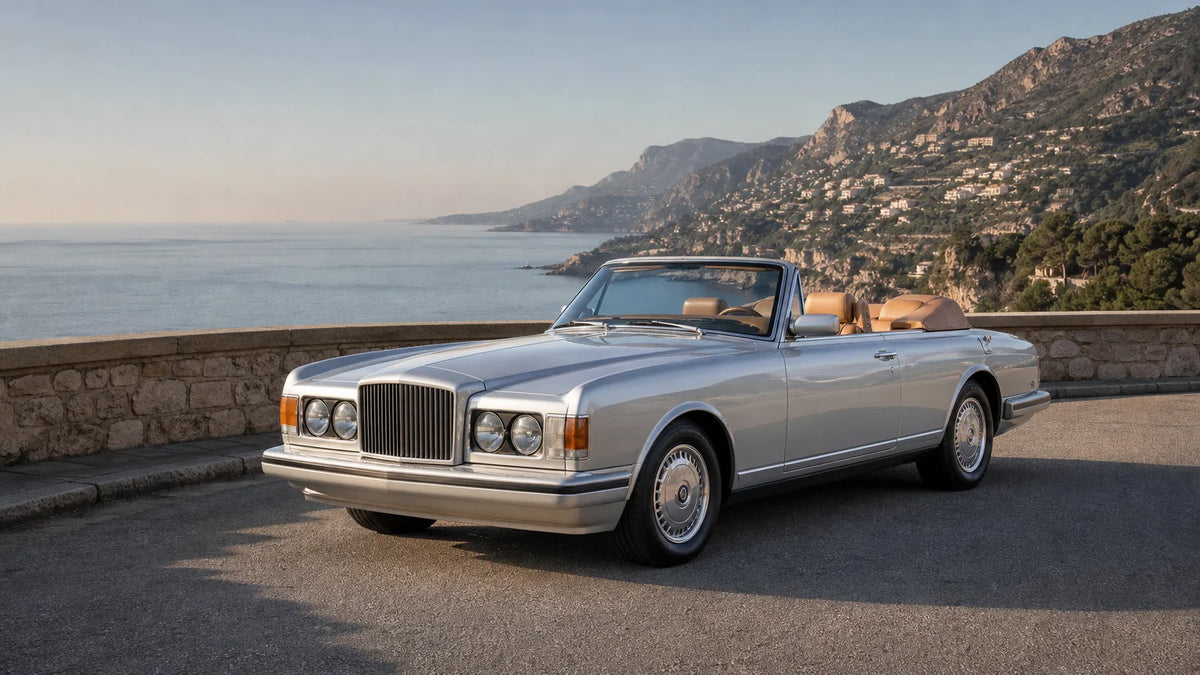
The 1983 model sits within the first generation of Corniche convertibles. This generation evolved from the two-door Silver Shadow models developed by Mulliner Park Ward. It retained the long bonnet, formal radiator treatment, frameless side glass, and folding roof that made the Corniche distinct from ordinary luxury saloons.
According to the marque’s history, the convertible continued in production through 1987, even after the Corniche II appeared in 1986. Therefore, a 1983 car should be assessed as an early-series Corniche rather than confused with later versions that received different equipment and trim updates.
Its appeal is fundamentally architectural. The car has a long wheelbase, generous overhangs, a formal passenger compartment, and a high-quality cabin built around leather, wood, and thick carpeting. It was designed for quiet progress rather than aggressive cornering.
That character makes the Corniche especially relevant to collectors who appreciate classic cars for their craftsmanship and atmosphere. In our editorial coverage, we approach these vehicles as complete design objects, where materials, provenance, and the driving experience matter together.
Which specifications matter when assessing one?
A 1983 Corniche Convertible is mechanically straightforward in concept, but its systems require specialist understanding. The car uses a 6.75-liter V8, a three-speed automatic transmission, rear-wheel drive, independent suspension, and four-wheel disc brakes.
Reference data for the 1983 model year confirms the core specification in 1983 specifications. These figures provide useful identification points, but they should not be treated as a complete condition report. Age, maintenance quality, market configuration, and previous restoration work can affect the way each car performs.
The engine should start promptly, settle into a smooth idle, and respond cleanly without persistent smoke or unusual mechanical noise. The automatic transmission should engage without a hard thump. Gear changes should feel deliberate but not harsh.
The hydraulic systems deserve particular attention. The Corniche uses hydraulic assistance for important functions, including self-leveling and braking. Leaks, warning lights, a low rear ride height, or an unsettled ride can indicate deferred maintenance.
Do not judge the car solely by its engine. A mechanically healthy example can still require substantial expenditure if the body, roof mechanism, electrical equipment, or interior trim needs restoration. A complete inspection should consider the entire vehicle as one connected ownership proposition.

What should you inspect before buying?
Begin with the lower structure. Corrosion around the sills, floor areas, wheel arches, front wings, rear valance, and spring mounting points can be more serious than cosmetic rust on visible panels.
Convertible-specific areas deserve extra care. Inspect the roof well, drainage channels, header rail, folding mechanism, seals, and rear window. Water ingress can damage carpets, electrical components, wood trim, and hidden metalwork.
Body and paint
Look for inconsistent panel gaps, overspray, ripples, filler, and mismatched paint texture. A glossy respray can conceal previous accident repairs or corrosion. Paint quality matters, but structural integrity matters more.
Check the doors, bonnet, and boot carefully for corrosion caused by dissimilar metals. Brightwork should be examined closely because replacement and professional refurbishment can be expensive. Original trim is valuable, but poor repairs are not automatically preferable to high-quality restoration.
Interior materials
The cabin is one of the Corniche’s main attractions, yet it can also create the largest restoration bills. Examine the leather for drying, cracking, discoloration, and incorrect recoloring. Inspect the veneer for lifting, delamination, splits, or visible patchwork.
Test every seat adjustment, window switch, instrument, heater control, courtesy lamp, and audio component. A nonworking accessory may seem minor, but several small electrical faults can indicate long periods of neglect.
Convertible roof
The roof should fold smoothly and sit evenly when raised. Check for tears, brittle material, cloudy plastic windows, damaged seals, and strained frame components. Do not operate it forcefully if the mechanism feels tight.
A professional inspection should include the underside of the roof, the storage compartment, and the drainage paths. Water damage often begins in places that are difficult to see during a brief viewing.
How important are mileage and provenance?
Mileage helps establish context, but it does not determine quality by itself. A frequently driven Corniche with consistent servicing may be a stronger purchase than a low-mileage example that spent years stationary.
Long periods of inactivity can affect seals, hoses, hydraulic components, tires, fuel systems, and electrical connections. A car that has been used carefully may therefore offer a more reassuring ownership profile than one presented as barely driven.
Look for invoices, service stamps, ownership records, restoration photographs, import documents, and inspection reports. The most useful documents connect dates, mileage, repairs, and specialists. A folder filled with undated claims is less valuable than a smaller file with clear continuity.
Provenance becomes especially important when a car has undergone restoration. Ask which panels were repaired, which components were replaced, what materials were used, and whether the work prioritized originality or usability.
For collectors building a broader luxury car collection, documentation also supports future curation. It clarifies how the car fits within a collection, what work remains, and whether the vehicle can be shown, driven, or preserved according to its intended role.
How should you assess value in 2026?
In 2026, the value of a 1983 Corniche Convertible remains highly condition-dependent. The market does not treat all examples as interchangeable. Originality, body integrity, service history, interior preservation, mileage credibility, and restoration quality can create large differences between cars.
Hagerty’s valuation page illustrates why valuation tools should be read as reference points rather than guarantees. Published values are useful for establishing a broad range, but they cannot replace a physical inspection or account fully for a rare specification.
When comparing an asking price, separate the car’s purchase cost from its immediate ownership requirements. A seemingly attractive price may reflect worn hydraulics, aged roof materials, corrosion, incomplete trim, or missing records.
Conversely, a higher-priced car may be rational if it has a documented restoration, correct materials, healthy mechanical systems, and evidence of specialist care. The right comparison is not the cheapest available car. It is the strongest example that fits your intended use and budget.
Be cautious with investment language. A classic car can provide cultural, aesthetic, and driving value, but no historical model guarantees financial returns. Treat market appreciation as uncertain and buy a car you would still appreciate if values remained unchanged.
What ownership experience should you expect?
The Corniche is best suited to relaxed touring, special occasions, and measured road use. Its size and weight reward smooth inputs, generous stopping distances, and careful route planning. It is not designed to mimic a modern sports car.
Ownership requires access to a qualified specialist. Routine servicing is essential, while hydraulic, electrical, trim, and bodywork issues should be diagnosed before they become larger failures. Preventive maintenance usually costs less than allowing several neglected systems to deteriorate together.
Storage also matters. A dry, ventilated environment protects leather, wood, carpets, brightwork, paint, and roof materials. Regular use is beneficial, but exposure to intense sunlight, standing water, poor drainage, and unsuitable storage can quickly undermine a careful restoration.
Parts availability is mixed. Major mechanical components may be supportable through specialist networks, while model-specific trim, correct veneer, brightwork, and roof components can require patience and specialist sourcing. That is why condition and documentation should influence the purchase decision from the beginning.
Is a 1983 Corniche Convertible right for your collection?
It may be a strong choice if you value presence, craftsmanship, open-air touring, and a slower form of luxury motoring. The car has a distinctive identity, but it demands more preparation than a contemporary convertible.
Before committing, define your intended role. A concours presentation car, a weekend tourer, and a frequently driven grand tourer require different priorities. Originality may matter most for one collector, while reliable usability may matter more for another.
Arrange an independent inspection before signing a purchase agreement. Ask the inspector to document corrosion, hydraulic operation, mechanical noise, roof function, electrical faults, paint thickness, and the quality of previous repairs.
Finally, reserve a realistic maintenance budget. The purchase price is only the entry point. A properly maintained example can deliver a remarkably composed driving experience, but neglect rarely remains inexpensive for long.
What to remember before buying
The strongest 1983 Corniche Convertible is not necessarily the lowest-mileage or most polished example. It is the car with the clearest history, sound structure, healthy hydraulic systems, credible restoration work, and an interior that reflects its original character. In 2026, careful inspection and documented condition remain the most reliable foundations for a confident purchase.
Take action with TheArsenale
If your interest extends beyond researching a historic convertible, you may be looking for a rare mobility object that combines design, provenance, and a distinctive ownership experience. Our curated approach is built for collectors who want to explore unusual machines with informed guidance.

Explore our selection of rare mobility objects and discover a contemporary Rolls-Royce luxury convertible with the support of a marketplace focused on extraordinary design and future-oriented motion.
Frequently Asked Questions
Is the 1983 Rolls-Royce Corniche Convertible rare?
It was produced in limited numbers compared with ordinary luxury cars of its period, and surviving examples vary widely in condition. Rarity matters most when combined with originality, documentation, and sound mechanical condition.
What engine does the 1983 Corniche Convertible use?
The 1983 model uses a 6.75-liter V8 paired with a three-speed automatic transmission. Its character is built around smooth torque and quiet cruising rather than rapid acceleration.
What is the most serious inspection concern?
Structural corrosion is among the most important concerns, especially around the sills, floors, spring mounting areas, and roof well. Hydraulic faults and neglected roof mechanisms can also create substantial repair costs.
Is low mileage enough to justify a higher price?
No. Low mileage is valuable only when it is credible and supported by consistent maintenance records. A regularly serviced car with higher mileage may be more dependable than a seldom-used example with long periods of inactivity.
Can TheArsenale help source a rare luxury vehicle?
Yes. TheArsenale provides curated access to rare mobility objects and personalized support for high-value acquisitions. Collectors can contact the team to discuss sourcing requirements, availability, and suitable opportunities.