efoil vs electric surfboard: Which Ride Fits You Best?
Two powered boards can leave the same dock and deliver completely different experiences. If you are comparing efoil vs electric surfboard, the central question is simple: do you want to stay connected to the surface, or rise above it?
The wider category is developing quickly. One 2026 market estimate places the global eFoil electric surfboard market at USD 292.34 million, although market figures vary according to how manufacturers, retrofit systems, rental services, and complete boards are counted. That growth gives buyers more choice, but it also makes careful comparison more important.
What is the real difference between an eFoil and an electric surfboard?
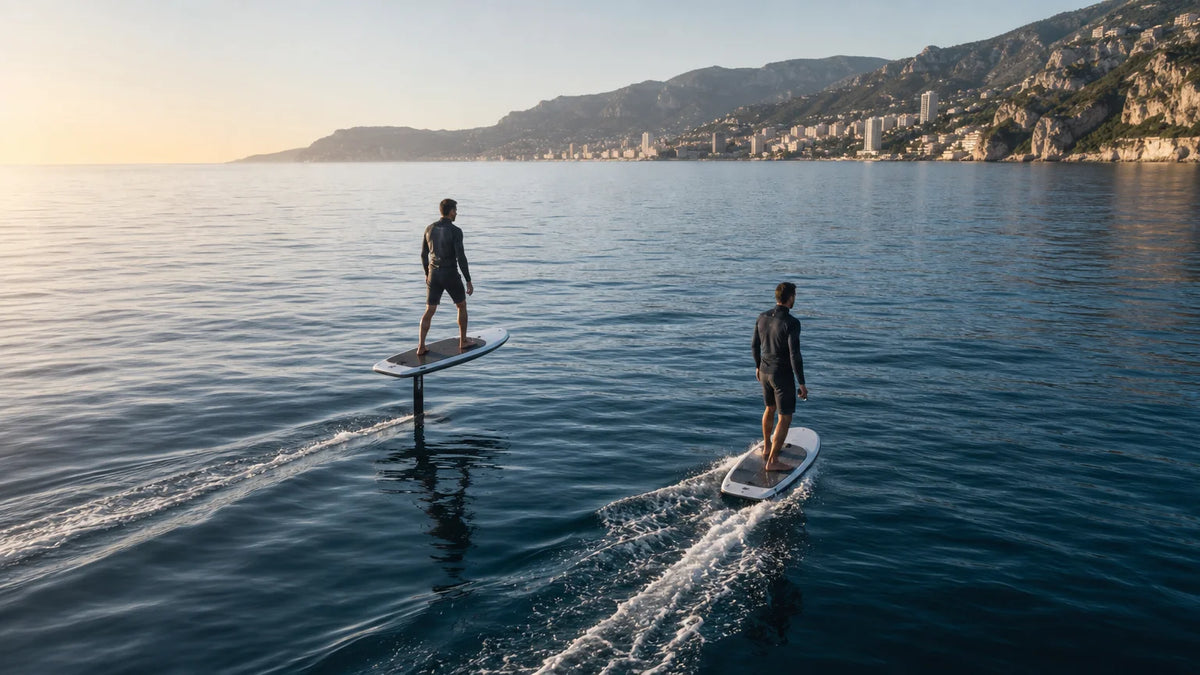
An electric surfboard rides on the water’s surface. Its motor drives a jet or propeller system, allowing the board to plane across the water without wind, waves, or a tow boat. You feel the hull respond directly to acceleration, chop, spray, and turns.
An eFoil uses a different arrangement. Its battery powers a motor mounted on a submerged mast, while an underwater wing creates lift as speed increases. Once the board rises, much of the hull leaves the water, creating the distinctive sensation of hydrofoil lift and silent gliding.
The underlying idea is not entirely new. A technical report from KTH research traces electric hydrofoil development to 2008. What has changed since then is the integration of stronger batteries, compact controls, improved waterproofing, and more accessible board designs.
This mechanical distinction affects nearly every buying decision. An electric surfboard usually offers more immediate surface feedback and direct acceleration. An eFoil rewards careful weight control, smoother lines, and the ability to maintain stable flight above the water.
How do the two boards feel to ride?
Imagine standing on a board that reacts instantly to your throttle input. An electric surfboard gives you that direct response. The hull remains in contact with the water, so you feel the force of each turn and the texture of every wave. It can feel energetic, athletic, and highly engaging.
The experience is especially appealing if you value acceleration and physical feedback. Surface riding also makes it easier to understand what the board is doing. You can see the wake, feel the rail pressure, and adjust your stance according to the water beneath you.
An eFoil feels more detached from the surface. As the wing generates lift, the board rises and the hull stops absorbing every small disturbance. The water appears to move beneath you while the board follows a smoother path. Many riders describe the sensation as closer to snowboarding on powder than conventional surfing.
Neither experience is universally superior. Choose the electric surfboard if you want spray, acceleration, and sharp surface turns. Choose the eFoil if you prefer flow, quiet movement, and the satisfaction of learning a technical balance skill.
Which board offers more speed, range, and usable ride time?
Top speed can be misleading. Manufacturer figures depend on rider weight, battery condition, water temperature, board configuration, throttle setting, and whether the number represents a controlled test or a short maximum run.
In broad terms, electric surfboards are designed around strong acceleration and fast surface travel. They continuously push the full board through the water, which creates a direct and forceful ride. This can make them exciting for short, high intensity sessions.
eFoils use energy differently. After takeoff, the hydrofoil reduces the amount of board touching the water. Less contact generally means less drag, which can support longer cruising and more efficient battery use. Actual ride time still varies considerably, especially when the rider is learning and repeatedly returns to the surface.
For a realistic comparison, ask for performance information at a normal cruising setting. Confirm the battery capacity, rider weight used in testing, water conditions, charging time, and expected performance after repeated use. A slower setup that supports a full session may be more useful than a faster board that spends much of the day charging.
If you want to compare the category through a curated mobility lens, our editorial selection of best efoils can help you assess design, technology, and intended riding style without relying on a single headline speed.
Which one is easier to learn and control?
The first standing ride is usually more straightforward on an electric surfboard because the board remains supported by the water. You still need throttle control, balance, and enough space to fall safely, but there is no flight height to manage.
An eFoil adds another layer of control. You must regulate speed while managing pitch, roll, and lift. Small movements through your feet and hips can change the board’s height quickly. This creates a steeper learning curve, particularly when you move from kneeling to standing and begin lifting clear of the surface.
That extra challenge is also part of the appeal. An eFoil gives you a skill to develop over time, from stable low altitude cruising to tighter turns and more advanced control. A larger board and a generous front wing can make the first sessions more forgiving.
Your previous experience matters, but it should not decide the purchase alone. A rider with no board sport background may prefer the immediate familiarity of a surface board. Another beginner may accept a slower start because the feeling of flight is the main reason for buying an eFoil.
Before committing, consider a lesson or supervised test session. Pay attention to how you recover from a fall, how easily you stop, and whether the board feels manageable when you are tired. Those practical impressions are often more useful than a specification sheet.
What safety factors should you consider?
Both board types require open water, protective equipment, and disciplined throttle control. A motorized board can accelerate quickly, so you should learn stopping distance before increasing speed. You should also keep clear of swimmers, docks, rocks, boats, and other hard objects.
An eFoil introduces specific hazards below the board. Its mast, fuselage, motor, and wings need sufficient clearance from the bottom and from other people. If you fall, release the throttle and move away from the board rather than trying to step over the foil.
An electric surfboard removes the long mast, but it is not risk free. Surface speed can create collision forces, and the propulsion system still requires care around swimmers, seaweed, sand, and floating debris. An enclosed drive may reduce exposure to moving components, but it does not eliminate impact risk.
Wear the safety equipment required by the manufacturer and local authority. Use approved cut off systems, inspect the battery and propulsion components before every session, and avoid riding alone in unfamiliar conditions.
Where can you ride each type of board?
Water access may be the most important part of the decision. An eFoil needs adequate water depth for the mast, motor, fuselage, and wings. Shallow sandbars, rocks, submerged ropes, weeds, and unknown bottoms can damage the equipment or create a serious fall hazard.
An electric surfboard generally needs less depth because it remains on the surface. It still requires enough clearance for the intake or propulsion system, and shallow water can introduce sand, stones, and vegetation into the drive.
Calm bays, deep lakes, sheltered harbors, and smooth coastal water can suit both platforms. A surface board may feel more direct when the water is confused, while an eFoil can smooth out small surface chop after takeoff. In larger waves, each design places different demands on the rider.
Local rules can also determine the answer. Registration, speed limits, launch restrictions, protected areas, personal flotation requirements, and permitted motorized activities differ by country, state, and waterway. Confirm the rules for the exact place where you intend to ride before purchasing equipment.
For a more structured buying process, our guide on how to buy an efoil helps connect rider profile, intended water, design preferences, and practical ownership considerations.
How do setup, portability, maintenance, and cost compare?
Electric surfboards can be simpler before launch because many components remain integrated into one board. That convenience can come with greater bulk, particularly when the battery and propulsion system are built into a heavy surface platform.
eFoils often separate into a board, battery, mast, motor, wings, and controller. This modular structure can make individual components easier to lift, but it adds assembly time and creates more parts to protect during transport. Foil edges also require careful handling in cars, garages, and on docks.
Maintenance is different rather than absent. Both categories need battery care, freshwater rinsing after saltwater use, dry storage, inspection of seals, and protection from heat. An eFoil requires particular attention to its mast, wings, motor, and connections. An electric surfboard requires attention to its intake, pump, hull, and internal drive system.
Purchase price is only one part of ownership cost. Include the charger, bags, safety equipment, spare parts, battery replacement, shipping, possible servicing, storage, and any registration or training expenses. You should also confirm how the battery can be transported, since large lithium batteries may be subject to separate shipping rules.
Published market estimates illustrate why price comparisons need context. One 2026 industry report estimates the global eFoil board market at USD 233.77 million, a different figure from broader eFoil electric surfboard estimates. Such variation reflects different definitions, product categories, and research methods rather than a simple contradiction.
Our overview of best electric surfboards can support a more complete comparison when you are weighing surface performance, design, equipment format, and intended use.
Which choice fits your riding priorities?
An electric surfboard may suit you if your priority is quick access to surface riding. It is a logical direction when you want acceleration, spray, direct feedback, and a shorter path to basic standing control. It can also make sense where water is too shallow for a foil mast.
An eFoil may suit you if you value silence, efficient cruising, and the feeling of rising above the water. It is especially compelling when you have access to deep, open water and are willing to invest time in learning pitch and balance.
For collectors and design focused enthusiasts, the decision can include more than performance. Materials, craftsmanship, portability, visual identity, component modularity, and the character of the machine all influence how often you will use it and how well it fits your broader mobility collection.
The most reliable method is to compare complete systems, not isolated specifications. Consider the board, battery, propulsion, wings, control system, carrying cases, safety equipment, service access, and local riding environment as one ownership experience.
Choose the ride you will use most
The efoil vs electric surfboard decision is ultimately a choice between flight and surface connection. An electric surfboard gives you immediate acceleration, spray, and physical feedback, while an eFoil rewards patience with a quieter, smoother, more elevated ride. Before buying, confirm your water depth, local access rules, transport routine, safety requirements, and realistic battery expectations. The right board is not the one with the most impressive specification. It is the one that matches your water, your experience, and the way you genuinely want to spend time on it.
Take action with TheArsenale
Once you know whether your ideal experience is surface speed or hydrofoil flight, the next step is finding a machine that reflects your priorities. We bring together future oriented mobility objects for collectors, enthusiasts, and riders who value design as much as performance.

Explore our curated range of eSurf electric surfboards and consider the details that matter to your ownership experience, including ride character, build quality, portability, and intended use. Our marketplace and sales team can also support a more considered search when your requirements extend beyond a standard purchase.
Frequently Asked Questions
Is an eFoil the same as an electric surfboard?
An eFoil is a type of electric surfboard, but it uses a submerged mast and hydrofoil wing to lift above the water. A conventional electric surfboard remains on the surface and uses its hull for support throughout the ride.
Which is easier for a first time rider?
An electric surfboard is often easier to understand initially because it stays on the water. An eFoil requires additional balance and pitch control, although a stable setup and professional instruction can make the learning process more manageable.
Which board is better for shallow water?
An electric surfboard generally requires less depth because it does not use a long mast and underwater wing. You should still avoid very shallow water, sand, stones, vegetation, and debris that could damage the propulsion system.
Which board usually offers longer sessions?
An eFoil can use less energy after takeoff because the hydrofoil reduces contact with the water. Actual session length depends on battery capacity, rider weight, speed, water conditions, and how often the board returns to the surface.
Can TheArsenale help me choose between the two?
Yes. TheArsenale curates future oriented mobility objects and can help you evaluate a machine according to your riding goals, design preferences, water access, and ownership expectations.