How to Choose the Right Electric Bike for Sale in 2026
The global electric e-bike market is projected to reach USD 65.80 billion in 2026, a figure that signals how quickly these machines have moved from novelty to mainstream transport. That growth translates into an overwhelming number of choices, which is precisely why finding the right electric bike for sale now requires a clear method rather than a quick impulse. Before you compare deals, you should understand what actually separates one model from another. If you want a starting point, our electric BMX e-bike shows how design and performance can meet in a single package.
Motor output, battery chemistry, range claims and frame geometry determine whether a bike suits your life or frustrates it. According to Fortune Business Insights, the market is expanding at a compound annual growth rate above 14 percent, which means fresh models arrive constantly. The goal of this guide is to help you filter that noise and buy with confidence.
Understand what you are actually buying
An electric bicycle is a conventional bike fitted with a motor and a rechargeable battery that assists your pedaling. The assistance makes hills, headwinds and longer distances far more manageable. Yet not all systems feel the same, and the differences matter more than any single spec sheet suggests.
The most important distinction is how the motor decides to help you. A torque sensor measures how hard you press the pedals and responds proportionally, producing a natural, bike-like feel. A cadence sensor simply detects whether the pedals are turning, which can feel abrupt. Battery quality is the second pillar, and Coherent Market Insights reports that lithium-ion cells hold roughly 62.9 percent of the market in 2026 thanks to their energy density and longer lifespan.

Match the style to your terrain and routine
Consider where you will ride before you look at any price tag. A rider replacing car trips has different needs than someone tackling gravel trails on weekends. Each category exists to solve a specific mobility problem.
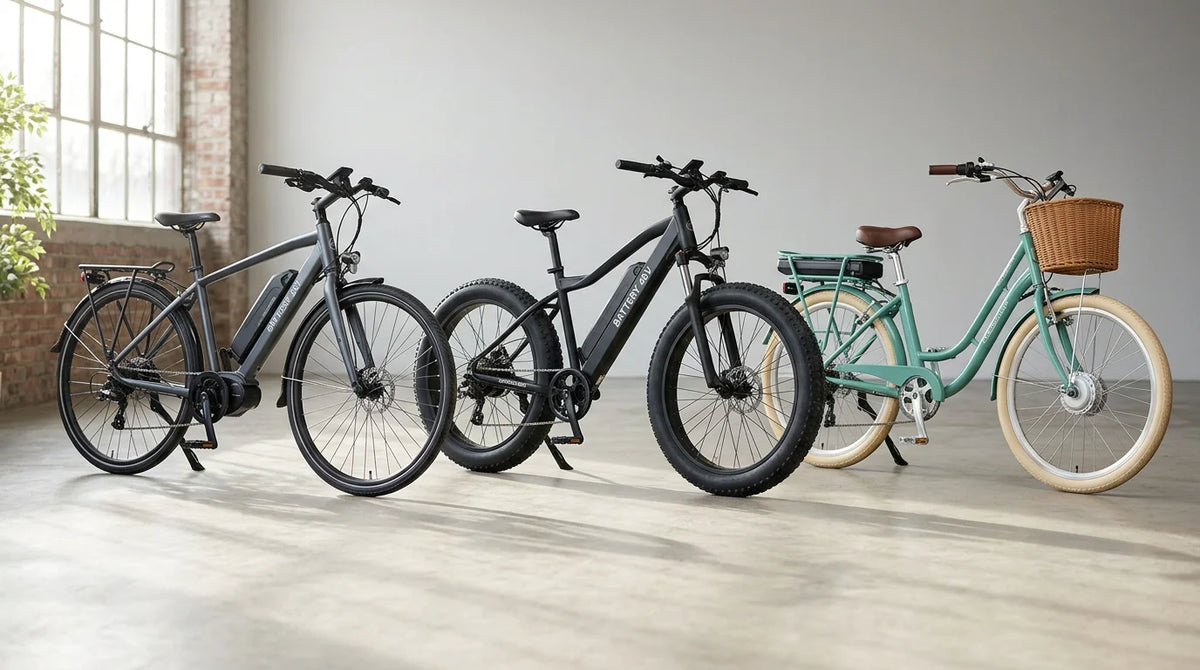
- Commuter e-bikes favor efficiency, comfort and reliability on paved city streets.
- Fat tire models add traction on sand, snow and loose gravel where narrow tires struggle.
- Cargo e-bikes haul groceries, gear or a child seat with a reinforced rear carrier.
- Folding bikes compress for apartments, offices and public transit connections.
- Step-through cruisers lower the frame for easy mounting and relaxed rides.
If comfort and easy mounting rank highest for you, our step-through electric bike illustrates how an accessible frame can still deliver strong performance. The personal-use segment dominates demand, and Grand View Research notes that it accounted for 85.1 percent of the market in 2025.
Read range and battery figures critically
Manufacturers quote range under ideal conditions: flat ground, light rider, minimal assistance. Real-world figures are usually lower. When you evaluate a bike, look at the battery capacity in watt-hours rather than the headline mileage, because that number is harder to inflate.
Safety certification deserves equal attention. A UL-certified battery reduces fire risk, a concern that has prompted new regulations in several cities. Ask whether the cells are name-brand, whether the charger is included, and how many charge cycles the pack is rated for. These details protect both your investment and your household.
Compare bike styles at a glance
The table below summarizes how the main categories perform against everyday priorities, with our curated marketplace positioned for buyers who want vetted, high-end options.
| Option | Best for | Typical strength | Consider if |
|---|---|---|---|
| TheArsenale curation | Design-led, premium buyers | Vetted models, free shipping, early access via membership | You want quality and style verified for you |
| Commuter e-bike | Daily city travel | Efficiency and comfort | You replace car or transit trips |
| Fat tire e-bike | Mixed and off-road terrain | Traction and stability | You ride sand, snow or gravel |
| Cargo e-bike | Families and hauling | Payload capacity | You carry loads or passengers |
| Folding e-bike | Small spaces and transit | Portability | You store indoors or combine modes |
A comparison clarifies priorities, but specifications alone do not capture ride feel. Whenever possible, test a model or study detailed owner feedback before committing.

Factor in smart features and connectivity
Modern e-bikes increasingly include integrated displays, app connectivity, GPS tracking and adjustable assistance profiles. These features add convenience but also complexity, so weigh them against your genuine needs. A rider who values simplicity may prefer a clean, minimal system.
Connected models can transform a daily ride into a seamless experience, and our feature on a smart e-bike that changes the commute explores how intelligent systems reshape urban mobility. As cities invest in bike lanes and micro-mobility infrastructure, demand for these machines continues to climb, reinforcing why buying thoughtfully now pays off later.
Time your purchase and verify the seller
Prices fluctuate with seasonal sales, closeouts and new-model releases. Shopping during a clearance or flash sale can lower your cost significantly, yet a low price means little without warranty coverage and reliable support. Confirm the warranty length, the return window and the availability of replacement parts.
Demand for these bikes in North America remains strong. Independent reporting citing customs analysis estimated that 1.7 million e-bikes were imported into the United States in 2024, a 72 percent jump over the previous year. That volume underscores how competitive the market has become, which favors informed buyers who compare warranties, not just headline discounts.
Bringing your decision together
Selecting the right electric bike is a process of elimination guided by your terrain, your distance and your priorities. Start with the motor and battery, then narrow the frame style, then scrutinize range and safety certification. Treat price as the final filter rather than the first, and always confirm warranty and support before you buy. A methodical approach turns a crowded market into a shortlist of two or three genuinely suitable machines, leaving you confident in a purchase built to last.
Take action with TheArsenale
You have identified what to look for, and the next step is finding machines worthy of that standard. We curate high-end mobility for riders who value design, performance and craftsmanship as much as practicality, removing the guesswork from a saturated market.

Explore our curated e-bike collection, where each model is selected for quality and style, with free shipping included. Through our Private Membership, you may also access vehicles before they are listed publicly, giving you first pick of the machines that matter most to you.
Frequently Asked Questions
How much should you spend on a quality electric bike?
Prices vary widely based on motor, battery and build quality. Entry-level commuters cost less, while premium and design-led machines command more. Focus on value and warranty rather than the lowest number, and consider seasonal sales to improve your budget.
What range can you realistically expect?
Advertised range assumes ideal conditions, so real figures are typically lower. Terrain, rider weight, assistance level and weather all reduce distance. Review the battery capacity in watt-hours for a more honest comparison between models.
Are torque sensors worth the extra cost?
A torque sensor delivers smoother, more natural assistance by matching your pedaling effort. Many riders find the improved feel justifies the price. If a natural ride quality matters to you, prioritize this feature over raw wattage.
Which e-bike style suits a first-time buyer?
Commuter and step-through models are forgiving and versatile for newcomers. They balance comfort, stability and everyday practicality. Our curated collection at TheArsenale includes accessible frames that welcome riders who are new to electric cycling.
How important is battery safety certification?
It is essential, as a certified lithium-ion battery reduces fire risk considerably. Look for UL certification and name-brand cells, and always use the supplied charger. Several cities now require certified batteries, so this detail also protects resale value.