How Much Does an Electric Surfboard Cost in 2026? Full Guide
A complete electric surfboard can cost less than $5,000 at the accessible end of the market, while premium systems can exceed $20,000. The most useful comparison is not the board alone, but the entire package, including the battery, charger, remote, fins, safety equipment, and support. For a first orientation, review our electric surfboard prices with the intended riding experience in mind.
The answer to how much does an electric surfboard cost also depends on the type of board you are considering. A surface jetboard, an electric hydrofoil, and a motorized accessory can look similar in a listing, yet provide very different performance and ownership costs. A 2026 market report places entry-level electric hydrofoil products available in 2025 at roughly $4,500 to $7,000, which helps establish a realistic lower boundary for a complete system. See the Fact.MR estimate for that market context.
What is the typical electric surfboard price in 2026?
For international buyers, the most practical 2026 budget ranges are broad but clear:
- Entry-level systems: approximately $4,000 to $7,000, generally focused on recreational use, moderate power, and straightforward equipment.
- Mid-range systems: approximately $7,000 to $12,000, often offering stronger motors, improved materials, longer ride times, and more refined controls.
- Premium systems: approximately $12,000 to $20,000 or more, with higher output, lighter construction, advanced propulsion, and premium support.
- Specialist or bespoke systems: more than $20,000, particularly when the package includes custom construction, unusually high performance, or limited production.
These bands describe a complete electric surfboard, not an isolated battery, board shell, motor unit, or electric fin. A low advertised price may exclude the battery or charger, use a smaller battery, or refer to an accessory that turns another board into a powered craft.
Published 2026 market estimates also show why a single average price can be misleading. One estimate values the global eFoil electric surfboard segment at $292.34 million in 2026, while broader electric surfboard reports use different product definitions. The category includes jet-powered boards, hydrofoil systems, and recreational motorized boards, so the figures should be treated as market context rather than a retail price list. Read the 2026 market estimate with those boundaries in mind.
What does the purchase price normally include?
Imagine comparing two boards listed at similar prices. One may arrive ready to ride, while the other may require several expensive additions. The first question should therefore be, “What is included in the quoted price?”
A complete package commonly includes the board, propulsion system, one battery, a charger, a handheld remote or control handle, fins or a foil assembly, and basic tools. Some packages also include a protective bag, bindings, a leash, a battery case, or a transport solution. Others price these items separately.
The battery and charger deserve particular attention. A board may appear affordable because its advertised configuration includes a smaller battery with shorter ride time. A larger battery can raise the initial cost substantially, but it may provide longer sessions and reduce the need to purchase a second pack later.
You should also confirm whether the listed price includes local taxes, delivery, import clearance, and warranty coverage. International listings often show a regional price that excludes some of these charges. A detailed written quotation is more useful than a headline price, especially when the board crosses borders.
Why do electric surfboards cost so much?
The price reflects several specialized systems working together in a demanding marine environment. An electric surfboard is not simply a traditional board with a motor attached. It combines waterproof electronics, battery management, propulsion, control software, structural reinforcement, and safety systems.
Motor output is one of the clearest cost factors. More power can improve acceleration, carrying capacity, and top speed, but it also requires stronger controllers, better cooling, and a battery capable of delivering high current. For a beginner, maximum output may be less valuable than smooth acceleration and predictable control.
Battery capacity affects both price and ride time. A larger lithium battery can support longer sessions, but it increases weight, charging requirements, and replacement expense. Battery quality also involves cell selection, thermal protection, water resistance, balancing electronics, and safe charging hardware.

Board construction creates another major difference. Carbon fiber can reduce weight and improve stiffness, while fiberglass and reinforced composite construction may offer a lower purchase price and greater tolerance for everyday impacts. The right choice depends on whether you value portability, responsiveness, durability, or a lower entry cost.
A recent specialist pricing review also identifies battery capacity and construction as major causes of price variation in 2026. Its comparison is useful because two boards with similar speed claims can have very different weights, battery sizes, charging times, and included equipment. Consult the 2026 price breakdown as a reference point, not as a substitute for checking the exact configuration.
How much do batteries and replacement parts add?
The battery is often the most important long-term cost after the board itself. If you plan to ride frequently, ask whether a spare battery is available, how much it costs, and whether it can be replaced independently from the propulsion system.
A spare battery can make sense for longer outings, shared use, rental operations, or multiple riders. However, it also adds weight and requires safe storage, transport, and charging. You should follow the manufacturer’s charging instructions and avoid treating a marine battery like an ordinary portable power bank.
Other replacement costs may include a charger, remote control, fins, foil components, protective cases, bindings, leashes, seals, cables, and propulsion parts. Some parts are routine wear items, while others require specialist servicing. Before purchase, request the expected price and availability of the components most likely to be damaged during transport or use.
Warranty coverage should be separated into categories. The board structure, motor, battery, charger, and remote may have different coverage periods or exclusions. Water intrusion, impact damage, incorrect charging, and unauthorized modifications may be treated differently from manufacturing defects.
What other costs should you budget for?
The purchase price is only the starting point. A realistic ownership budget should account for the conditions in which you will use, store, and transport the board.
- Shipping: oversized packaging and lithium battery handling can increase delivery costs.
- Taxes and customs: international buyers may face sales tax, import duty, brokerage, or local processing charges.
- Safety equipment: a suitable personal flotation device, helmet, impact protection, and water safety accessories may be necessary.
- Storage: the board and battery require a dry, secure storage area away from extreme heat and moisture.
- Maintenance: saltwater rinsing, connector care, inspection, software updates, and periodic replacement of wear parts all affect ownership.
- Transport: a padded board bag, vehicle rack, trolley, or other carrying equipment may be useful for regular travel.
Maintenance is especially important after saltwater use. Rinsing the board and cleaning connectors can help reduce corrosion, but it does not replace professional inspection when the system shows unusual noise, reduced power, overheating, or control problems.
If you are comparing international listings, ask for the delivered price to your destination. A board that appears cheaper before shipping and taxes may become more expensive once the complete landed cost is calculated.
How should you compare electric surfboard prices?
Start with the experience you want rather than the lowest number on the page. A stable board for relaxed cruising has different priorities from a compact performance board designed for rapid acceleration and aggressive turns.
Use these criteria when requesting or reviewing a quotation:
- Confirm the configuration: identify the exact board, motor, battery, charger, remote, and included accessories.
- Check the usable ride time: distinguish a manufacturer’s maximum claim from the expected time for your weight, speed, water conditions, and riding style.
- Review power and handling: consider acceleration, stability, control response, rider capacity, and learning curve.
- Calculate the delivered cost: include shipping, tax, customs, insurance, and any required local fees.
- Verify ownership support: check warranty coverage, spare parts, service access, and battery replacement options.
Our electric surfboards for sale editorial coverage can help you frame the search around design, technology, and intended use. The goal is not to choose the most powerful board automatically, but to match the equipment with your skill level, riding location, and expected frequency of use.
Should you choose an electric surfboard or an eFoil?
The distinction matters because the two formats produce different sensations and require different equipment. An electric surfboard or jetboard generally rides on the water’s surface. An eFoil uses a submerged hydrofoil to lift the board above the water once sufficient speed is reached.
Surface riding can feel more immediate and familiar, especially for people who prefer acceleration, carving, and a direct connection with the water. Hydrofoil riding can feel quieter and smoother, but it introduces a different balance challenge and may require more practice.
Price should be evaluated alongside portability, learning curve, battery range, water conditions, and maintenance. Our guide to an electric surfboard versus eFoil can support that decision without reducing it to a simple price comparison.

How much should you spend on an electric surfboard?
For many recreational buyers, a budget in the middle of the market provides the most balanced starting point. It can offer meaningful performance without requiring the lightest construction, largest battery, or highest output available.
A lower budget may be appropriate if you are learning, riding occasionally, or using calm water near home. In that case, stability, manageable power delivery, replacement parts, and service access may matter more than maximum speed.
A higher budget becomes easier to justify when you ride frequently, need longer sessions, carry heavier loads, travel with the board, or place a high value on low weight and refined control. Even then, the most expensive system is not automatically the most suitable. The best value is the configuration that meets your actual use without leaving you dependent on unavailable parts or unsupported technology.
Making a confident electric surfboard budget
In 2026, plan on approximately $4,000 to $7,000 for an accessible complete system, $7,000 to $12,000 for a stronger mid-range setup, and $12,000 to $20,000 or more for premium performance. Treat those figures as planning ranges, because battery size, construction, included equipment, taxes, shipping, and support can change the final amount substantially.
Before you commit, compare complete configurations rather than headline prices. Confirm the battery, charger, ride time, warranty, replacement parts, delivered cost, and intended riding experience. That approach gives you a more reliable answer to how much an electric surfboard really costs.
Take action with TheArsenale
Choosing an electric surfboard involves more than comparing a price tag. You may also want guidance on design, engineering, rarity, configuration, and how the machine fits into a wider mobility collection.

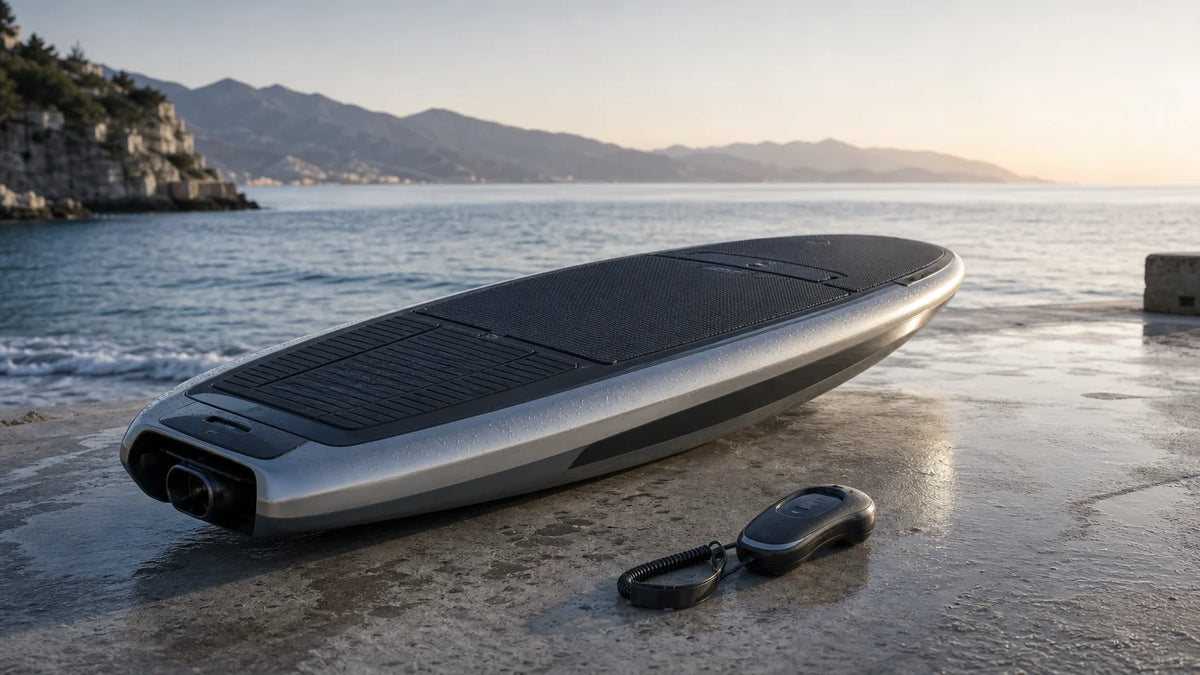
We curate extraordinary mobility objects and connect collectors and enthusiasts with future-oriented machines through our marketplace and sales team. Explore the ESURF electric surfboard to begin your evaluation, then contact us for further information about the machine and the acquisition process.
Frequently Asked Questions
What is a realistic budget for an electric surfboard?
A complete electric surfboard generally requires a budget of several thousand dollars, while premium systems can reach five figures. The exact amount depends on the battery, motor, construction, included equipment, and delivery destination.
Does the price usually include the battery and charger?
Many complete packages include one battery and a charger, but this is not universal. Always confirm the exact configuration because a lower price may exclude one of these essential components.
Is an electric surfboard the same as an eFoil?
No. An electric surfboard usually rides on the water’s surface, while an eFoil uses a hydrofoil to lift the board above the water. They require different techniques and may have different battery, transport, and maintenance needs.
What additional costs should you expect?
Possible additions include shipping, taxes, customs, safety equipment, board bags, spare batteries, replacement parts, and maintenance. International buyers should request a delivered quotation rather than relying on the advertised product price.
Can TheArsenale help with an electric surfboard purchase?
Yes. Our curated mobility marketplace and sales team support discovery and high-value acquisition conversations. We can help you evaluate a future-oriented machine according to your interests, intended use, and collection priorities.