Professional Racing Simulator Price: 2026 Buyer Guide
Professional racing simulator price is rarely one fixed number. A credible 2026 budget can range from a carefully selected fixed cockpit to a fully configured training platform with motion, custom finishes, and professional installation. If you are comparing premium options, our racing simulator pricing provides a useful starting point for understanding the main cost drivers.
The market itself is growing, but published estimates vary because some reports include gaming hardware while others focus on professional systems, software, or commercial installations. Fortune Business Insights valued the global racing simulator market at $1.19 billion in 2025 and projected $1.30 billion for 2026, which reflects a broad industry definition rather than the price of one complete simulator.
What should a professional racing simulator cost in 2026?
A practical 2026 planning budget begins with the level of realism you require. A fixed professional-style cockpit can cost approximately $3,000 to $8,000 when it includes a rigid frame, direct-drive wheel, performance pedals, display, and suitable computing. Motion, custom bodywork, hydraulic controls, multiple displays, and installation can move the total beyond $15,000.
These figures are planning bands, not universal retail tariffs. Configuration, shipping, taxes, software, room preparation, and after-sales support can change the final amount. The most useful question is not whether a simulator costs $5,000 or $15,000, but which components create measurable value for your driving goals.
| 2026 planning level | Indicative budget | Typical configuration | Best suited to |
|---|---|---|---|
| Advanced enthusiast | $1,500 to $3,000 | Fixed cockpit, integrated wheel and pedals, single display, capable computer | Private use and regular sim racing |
| Professional fixed cockpit | $3,000 to $8,000 | Rigid chassis, direct-drive wheel, load-cell or hydraulic pedals, high-refresh display, dedicated computer | Serious training and high-frequency driving |
| Motion or bespoke system | $8,000 to $20,000 or more | Motion platform, tactile feedback, multiple displays or virtual reality, custom finishes, installation | Driver development, hospitality, and premium home environments |
| TheArsenale curated configuration | Quote-based | Specification-led sourcing, design-led presentation, and tailored acquisition support | Collectors seeking a curated, high-end mobility object |
What makes a racing simulator genuinely professional?
A professional simulator is defined by the relationship between its components, not by the number of screens or the visual appearance of the chassis. The frame must remain rigid under braking and steering loads. The seating position must reproduce the intended vehicle type. The pedals, wheelbase, display, and software must work as one calibrated system.
Direct-drive force feedback is usually one of the largest cost factors. It transfers steering information through a motor connected directly to the wheel shaft. This can provide more detailed feedback than lower-cost gear or belt systems, but it also demands a rigid mounting structure and careful configuration.
Brake pedal technology is equally important for training. Load-cell pedals measure applied pressure rather than only pedal travel. Hydraulic systems can offer a more realistic braking response, although they require a larger investment and may need more detailed installation and maintenance.
The driving position also changes the price. A formula cockpit supports a low, reclined posture with raised legs, while a GT configuration provides a more upright position and broader adjustment range. If you are looking for a collector-grade object rather than a generic gaming setup, our luxury racing simulators for sale can help frame the decision around design, rarity, and presentation as well as hardware.
Professional use also requires reliability. A system used for driver preparation, commercial sessions, or hospitality must be repeatable between users. Stable software, accessible controls, secure cable management, and support access may therefore matter more than an additional visual effect.
Why do professional simulator quotes vary so widely?
Two systems can both be described as professional while serving completely different purposes. One may be a fixed cockpit for a private driver. Another may include motion, telemetry integration, custom vehicle geometry, commercial-grade displays, white-glove delivery, and on-site calibration.
Published market estimates illustrate this difference. A January 2026 2026 market report estimated the racing simulator market at $1.01 billion for 2026, while the Fortune Business Insights estimate cited earlier was higher. The difference does not necessarily indicate an error. It can result from different definitions of racing simulator, regional coverage, product categories, and inclusion of software or commercial services.
The same issue affects individual prices. Some listings cover only a cockpit frame. Others include the steering wheel, pedals, displays, computer, software, seat, delivery, and installation. A low initial price can therefore become less attractive once missing components are added.
Before comparing quotes, ask suppliers to identify whether the price includes:
- Chassis and seat
- Wheelbase and steering wheel
- Pedals and pedal mounting
- Display, monitor stand, or virtual reality equipment
- Computer and simulation software
- Motion, tactile, or belt feedback
- Assembly, calibration, delivery, and installation
- Taxes, duties, warranties, and ongoing support
Where should you allocate the budget?
The correct allocation depends on what you want to improve. A driver preparing for a formula car should prioritise seating position, pedal geometry, steering response, and braking consistency. A GT or endurance driver may value adjustability, longer-session comfort, visibility, and the ability to support different vehicle profiles.

The cockpit structure should come first. Flex in the frame can reduce braking consistency and introduce unwanted movement into the wheelbase. Aluminium profile systems and reinforced steel structures are common choices because they support powerful hardware and allow future upgrades.
The wheel and pedals usually deserve the next allocation. A modest display paired with strong, consistent controls can produce a more useful training environment than an elaborate visual system attached to weak input hardware. This is particularly relevant when the goal is muscle memory, repeatable braking, or race preparation.
The display system should match the available space. A single curved monitor can provide a clean footprint. Triple displays offer broader peripheral vision but require more room and careful alignment. Virtual reality can increase immersion, but it introduces headset comfort, software compatibility, and user access considerations.
Motion technology is not automatically essential. A well-calibrated fixed cockpit can communicate steering, braking, kerbs, and surface changes through force feedback and tactile systems. Motion becomes more valuable when you need physical cues for driver training, demonstrations, or an immersive hospitality environment.
For a clearer component checklist, our racing simulator buying guide can help you define the brief before requesting a quotation. This reduces the risk of paying for features that do not support your intended driving position or use case.
What additional costs should you include?
The advertised hardware price is only part of the ownership calculation. International buyers should consider freight, import duties, local taxes, electrical requirements, delivery access, assembly, calibration, and future servicing. Large cockpits may require a dedicated room, reinforced flooring, ventilation, or a clear route through doors and staircases.
Computing can also affect the total. High-resolution displays and advanced simulation software require suitable graphics performance. If you choose several screens, virtual reality, or demanding visual settings, the computer may need to be upgraded before the rest of the simulator reaches its potential.
Software licensing is another variable. Some platforms use subscriptions, while others charge separately for cars, tracks, or content. A professional environment may also require configuration work, custom vehicle models, telemetry tools, or user management features.
Maintenance should be considered before purchase. Direct-drive systems, hydraulic pedals, motion actuators, and tactile equipment contain more components than a basic fixed cockpit. Ask how replacement parts are handled, who performs calibration, and whether remote support is available in your region.
Is a premium simulator worth the investment?
A premium simulator can be worthwhile when it serves a clear purpose. Professional drivers may use it to rehearse circuits and refine inputs. Teams may use it for preparation and communication. Collectors may value it as a design object that brings motorsport engineering into a private environment.
The investment is less compelling when the system is selected only for appearance. A dramatic shell cannot compensate for an unstable frame, poor pedal geometry, insufficient computing, or inadequate room planning. Premium pricing should be connected to measurable improvements in consistency, realism, durability, customisation, or ownership experience.
Industry research also separates cockpit hardware from complete simulator systems. A 2026 cockpit price study placed the average global sim racing cockpit price at approximately $580 in 2025. That figure describes the cockpit category, not a complete professional simulator with controls, displays, computing, software, and installation.
For buyers who want the system to function as part of a larger luxury mobility environment, the design language matters as much as the specification. Our Curv racing simulators offer a route for considering the simulator as a curated object, not merely a collection of separate components.
The strongest buying decision begins with a written brief. Define the vehicle position, intended users, available room, display preference, motion requirement, expected usage, and service expectations. Then compare complete delivered configurations rather than isolated component prices.
Making sense of professional racing simulator price
A professional racing simulator price should be evaluated against the experience and purpose you require. In 2026, a serious fixed system may begin around $3,000, while motion, bespoke design, specialist controls, installation, and international delivery can raise the investment substantially. Compare rigidity, feedback quality, driving position, support, and upgradeability before focusing on the headline figure. The right system is the one that delivers repeatable performance and a credible ownership experience for your space and ambitions.
Take action with TheArsenale
If you are moving from general price research to a specific acquisition brief, the next step is to define the driving position, level of immersion, room requirements, and desired visual character. A focused specification makes it easier to compare complete systems and identify where premium equipment will genuinely improve the experience.

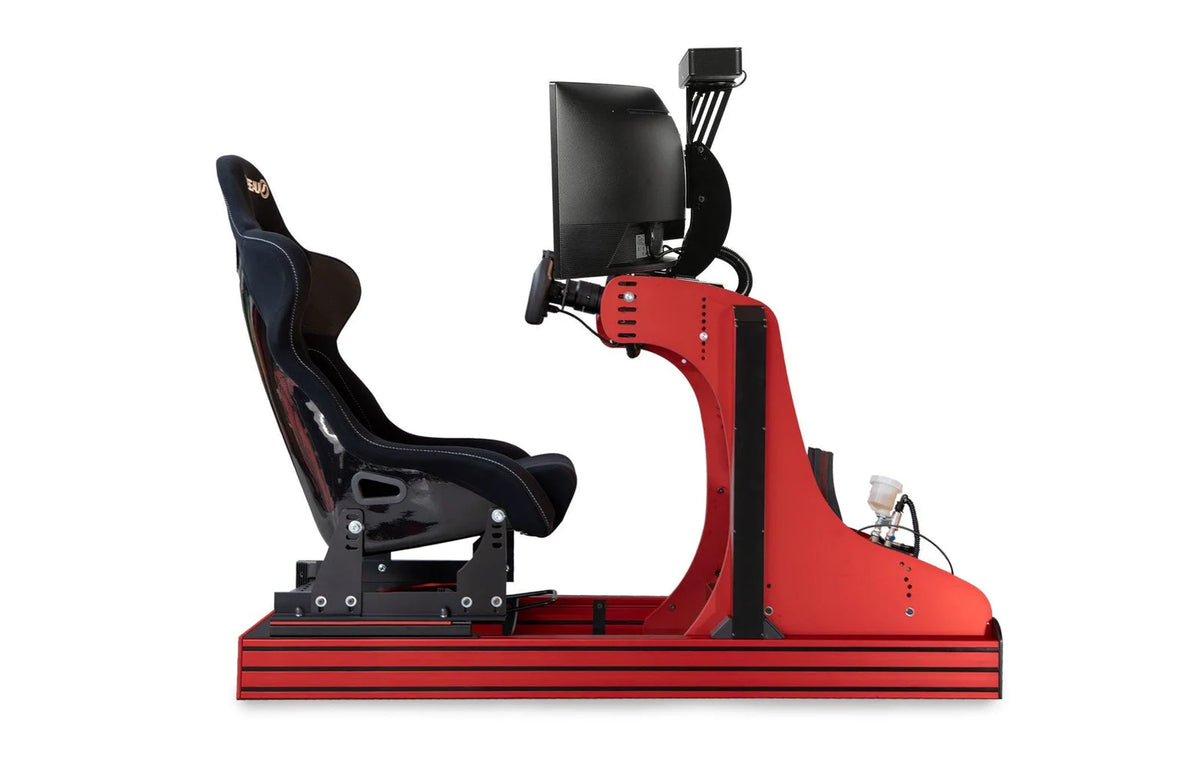
For a direct review of a Formula-focused configuration, explore our professional Formula Pro racing simulator. You can use the product page as a starting point for discussing the format, intended environment, and requirements of your project with TheArsenale team.
Frequently Asked Questions
What is the typical price of a professional racing simulator?
A serious fixed simulator may require approximately $3,000 to $8,000 in 2026. Motion systems, bespoke bodywork, specialist controls, installation, and international delivery can push the total beyond $15,000.
What is included in a professional simulator package?
A complete package may include the cockpit, seat, steering system, pedals, display, computer, software, and installation. Always confirm whether delivery, calibration, taxes, and support are included in the quoted amount.
Is motion necessary for professional driver training?
Motion is not essential for every training objective. A rigid cockpit with accurate force feedback, consistent pedals, and suitable software can support valuable practice, while motion adds physical cues for specific training and presentation needs.
Should I choose a formula or GT simulator?
Choose a formula position if your focus is open-wheel driving and a low, reclined seating posture. Choose a GT position if you need greater versatility across GT, touring, endurance, rally, or road-car simulations.
Can TheArsenale help with a high-end simulator purchase?
Yes, TheArsenale is positioned around curated mobility objects, sourcing, and high-value acquisition support. You can use the team to clarify the desired configuration and explore a professional Formula Pro racing simulator suited to your brief.