How to Buy Motorcycle Luggage: A Complete Buyer's Guide
A full set of hard factory luggage can cost thousands, yet a simple rucksack starts near twenty pounds. That single price gap explains why so many riders hesitate at the counter. The truth is that the right choice depends far less on budget than on how, where, and how far you ride. Learning how to select the right motorcycle luggage means weighing capacity, security, weight, and fit before any purchase.
Knowing exactly how to buy motorcycle luggage protects both your wallet and your bike. According to Motorcycle News, no single system is universally better, since each type carries genuine trade-offs. Before you compare brands, define your priorities. If you are still building a touring setup, our motorcycle accessories for touring can complement whatever carrying system you choose.
Match the Luggage Type to Your Riding Style
Start with a question: what does a typical ride look like for you? A daily commuter, a weekend tourer, and a round-the-world adventurer each need different gear. Our bags and luggage selection spans several formats, so the decision comes down to purpose rather than availability.
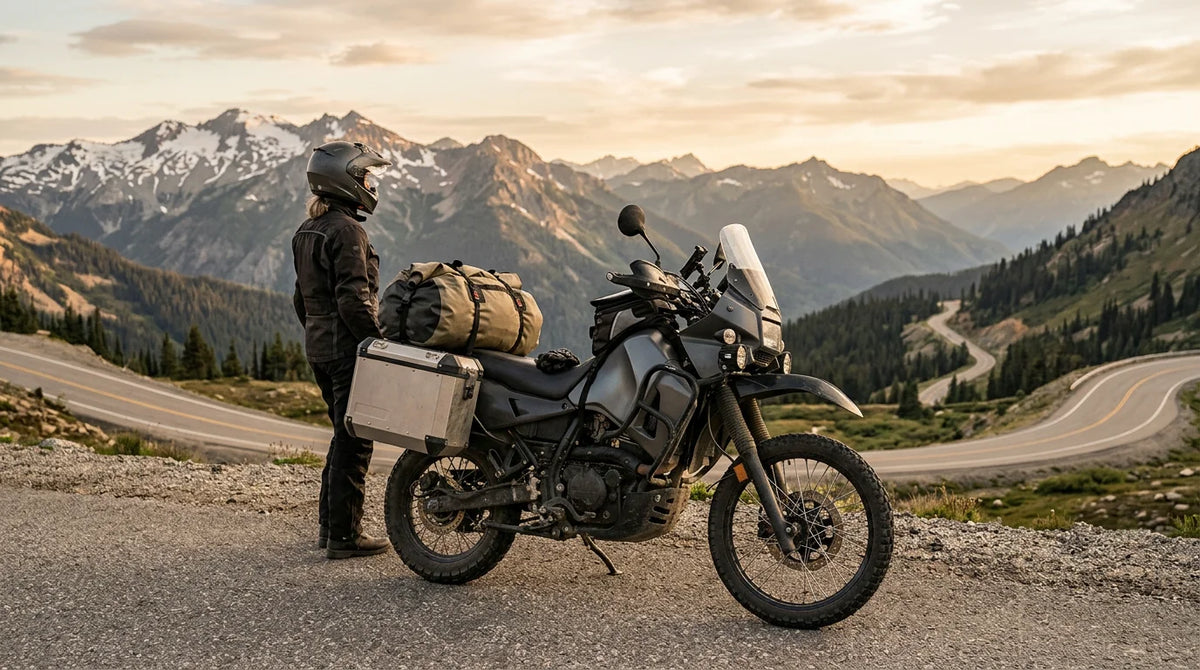
For touring or carrying larger loads, panniers, tail packs, and top boxes handle volume well. MCN's testers note that rucksacks can cause fatigue over long distances, which makes them better suited to short urban hops. Adventure riders often favor a balance of capacity and durability, while commuters lean toward flexible, waterproof soft bags that protect documents and laptops.

Hard Cases Versus Soft Bags: The Core Trade-Off
This is the debate every buyer faces. Hard luggage offers strong security, holds its shape, and resists theft thanks to integrated locks. The cost is weight and price. According to ADVPulse, a reasonable rule of thumb is ten to fourteen pounds per side, plus another eight to ten pounds for the rack, before you pack a single item.
Soft bags reverse the equation. They stay lighter and easier to repair, and their pliable design reduces the risk of leg injury in a fall. The drawbacks are reduced security and vulnerability to theft. Rigid aluminium panniers, by contrast, can even damage a bike's subframe in a heavy crash, a concern worth weighing if you ride off-road often.
Check Fit, Racks, and Mounting Before You Buy
Imagine ordering a beautiful pair of panniers only to discover your frame cannot hold them. Compatibility is the step most first-time buyers overlook. Many machines require an aftermarket rack before any side case will mount, and bikes without sub-frame support may need a dedicated kit or a tail bag instead.
Mounting systems vary widely. Options include throw-over straps, hard-mount bolts, and quick-disconnect posts that let you remove bags in seconds. Confirm the rack weight limit before loading, because exceeding it can bend brackets, destabilize the bike, and create a genuine safety hazard. If you are still choosing a machine to build around, you can browse motorcycles to plan the pairing early.
Weight, Capacity, and Packing Realities
Weight matters most on long trips, especially when you ride solo. Every added kilogram changes handling and makes a dropped bike harder to lift. Real numbers help here. A 2023 field guide from Mad or Nomad underscores that hard luggage significantly increases a bike's mass and affects how it rides.
Capacity should follow your route, not your ambition. Packing light remains the golden rule, since less space naturally discourages unnecessary items. Standard panniers are generally rated for fifteen to thirty-five pounds per side. Keep the heaviest items low and close to the bike's center, and never let overpacked soft luggage touch a hot exhaust, which can melt the fabric.

Comparing Systems at a Glance
A side-by-side view clarifies the priorities. The table below summarizes typical characteristics drawn from tested buying guides, alongside our own curated approach for riders who want a considered selection rather than endless options.
| Option | Weight (empty) | Security | Best for |
| Hard panniers | 10-14 lb per side + rack | High, lockable | Long-distance touring |
| Soft panniers | 2.5-6.6 lb per pannier | Lower | Off-road, weight-saving |
| Rucksack | Very light | Carried with you | Short urban rides |
| Our curated bags and luggage | Varies by format | Selected for quality | Riders wanting a refined, matched setup |
Prices for adventure panniers can range widely by pair, so define your budget ceiling before comparing. Matching a set of panniers to a suitable rack, rather than mixing hard and soft units, keeps handling predictable.
Waterproofing, Security, and Everyday Details
What ruins a trip faster than a soaked sleeping bag? Waterproofing deserves attention regardless of bag type. Many hard cases seal against dust and rain, yet dry bags and inner liners often outperform rigid cases during long downpours. For daily use, prioritize waterproof materials that protect electronics and documents.
Security is the other everyday concern. Lockable hard cases resist opportunistic theft, while soft bags travel best when you can detach and carry them. Consider reflectors, quick-release mechanisms, and a lifetime warranty where offered. Small details, repeated over thousands of miles, define whether luggage feels like an asset or a liability.
Bringing It All Together
Understanding how to choose motorcycle luggage comes down to sequence: define your riding style, confirm fit and rack limits, then balance weight, capacity, security, and waterproofing against your budget. Hard cases reward tourers who value protection, while soft bags suit riders who prize agility and lower weight. There is no universal winner, only the setup that fits your machine and your miles. Decide your priorities first, and every subsequent choice becomes far simpler and considerably less expensive to get right.
Take action with TheArsenale
Once you have clarified your priorities, the search shifts from confusion to curation. We understand that discerning riders want a considered selection rather than an overwhelming catalogue, and that quality should be evident before a bag ever reaches your rack.

As a luxury mobility marketplace, we curate premium products with free shipping and a support team that typically replies in under thirty minutes. Explore our motorcycle luggage selection to pair the right carrying system with your next journey, and reach our team at any hour with questions.
Frequently Asked Questions
Are hard or soft panniers better for beginners?
Neither is universally better, as each carries trade-offs. Beginners on paved tours often start with soft panniers because they are lighter, cheaper, and more forgiving in a fall. Riders prioritizing security and weather resistance may prefer hard cases.
How much weight can motorcycle panniers hold?
Most standard panniers are rated for roughly fifteen to thirty-five pounds per side. Always follow the manufacturer's limit, since exceeding it can bend brackets and destabilize the bike. Check your rear rack's rating separately before loading.
Do I need a rack to fit motorcycle luggage?
Many hard and clip-on soft systems require a compatible rack or mounting plate. Some bikes without sub-frame support need a dedicated kit or a tail bag instead. Confirm compatibility with your specific model before purchasing.
What luggage suits daily commuting?
Commuters usually favor soft bags and backpacks for their flexibility and quick access. Waterproof materials are a priority to keep documents and laptops safe. Our bags and luggage selection includes formats that suit everyday urban use.
How do I stop luggage from affecting handling?
Keep the heaviest items low and close to the bike's center, and respect rack weight limits. Avoid mixing hard and soft panniers, as unbalanced weight can create unstable handling. Stick to a matched set paired with a suitable rack.