How to Choose Automotive Decor for a Refined Interior
The global home decor market is worth USD 716.53 billion in 2026, and enthusiasts are increasingly directing that spend toward pieces with genuine character. Automotive design has become one of the most expressive corners of interior styling, where a crankshaft, a wheel, or a racing photograph can anchor an entire room. Understanding how to choose automotive decor is less about filling a wall and more about selecting objects with enough presence to earn a second look.
According to Mordor Intelligence, demand is being reshaped by personalized aesthetics and self-expression rather than generic furnishing. That shift favors automotive-inspired pieces that reference a specific era, marque, or discipline. This guide walks you through the practical decisions that separate a curated space from a cluttered one, whether you are dressing a garage, an office, or a living room.
Start With the Story and the Machine
The strongest automotive decor is specific. A generic image of a sports car fills empty space, but it rarely holds attention. Art tied to a particular era, marque, racing discipline, or local scene tells visitors exactly where your loyalties sit. Before you browse, decide what the room should say about you.
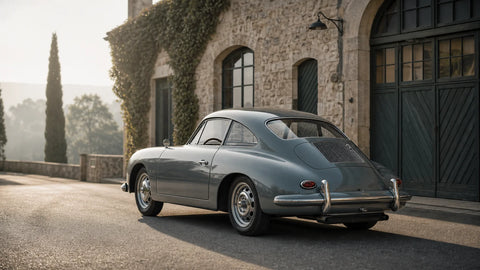
If a single vehicle defines the space, let it lead. A vintage roadster, a classic pickup, or a modern hypercar can set the visual direction for everything around it. Look for objects that share its era, color energy, or mechanical character rather than competing with it. A clean, modern performance car pairs naturally with sharp typography and blueprint-style graphics, while a classic build often calls for distressed signage and period racing visuals.
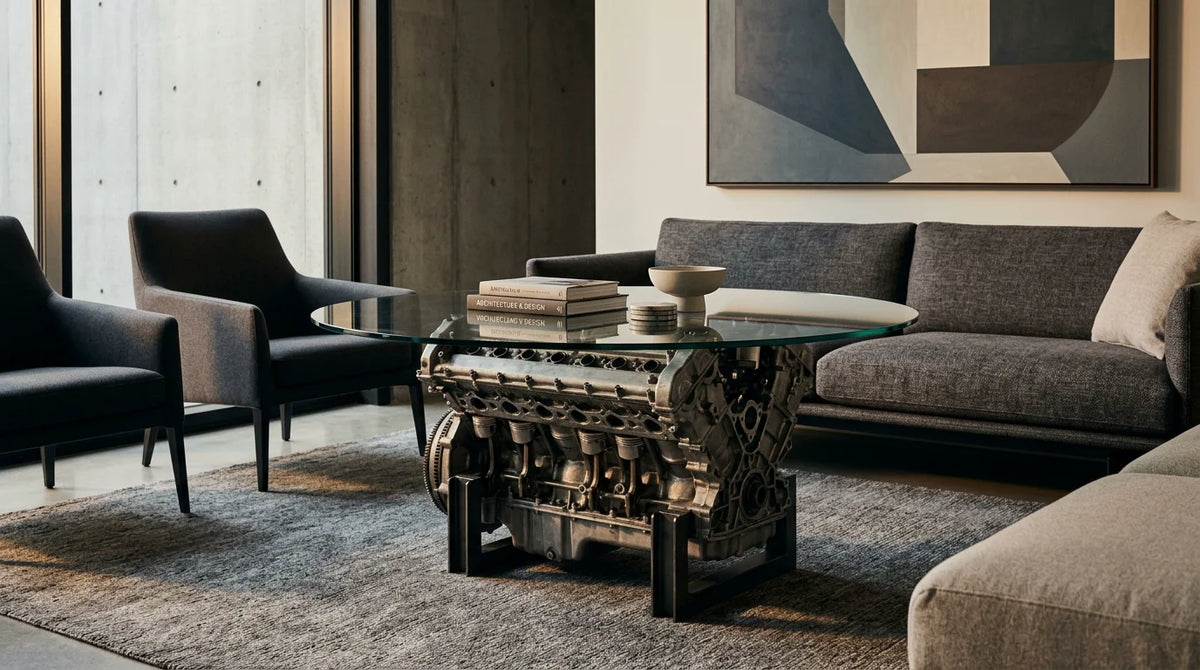
This principle extends to collectible objects as well. An authentic engine transformed into functional furniture carries a narrative that mass-produced ornaments cannot replicate. If you are drawn to that world, our range of luxury car-themed furniture shows how genuine components become conversation pieces without losing their engineering soul.

Get the Scale Right Before the Design
Size is where many walls lose the plot. A small piece above a wide workbench looks like an afterthought, while one oversized sign can crowd a compact office or apartment. Measure the open area, not just the wall, and account for cabinets, shelves, doors, windows, and any vehicle parked below.
Consider viewing distance too. A large garage needs visual weight because people see the walls from across the bay, while a smaller den can carry more detailed work viewed at close range. As a practical rule, art over a bench, sofa, or console should span roughly two-thirds to three-quarters of that furniture's width. On a broad empty wall, one statement piece can work beautifully, though a grouped display often feels more collected.
If you build a gallery wall, keep one element clearly dominant and vary the sizes while holding the theme consistent. That balance ensures the arrangement reads as a deliberate collection rather than a pile of souvenirs.
Choose Materials Built for the Space
Automotive decor has to live where you actually spend time, and material affects both look and longevity. Metal wall art brings shop-ready presence and suits industrial or modern spaces, especially near steel cabinets and polished concrete. Canvas and framed prints deliver more detail and warmth, making them a strong choice for a climate-controlled office or finished lounge, though they belong away from damp or high-contact areas.
Neon-style and illuminated pieces change the mood after dark and work best as a single focal point rather than a room full of glowing signs. Wood introduces a vintage, lodge-like feel that pairs with classic trucks and Americana, while acrylic or metal often looks more intentional in a high-gloss, LED-lit environment. The furniture category itself is central here: Future Market Insights projects furniture will lead the home decor market with a 42% product share in 2026, underlining why substantial, well-made pieces anchor a space more effectively than accessories alone.
Quality of construction matters as much as material choice. Premium interiors have grown increasingly sophisticated in their sourcing, a trend reflected in the wider automotive materials sector, which Fortune Business Insights valued on a path toward USD 66.38 billion by 2026. If you are weighing craftsmanship and finish, our design furniture buying guide lays out what to inspect before you commit.
Match the Era, Not Every Color
You do not need to match the paint on your car exactly. Trying too hard to coordinate every shade can make a room feel staged. What matters more is the visual era and shared attitude, whether that is heritage racing, desert off-road, European speed, or classic Americana. A black-and-white racing photograph can sit perfectly beside a modern red coupe.
Color still counts when you select a large statement piece. If the wall is already busy with cabinets, tools, and banners, choose artwork with a limited palette and a clear silhouette. If the room is mostly neutral, a bold red, yellow, or electric blue design can supply the punch. For collectors, avoid repeating the same logo in the same finish across every wall, since a hero piece supported by contextual art always reads as more personal than branded storage.

Let Lighting and Placement Do the Work
Even remarkable automotive art disappears under poor lighting. Before mounting anything, check the wall at the time you use the space most. A sign may look perfect in daylight yet sit in shadow once a garage door closes. Glossy prints can throw glare under direct overhead LEDs, while metal art often benefits from side lighting that catches its edges and texture.
Placement protects the piece and signals intent. Over a workbench, keep clearance so tools and shelves do not cut into the design. In a garage with a vehicle parked close, mount art high enough to stay visible above the roofline. In an office, center it around eye level whether standing or seated. Avoid hanging prized objects where they face moisture, vibration, or constant contact with equipment.
Comparing Automotive Decor Formats
Different formats serve different rooms and budgets. The table below summarizes how common options behave in real environments, with authentic engine art included as the most durable and characterful anchor for a serious collection.
| Format | Best environment | Durability | Statement level |
| Metal wall art | Industrial garage, modern space | High | Medium to high |
| Canvas and framed prints | Office, climate-controlled lounge | Medium | Medium |
| Neon and illuminated signs | Bar, lounge, focal wall | Medium | High |
| Authentic engine furniture (our collection) | Living room, office, showroom | Very high | Very high |
When a single object needs to define a room, functional engine art delivers the most presence and the strongest narrative. Our Ferrari engine coffee table illustrates how a genuine powerplant becomes both a usable surface and the visual heart of a space.
Buy for the Story You Will Keep Telling
Trend-driven decor has its place for a quick refresh, but the pieces that endure connect to a memory, a machine, or a milestone. Maybe an object marks the car you are restoring, the model you plan to own, or the first garage where your passion began. That emotional anchor is also why enthusiast decor makes such a considered gift.
When you are deciding between two designs, choose the one that would still make you look up years from now. The market rewards this instinct: personalization and authenticity are driving demand across the sector, and objects chosen for meaning consistently outlast those chosen for novelty. The right piece should not simply fill a wall; it should make the space feel unmistakably yours.
Bringing It All Together
Knowing how to select automotive decor comes down to a clear sequence: define the story, size the piece to the space, match the material to the environment, respect the era over exact color, and let lighting finish the job. Each decision compounds, turning a collection of objects into a coherent statement. Prioritize authenticity and craftsmanship, and favor pieces with enough presence to hold their own. Do that consistently, and your interior will read as intentional, personal, and built to be admired for years rather than seasons.
Take action with TheArsenale
If you are ready to move from inspiration to acquisition, the right centerpiece transforms how a room feels. The principles above point toward objects with genuine engineering heritage, the kind that anchor a space and start conversations rather than blend into the background.

We curate automotive-inspired home decor built from authentic components and finished for demanding interiors, with free shipping across our collection. As a luxury mobility marketplace, we connect collectors in Monaco, Dubai, Doha, and online to pieces that carry the same craftsmanship as the machines that inspire them. Explore the collection and find the object that makes your space unmistakably yours.
Frequently Asked Questions
What is the first step in choosing automotive decor?
Begin with the story you want the room to tell, then identify the machine, era, or discipline that defines it. This decision guides every later choice around scale, material, and color. A specific reference will always resonate more than a generic image.
How large should an automotive art piece be?
Art placed over a bench, sofa, or console should span roughly two-thirds to three-quarters of that furniture's width. On a broad empty wall, a single statement piece can work well, while grouped displays feel more collected. Always measure the open area and account for viewing distance.
Which material works best in a garage environment?
Metal wall art offers the most durability and shop-ready presence for garages exposed to dust and temperature swings. Canvas and framed prints suit climate-controlled offices or lounges where detail matters. For a lasting centerpiece, authentic engine furniture withstands demanding spaces while delivering strong visual impact.
Do I need to match my decor to my car's exact color?
No, matching every shade often makes a space feel staged rather than curated. Focus instead on a shared era and attitude, such as heritage racing or classic Americana. A limited palette with a clear silhouette usually reads as more intentional.
Where can I find authentic engine-based decor?
We specialize in collectible pieces crafted from genuine engines and automotive components, including functional coffee tables and sculptural furniture. Our home interior collection is curated for enthusiasts who want engineering heritage in their living spaces. Each item is finished to suit refined, high-end interiors.