190E 2.3-16: History, Specs, Value, and Buying Guide
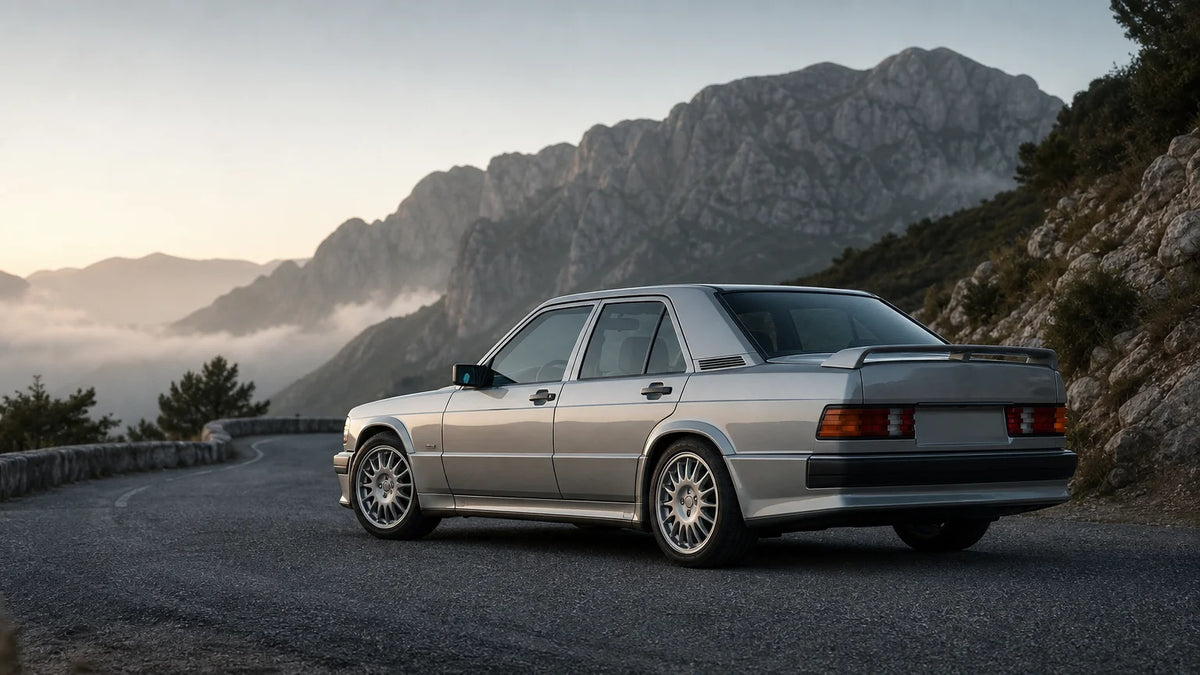
What happens when Mercedes-Benz gives a compact executive sedan a racing purpose? You get the 190E 2.3-16, a four-door performance car with a discreet shape and a remarkably focused mechanical character. If you are assessing a potential purchase, our 190E Cosworth for sale guide provides a useful starting point for understanding the model and its collector appeal.
Originally developed with Cosworth engineering support, the car combined a 16-valve cylinder head with a revised suspension, aerodynamic bodywork, and a five-speed manual transmission. Its historical importance is closely tied to the rise of German touring car racing, while its road manners reflect Mercedes-Benz priorities of the period. Hemmings history also highlights why the model remains relevant among enthusiasts seeking a usable classic rather than a static museum piece.
Why is the 190E 2.3-16 historically important?
The answer begins with motorsport. Mercedes-Benz initially considered a rally programme for the W201, but the arrival of all-wheel-drive turbocharged competition cars changed that opportunity. The company redirected its efforts toward touring car racing, where production-based vehicles could support a serious competition programme.
That shift created a road-going performance model with a clear purpose. Cosworth developed the cylinder head for the 2.3-liter engine, adding dual overhead camshafts and four valves per cylinder. The result was not simply a more powerful version of the ordinary 190E. It was a carefully revised package with distinctive suspension tuning, quicker steering, wider bodywork, improved aerodynamics, and a larger fuel tank.
The car also helped establish the modern European performance sedan formula. It offered four doors, rear-wheel drive, a manual gearbox, and a naturally aspirated engine that rewarded revs rather than low-speed torque. This formula later became central to the rivalry between Mercedes-Benz, BMW, and other German manufacturers.
Its competition connection is important, but it should not be overstated. A standard road car is not a DTM racer, and its performance is modest by 2026 standards. Its significance comes from the engineering philosophy, the period technology, and the way the model connects a practical sedan to an emerging generation of homologation-inspired road cars.
What makes the engineering distinctive?

The mechanical identity of the car is defined by its Cosworth cylinder head. The 16-valve layout allowed the engine to breathe more effectively at higher revolutions, giving the car a sharper character than ordinary four-cylinder W201 models. European versions are generally associated with higher output, while North American cars received different emissions equipment and calibration.
The engine is only one part of the experience. The dogleg five-speed gearbox places first gear below reverse, a layout influenced by competition driving. It can feel unfamiliar in everyday traffic, but the arrangement places second and third gears in a useful position for fast road work. The shift action is deliberate rather than hurried, which suits the car's measured personality.
Underneath, the W201 chassis uses a sophisticated rear suspension design that gives the car stability and predictable cornering behavior. The 190E 2.3-16 is not especially light by modern compact-car standards, but its compact dimensions and balanced rear-wheel-drive layout make it engaging on winding roads.
One of the most appealing qualities is the contrast between restraint and capability. The bodywork is recognizably Mercedes-Benz, yet the spoilers, side skirts, flared arches, and smaller steering wheel signal that this is not an ordinary executive sedan. Inside, supportive sport seats and a focused driving position reinforce the model's purpose without abandoning the solid, formal character associated with the W201.
What is a 190E 2.3-16 worth in 2026?
There is no single market value because condition, specification, originality, and documentation create large differences between individual cars. In 2026, 2026 auction data from DriveIndex records 76 verified sales, with prices ranging from $10,000 to $62,500 and a reported median of $23,625.
Those figures should be treated as market evidence rather than a guaranteed valuation. A high-mileage project with corrosion and deferred maintenance can be inexpensive to acquire but expensive to make reliable. A documented, unmodified car with strong bodywork, correct equipment, and consistent service history can command a substantial premium.
In practical terms, the market can be divided into three broad groups. Project cars attract buyers who have restoration facilities, parts knowledge, and time. Usable drivers offer a compromise between enjoyment and preservation. Collector-grade examples appeal to buyers who prioritize originality, low mileage, complete records, and factory-correct details.
The model's value is also affected by specification. European cars may attract interest because of their engine calibration and equipment, but import history must be carefully documented. U.S. cars can be easier to register and maintain locally, although their condition and originality remain more important than market mythology.
Which problems should you inspect before buying?
Begin with the body. Rust inspection should cover the wheel arches, rocker panels, jacking points, floor sections, trunk, suspension mounting areas, and the spaces behind exterior trim. Added body extensions can trap moisture and dirt, making corrosion difficult to see during a quick viewing.
Next, review the engine and timing system. Ask whether the timing chain, tensioner, guides, and camshaft components have been inspected or renewed. A neglected high-revving engine can create repair costs that quickly exceed the difference between an average car and a properly maintained one.
Do not overlook the transmission. The dogleg gearbox should engage each gear cleanly, especially when warm. Synchro wear, clutch problems, noisy bearings, and difficult reverse selection deserve attention because a test drive can reveal issues that photographs cannot.
The suspension and steering also require a systematic review. Check for worn bushings, tired dampers, leaks, uneven tire wear, and vague steering response. The car should feel composed rather than loose, although it should not be judged by the isolation or refinement of a modern sports sedan.
Documentation is equally important. Service invoices, import records, factory equipment lists, previous inspection reports, and photographs can help establish whether the car has been preserved or repeatedly rebuilt. A recent 2026 project sale demonstrates how a running example can still trade at a relatively accessible price when substantial work remains.
How does the 2.3-16 compare with later Cosworth models?
The 2.3-16 is the original expression of the formula. Its 2.3-liter engine, early styling, and direct connection to the first generation of the programme give it a distinct identity. It tends to appeal to buyers who prefer a more analog experience and a less developed interpretation of the W201 performance concept.
The later 2.5-16 introduced a larger engine and several mechanical revisions. It generally offers stronger performance and can be more desirable to drivers who want additional flexibility on the road. However, condition remains more important than displacement, and a neglected 2.5-16 is not automatically a better purchase than a healthy 2.3-16.
The Evolution models occupy a separate collector category. Their widened bodywork, competition-focused development, and limited production make them substantially more expensive. A current RM Sotheby's listing illustrates how the Evolution II is treated as a specialized collectible rather than simply a faster version of the original road car.
For many buyers, the 2.3-16 offers the most balanced entry point. It delivers the essential Cosworth character without requiring the budget associated with the most famous Evolution examples. That does not make it inexpensive, but it can make the ownership proposition easier to understand.
Is the 190E 2.3-16 suitable for modern ownership?
The answer depends on your expectations. If you want immediate acceleration, quiet cruising, modern safety systems, and effortless parts availability, a newer performance car will be more convenient. If you value mechanical involvement, compact dimensions, analog feedback, and a strong historical identity, the 190E 2.3-16 can be unusually rewarding.
It is best approached as a classic car that can be driven regularly, not as a maintenance-free commuter. Preventive servicing matters, and specialist knowledge can reduce the risk of buying an example with hidden structural or mechanical problems. You should also budget for age-related repairs even when the car appears clean.
The strongest candidates combine a healthy body with an unmodified drivetrain and credible records. Cosmetic upgrades are easy to notice, but the most important evidence is found in the engine bay, underneath the car, and inside the maintenance file.
For broader context, you can also explore our classic cars collection to compare the 190E 2.3-16 with other collectible vehicles shaped by distinctive engineering, design, and cultural history.
What should you remember about the 190E 2.3-16?
The 190E 2.3-16 remains compelling because it combines a discreet sedan body with Cosworth-developed engine technology, a competition-inspired gearbox, and carefully engineered chassis behavior. In 2026, the right example is defined less by a headline asking price than by rust-free structure, originality, documented maintenance, and honest provenance. Inspect the car patiently, verify its specification, and choose mechanical health over cosmetic presentation.
Take action with TheArsenale
Finding the right classic performance car requires more than comparing photographs. You need context around rarity, condition, provenance, design, and the experience each machine can provide. That perspective is especially valuable when a model has several market specifications and a wide range of restoration needs.

We curate unusual vehicles and mobility objects for collectors seeking something beyond ordinary transportation. Browse our selection of classic and performance cars to continue your research, then contact our team when you need a more tailored direction for your next acquisition.
Frequently Asked Questions
What does 2.3-16 mean?
The designation refers to a 2.3-liter engine with four valves per cylinder, creating 16 valves in total. It identifies the Cosworth-developed performance version of the Mercedes-Benz 190E.
How powerful is the 190E 2.3-16?
Output varies by market and emissions specification. European examples are generally more powerful than North American versions, so you should confirm the exact engine specification before comparing cars.
Is the 190E 2.3-16 a good collector car in 2026?
It can be a strong collector purchase when the body is sound, the car remains close to factory specification, and maintenance records are credible. Its appeal comes from engineering history and driving character, not simply from age.
What is the biggest buying risk?
The main risks are hidden corrosion, deferred timing-system maintenance, worn suspension components, and undocumented modifications. A specialist inspection before purchase is usually more valuable than relying on a polished exterior.
Should you choose a 2.3-16 or a 2.5-16?
The 2.3-16 suits buyers who want the original Cosworth formula and a more direct historical connection. The 2.5-16 offers additional engine capacity, but condition, originality, and service history should decide the purchase.