1928 Hupmobile: History, Models, Specs, and Legacy
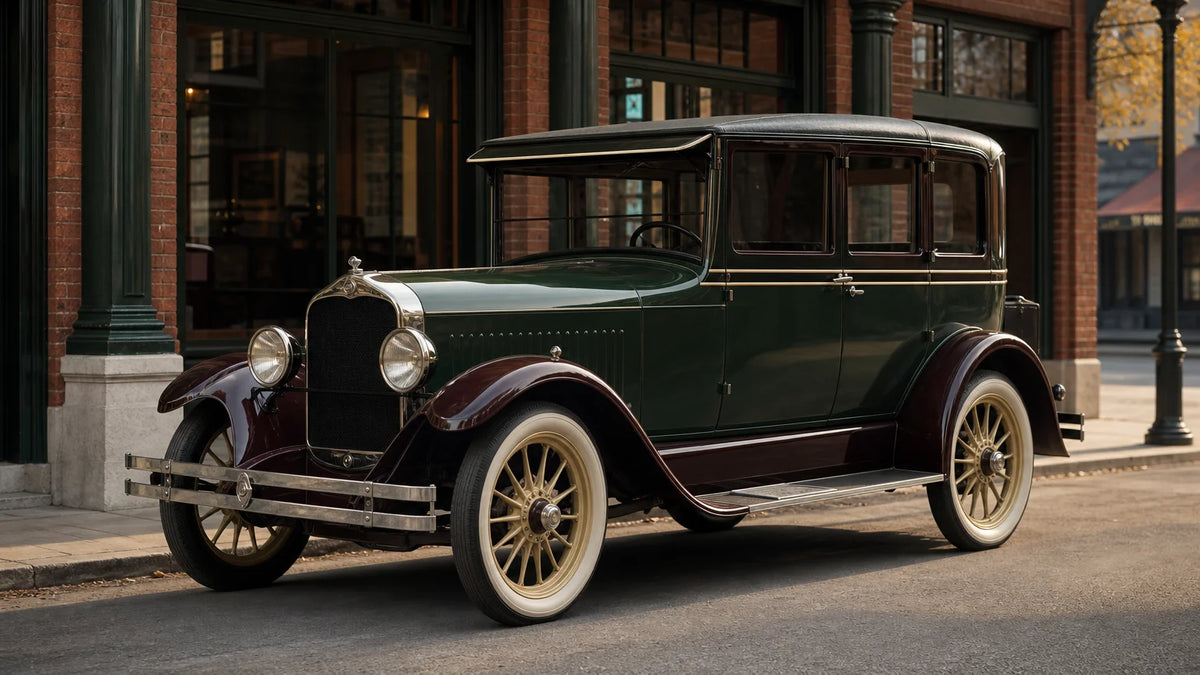
A 1928 Hupmobile captures a decisive moment in American automotive history. It was large enough to express the confidence of the late 1920s, yet distinctive enough to stand apart from more familiar marques. For readers exploring our classic cars, the Hupmobile offers an especially interesting combination of engineering, design, and historical context.
Hupp Motor Car Company was not a minor experiment in 1928. A contemporary newspaper report recorded 65,662 Hupmobiles shipped during that year, alongside substantial company revenue. That figure describes shipments rather than an exact production total, but it confirms the scale the brand had reached before the market changed dramatically in the early 1930s.
What was the 1928 Hupmobile?
The 1928 Hupmobile was an American automobile produced by the Hupp Motor Car Company of Detroit. By this period, Hupp had moved beyond its early four-cylinder identity and was developing a broader range of six-cylinder and eight-cylinder automobiles.
The company’s strategy reflected the changing American market. Buyers increasingly expected more space, smoother performance, enclosed bodies, and greater visual presence. Hupp responded with cars that occupied the medium-priced segment while adopting proportions and equipment associated with more expensive automobiles.
The wider industry was expanding rapidly at the same time. A 1928 government report recorded more than 4.3 million passenger and business cars built in the United States that year. This scale explains both the opportunity and the pressure facing Hupp. The company could sell tens of thousands of cars, yet it still had to compete against manufacturers with larger production systems and broader dealer networks.
Which models defined the 1928 range?
Model names can appear confusing because Hupp used series designations, engine configurations, and body styles across overlapping periods. The Hupmobile Model A is generally associated with the 1926 to 1929 model years, while the Century name appeared during the later 1920s and continued into the early 1930s.
For a 1928 buyer, the principal distinction was not simply the badge. Body style, cylinder count, wheelbase, equipment, and price all affected the character of the car. A sedan suited regular transportation and enclosed comfort, while a coupe or cabriolet placed greater emphasis on style and personal use.
This variety reflected a broader transition in the industry. American manufacturers were moving from a narrow range of practical body styles toward a more segmented market. Hupp attempted to serve several customer profiles without abandoning its established reputation for mechanical practicality.

What are the key 1928 Hupmobile specifications?
A representative six-cylinder configuration illustrates the scale of the 1928 Hupmobile. The available reference record for a 1928 Century 6 Series A sedan lists a 211.5 cubic-inch engine, a 114-inch wheelbase, seating for five passengers, a listed weight of 2,975 pounds, and an original base price of $1,345.
| Reference detail | 1928 Century 6 Series A sedan |
|---|---|
| Engine configuration | Six-cylinder, L-head |
| Displacement | 211.5 cubic inches |
| Wheelbase | 114 inches |
| Seating capacity | Five passengers |
| Listed weight | 2,975 pounds |
| Original base price | $1,345 |
These figures should be treated as a reference configuration rather than a universal specification for every 1928 car. A cabriolet, coupe, sedan, or eight-cylinder model could have different dimensions, equipment, weight, and pricing. The most reliable evaluation therefore begins with the individual car’s identification plate, engine number, body style, and surviving documentation.
The mechanical layout also matters. A period six-cylinder engine delivered a smoother character than the earlier four-cylinder cars, while the substantial wheelbase supported a stable ride and generous passenger space. These qualities help explain why a 1928 Hupmobile can feel more like a formal touring machine than a lightweight vintage runabout.
If you are comparing period American automobiles, our 1928 Pontiac provides another useful reference point. Comparing wheelbase, engine architecture, body proportions, and design language is often more revealing than comparing badges alone.
Why was 1928 an important year for Hupp?
In 1928, Hupp was still benefiting from strong commercial momentum. The company had expanded production, broadened its model range, and positioned the Hupmobile as a credible alternative within the American middle market.
However, scale created its own difficulty. Hupp had to support multiple models while competing with manufacturers that could spread tooling, advertising, and distribution costs across much larger volumes. The company’s later decline was not caused by a single technical failure. It reflected the combined effects of product strategy, financial pressure, market contraction, and limited dealer strength.
The significance of the 1928 car therefore extends beyond its individual specifications. It represents the point at which Hupmobile had achieved meaningful commercial reach but had not yet secured the industrial scale required to withstand a major downturn.
There is also an important distinction between contemporary success and long-term survival. A strong sales year did not guarantee that a manufacturer would remain competitive after consumer expectations, financing conditions, and manufacturing economics changed. The 1928 Hupmobile is valuable partly because it preserves that brief moment of confidence.
What should collectors inspect on a surviving example?
Condition is more important than a superficial resemblance to a catalogue photograph. Begin with the identity of the car, then assess its completeness, structural integrity, mechanical condition, and evidence of restoration.
- Identification: Check the serial number, engine number, body style, and available production records.
- Structure: Inspect the frame, timber components, floor sections, body mounts, and areas affected by long-term moisture.
- Engine: Look for correct casting details, appropriate fittings, compression consistency, oil pressure, and evidence of non-period modifications.
- Bodywork: Assess panel alignment, previous repairs, replacement steel, paint layers, and the quality of any restoration.
- Interior: Check upholstery patterns, instrument placement, window hardware, door panels, and dashboard completeness.
- Documentation: Request invoices, photographs, registration history, restoration notes, and evidence connecting the car to its stated configuration.
Archival research can add substantial value. The Smithsonian’s National Museum of American History lists Hupmobile material among its 1920s automobile advertising records, showing that period documentation remains an important research route. Original literature can help confirm trim, body terminology, equipment, and the way Hupp presented its cars to buyers.
Do not assume that every attractive restoration is mechanically authentic. Some cars have received later braking, electrical, cooling, or ignition upgrades. Such changes may improve usability, but they should be recorded clearly because originality and drivability are separate collecting priorities.

How does a 1928 Hupmobile fit into a modern collection?
A 1928 Hupmobile appeals to collectors who want more than a familiar nameplate. Its interest comes from the combination of period scale, American industrial history, relatively uncommon survival, and the story of a manufacturer that reached a significant commercial peak before disappearing.
It can also serve as a thoughtful addition to a collection focused on design evolution. The car shows how manufacturers balanced upright prewar construction with the increasing demand for enclosed comfort, smoother engines, longer bodies, and more expressive styling.
For international collectors, the main challenge is not only finding a suitable car. It is verifying title, import documentation, parts availability, local registration requirements, and the practical cost of transporting a large prewar automobile. A car that appears inexpensive at first may require substantial specialist work before it becomes usable.
When you are comparing several vehicles, our classic car marketplace can provide a broader view of how different historic and design-led automobiles are presented. The useful comparison points remain provenance, condition, engineering, rarity, and the quality of the ownership experience.
Why the 1928 Hupmobile still matters
The 1928 Hupmobile represents a manufacturer at an important crossroads. Its six-cylinder architecture, substantial dimensions, and period styling reflect the ambitions of late 1920s American motoring, while its later history illustrates how quickly the market could change. If you are considering one today, prioritize documented identity, structural soundness, mechanical authenticity, and realistic ownership requirements over appearance alone. That approach will help you appreciate the car as both a machine and a historical document.
Take action with TheArsenale
Researching a 1928 Hupmobile often leads to a wider appreciation of proportion, craftsmanship, engineering, and the cultural meaning of exceptional automobiles. If you are building a collection or looking for a historically distinctive machine, a carefully curated selection can make that search more focused.

We bring together rare and design-led mobility objects for collectors and enthusiasts seeking informed discovery. Explore our classic cars to compare distinctive automobiles and identify the machines that best reflect your interests.
Frequently Asked Questions
What was the 1928 Hupmobile known for?
It was known for combining substantial American proportions with practical engineering and a broader six-cylinder and eight-cylinder model strategy. The car occupied a competitive middle-market position during a period of rapid automotive expansion.
Did the 1928 Hupmobile have a six-cylinder engine?
Yes, six-cylinder configurations formed an important part of the 1928 range. Exact specifications varied according to the series, body style, and equipment.
How much did a 1928 Hupmobile cost when new?
Original pricing depended on the body style and configuration. A reference 1928 six-cylinder sedan was listed at a mid-market price, while more elaborate versions could cost considerably more.
Is a 1928 Hupmobile difficult to restore?
Restoration can be demanding because surviving cars may require specialist mechanical knowledge, accurate trim research, and period-correct components. A complete, documented example is usually a more practical starting point than an inexpensive but incomplete project.
Where can I compare historic automobiles?
You can begin with specialist archives, marque clubs, museums, and carefully curated marketplaces. TheArsenale also provides access to a wider selection of classic and unusual automobiles for collectors comparing different ownership possibilities.