1932 Lincoln V12: Specs, Rarity, Value, and Buying Guide
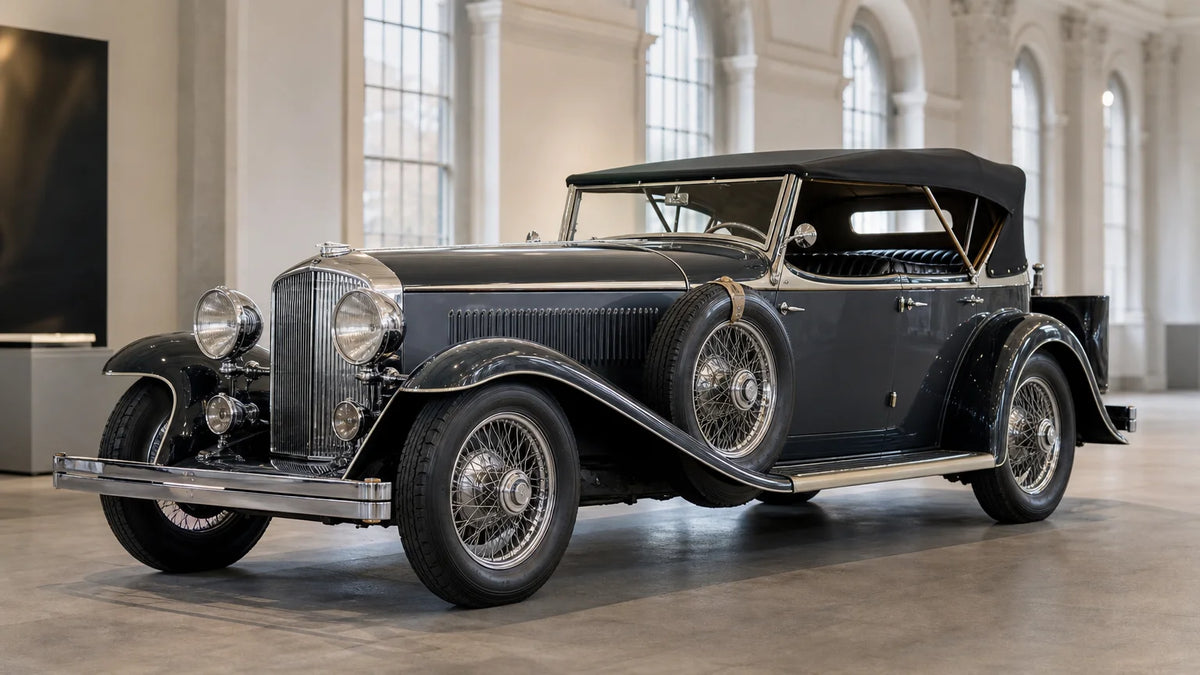
The 1932 Lincoln V12 refers primarily to the Model KB, an imposing American luxury car with the proportions, craftsmanship, and mechanical ambition of the Classic Era. Its long chassis and bespoke body styles still define the period. That visual language also informs how we present exceptional machines, including our 1932 classic roadster.
Lincoln introduced its first production V12 for 1932, placing the engine in the longer KB chassis. The manufacturer’s factory history also records the model’s 145 inch wheelbase and its close association with custom body designers. This combination makes the KB more than an old luxury sedan. It is a historically important platform for studying American coachbuilt design.
What exactly is the 1932 Lincoln V12?
The 1932 Lincoln V12 is the Model KB, positioned above the V8 powered Model KA in the 1932 K series. The KB used a 447.9 cubic inch, 7.3 liter L head V12 producing approximately 150 horsepower. Power reached the rear wheels through a three speed manual transmission, while the 145 inch wheelbase created room for large sedans, touring bodies, phaetons, coupes, and convertible designs.
The engine’s character is central to the car’s identity. Its fork and blade connecting rods allowed paired cylinders to share bearing space, an arrangement that reduced engine length while retaining twelve cylinders. The result was not a lightweight sports car. It was a quiet, torque rich grand tourer designed to move a substantial automobile with dignity.
A 1932 publication from the Lincoln Motor Car Heritage Museum lists 1,623 KB cars produced that year, alongside a 5,560 pound weight and 150 horsepower output. The museum record is valuable because it connects production context with a specific historical example. Production totals should still be treated as reference points, not as a count of surviving cars today.
That distinction matters when you encounter the phrase “1932 Lincoln V12” in a listing. It may describe a factory bodied sedan, a touring car, a phaeton, or a rare coachbuilt coupe. The chassis and engine establish the mechanical identity, but the body style determines much of the car’s cultural and collector significance.
Why does coachbuilder provenance matter so much?
Imagine two KB cars with similar mechanical specifications. One has ordinary factory bodywork with incomplete records. The other carries documented coachwork from a respected period body maker, retains its original proportions, and has a clear ownership history. They may share the same engine, yet collectors will evaluate them very differently.
Coachbuilt provenance affects rarity, visual character, restoration standards, and historical interest. Lincoln customers could select from a broad range of body designs, including formal sedans, open touring bodies, coupes, and convertible configurations. Some surviving examples are known for especially limited production, making the body number and chassis documentation essential parts of the research.
Body terminology also requires care. A car described as a convertible roadster may have a substantial folding top and wind-up glass windows. That configuration offers open air enjoyment, but it does not necessarily match the strict modern definition of a two-seat roadster. Read the listing carefully, then confirm the body style through factory records and period documentation.
For a compact visual counterpoint from the same model year, our 1932 Ford Model B roadster shows how dramatically scale and purpose could differ within the wider 1932 American car landscape. The contrast helps clarify why the KB feels architectural, formal, and unusually substantial.
What should you inspect before buying one?
A promising 1932 Lincoln V12 deserves a disciplined inspection rather than a quick assessment based on paint and presentation. Start with identity. Confirm the chassis number, engine number, body style, coachbuilder attribution, and any factory documentation. A correct chassis with an incorrect or undocumented body can change the car’s historical value.
- Identity: Verify the chassis number, engine number, body style, and stated coachbuilder.
- Provenance: Request ownership records, restoration invoices, show history, and archival correspondence.
- Mechanical condition: Inspect cold starting, oil pressure, cooling performance, transmission operation, steering, and braking.
- Body integrity: Look for structural repairs, altered proportions, incorrect timber work, corrosion, and poorly fitted panels.
- Originality: Separate factory components from later replacements, reproduction trim, and sympathetic upgrades.
The V12 should be inspected by a specialist familiar with prewar engines. A smooth idle does not prove that the crankshaft, bearings, cooling system, lubrication system, and valve train are healthy. Ask for cold start evidence, compression information where available, service records, and a road test performed at operating temperature.
Restoration quality also needs precise description. “Restored” can mean anything from a cosmetic refurbishment to a complete mechanical and structural rebuild. Seek photographs taken before restoration, invoices from the work, details of replaced metal and wood, and an explanation of whether the engine remains numbers matching. The best documentation reduces uncertainty before money changes hands.
How should you evaluate value in 2026?
There is no universal 2026 price for a 1932 Lincoln V12. Value depends on the body style, coachbuilder, originality, restoration quality, provenance, mechanical readiness, and presentation. A rare body with weak documentation may be less compelling than a less exotic configuration with excellent history and sound mechanical work.
Use a layered valuation process. First, establish whether the car is correctly identified. Next, determine whether the body is original, period correct, or recreated. Then assess the restoration, including the engine, chassis, brakes, wiring, interior, paint, brightwork, and weather equipment. Finally, compare the car with sales of genuinely similar body styles rather than relying on broad Model KB averages.
Public automotive industry records place the model in the difficult economic setting of 1932. The FTC industry report shows how sharply motor vehicle business activity contracted during that period. That context helps explain why a large, expensive V12 built during the Depression is unusual, but it does not by itself determine the value of an individual survivor.
For collectors, the most useful question is not simply “What is the car worth?” It is “What evidence supports this asking price?” Compare the documented specification with the advertised specification. Confirm that the restoration matches the car’s intended history. Pay particular attention to structural work, drivetrain correctness, and whether the body style is genuinely rare or merely described with dramatic language.
Collectors who also study period coupe design can explore our 1932 Ford coupe as a separate reference point. It is not a substitute for a KB valuation. It simply provides another way to examine how body proportions, rooflines, and intended use shaped the identity of cars built in 1932.
Is the 1932 Lincoln V12 practical to drive today?
The KB can be driven and enjoyed, but it requires expectations suited to a large prewar automobile. Steering is slower than in a modern car, braking requires planning, visibility varies by body style, and the turning circle can make tight roads inconvenient. Its strengths are composure, torque, presence, and the distinctive experience of operating a large twelve cylinder touring car.
Period road testing gives useful context. Automotive coverage describes the KB as capable of strong acceleration for its era, with substantial torque available at low engine speed and a high top speed for a car of its size. The period road test also emphasizes the car’s weight, large turning circle, and vacuum assisted mechanical brakes.
That combination makes preparation more important than speed. Before touring, confirm the cooling system, tires, brake adjustment, steering play, electrical system, fuel delivery, and lubrication points. Carry suitable tools and allow additional time for inspections. A well sorted example can be engaging on open roads, but it should not be treated like a modern grand tourer.
Maintenance access is another ownership consideration. Rare trim, specialist engine parts, coachbuilt woodwork, and correct hardware may require patient sourcing. If the mechanical architecture interests you as much as the vehicle itself, our V12 engine coffee table extends that appreciation into collectible design without presenting a display object as a substitute for a running car.
Conclusion
The 1932 Lincoln V12 remains compelling because it combines a landmark Lincoln engine with the individuality of Classic Era coachwork. When evaluating one in 2026, prioritize identity, body provenance, originality, mechanical evidence, and documented restoration quality. A convincing example is not defined by horsepower alone. Its value lies in the relationship between the chassis, the body, the history, and the care invested in preserving all four.
Continue your search for exceptional cars
Researching a 1932 Lincoln V12 often leads to a broader search for rare vehicles with distinctive engineering, design, and provenance. We help collectors explore unusual machines across curated automotive categories, with personal support available when a high value acquisition requires additional context.

Browse our curated cars to continue your search, then contact our team if you need help exploring a rare machine or sourcing a vehicle with specific historical and technical criteria.
Frequently Asked Questions
What is the 1932 Lincoln V12 called?
It is generally known as the Lincoln Model KB. The KB was the longer wheelbase 1932 K series model equipped with Lincoln’s large V12 engine.
Was every 1932 Lincoln V12 a roadster?
No. The Model KB was available in several body styles, including sedans, touring cars, phaetons, coupes, and convertible configurations. The exact body style must be confirmed from the chassis and coachbuilder records.
What makes a surviving KB especially desirable?
Desirability usually increases with documented coachbuilder provenance, correct bodywork, strong originality, high quality restoration, and a clear ownership history. Mechanical condition and usability also affect how confidently the car can be enjoyed.
What should you request before purchasing one?
Request chassis and engine numbers, restoration invoices, ownership records, archival documents, cold start evidence, and an independent inspection. You should also confirm the authenticity of the body style and the quality of structural repairs.
Can TheArsenale help source a rare 1932 Lincoln V12?
Our marketplace supports browsing, buying, and sourcing rare mobility objects, with sales assistance for high value acquisitions. A specific 1932 Lincoln V12 is not guaranteed to be listed, so direct contact is the appropriate way to discuss availability and sourcing requirements.