1965 Aston Martin DB5 for Sale: Collector Buying Guide
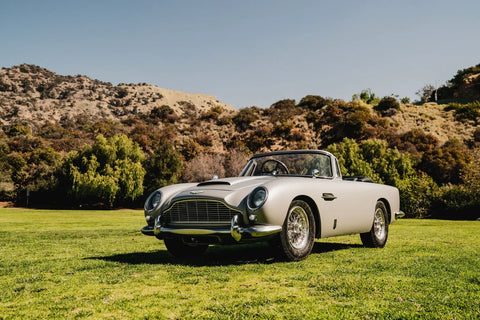
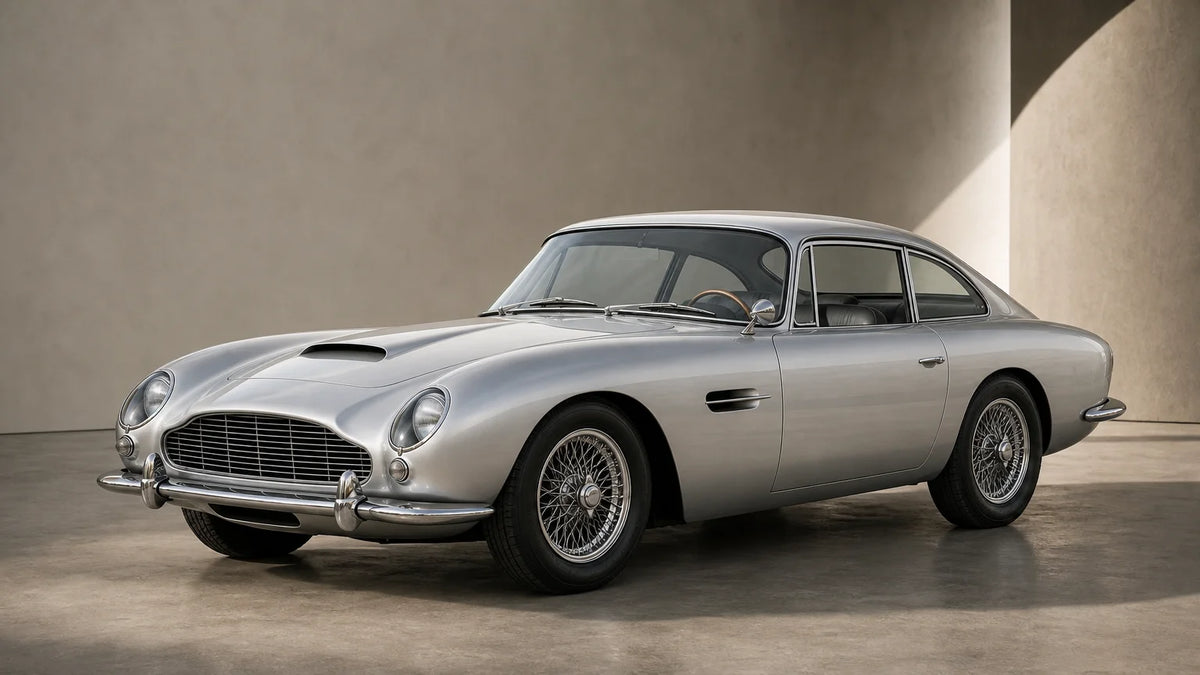
A 1965 Aston Martin DB5 is not an ordinary used car. It is a historically important grand tourer, a scarce collector asset, and a complex ownership decision. If you are searching for our classic cars, the most important question is not simply whether a car is available. You must determine whether its identity, specification, restoration, and ownership history justify the asking price.
Availability remains limited in 2026. A September 2026 market snapshot showed five 1965 DB5 listings, including four coupe listings and one Vantage Coupe listing. The same snapshot placed the coupe benchmark at $718,094, while one fixed-price example was listed at $748,082. These figures are reference points, not guarantees of a specific car’s value.
What does a 1965 Aston Martin DB5 cost in 2026?
The practical answer is that pricing usually sits in the high six figures or above $1 million, depending on specification and condition. A well-documented standard coupe may occupy a different market segment from a factory Vantage, a car with significant movie history, or an example with extensive recent restoration.
Current asking prices and completed sales should be treated separately. An asking price reflects a seller’s expectation, while an auction result reflects one completed transaction under specific circumstances. The car’s location, buyer competition, auction terms, currency, and documentation can all influence the final result.
For a serious buyer, the most useful approach is to build a comparable set using cars with similar characteristics. Compare body style, steering configuration, engine identity, transmission, originality, restoration quality, and provenance. Avoid comparing a modified Vantage specification directly with an original standard coupe.
Why can two 1965 DB5s have very different values?
A separate 2026 market index counted 22 auction sales for 1965 DB5s. It recorded recent results of $792,500 on July 8, 2026, and $1,276,000 on May 20, 2026. The difference illustrates how strongly condition, history, and specification influence the market.
Those results do not establish a universal price. They show why a buyer must assess the individual chassis rather than rely on the model year alone. A restored car with matching components and complete records may justify a substantial premium. A car requiring structural work may look attractive at first glance but demand a much larger ownership reserve.
The most important value factors include:
- Factory specification, including original color, interior, equipment, and transmission.
- Matching-numbers authenticity, particularly for the engine and major mechanical components.
- Vantage status, distinguishing factory-built cars from later performance conversions.
- Restoration quality, including the quality of body, paint, trim, and mechanical work.
- Documented provenance, supported by invoices, factory records, ownership history, and heritage certificates.
- Mechanical condition, including the engine, gearbox, cooling system, brakes, suspension, and electrical equipment.
Engine upgrades can improve usability, but they can also alter the car’s historical identity. A later Vantage-style conversion may deliver stronger performance without carrying the same value as a factory Vantage. The distinction should be clearly recorded in the sales documentation.
Which authenticity checks should you complete before buying?
Begin with the chassis number, engine number, body number, and factory documentation. These identifiers should be checked against credible records and the car’s physical components. A mismatch does not automatically make a car undesirable, but it must be reflected in the price and ownership strategy.
Review the restoration file in detail. Photographs taken before, during, and after the work can reveal whether the body was repaired correctly. Invoices should identify the specialists involved, the work completed, and the parts replaced. A polished presentation without supporting documentation deserves additional scrutiny.

The inspection should cover the areas most likely to affect safety and cost. Pay particular attention to the chassis, sills, jacking points, suspension mounting areas, floors, door fit, aluminum body panels, and evidence of corrosion. Inspect the engine for leaks, overheating, oil pressure issues, and signs of incomplete rebuilding.
You should also test the gearbox, clutch, brakes, steering, instruments, charging system, lights, windows, and air-conditioning equipment. A road test is valuable, but it should follow a lift inspection and a review of cold-start behavior. A warm engine can conceal issues that become obvious after the car has been stationary overnight.
Before committing funds, commission an independent pre-purchase inspection from a specialist familiar with historic Aston Martin engineering. The inspection should be written, photographically supported, and addressed to you. It should also separate urgent defects from normal age-related maintenance.
How should you plan an international DB5 acquisition?
Imagine that the right car is located in another country. The purchase price is only the first financial commitment. You must also evaluate inspection travel, secure payment, insurance, transport, customs clearance, taxes, registration, storage, and future servicing.
International buyers should request the complete document package before arranging transport. This should include the title or registration documents, invoices, heritage documentation, chassis details, export status, and any information about liens or finance. Ownership cannot be considered complete until the legal transfer is clear.
It is also important to clarify what is included in the transaction. Confirm whether the tool kit, manuals, spare wheels, spare parts, restoration photographs, and service records form part of the sale. Ask whether the advertised price includes taxes, buyer fees, storage, transport, and export preparation.
Our rare-vehicle sourcing service can help you organize the early stages of a complex search. Through our rare vehicles for sale section, you can explore a curated mobility environment while our team provides a route for sourcing and high-value acquisition discussions.
As of 2026, our network brings together more than 250 builders, designers, and brands. We have completed more than 11,000 transactions since 2017 and served more than 9,000 clients worldwide. These figures do not confirm that a 1965 DB5 is currently available, but they explain why a curated sourcing conversation can be useful when public inventory is limited.
How rare is the 1965 DB5 specification?
Production numbers explain much of the model’s appeal. One historical reference counts 1,021 DB5s built between 1963 and 1965, including 899 coupes and 220 left-hand-drive coupes. North American delivery figures are narrower because they identify a specific market destination rather than every left-hand-drive car.
That distinction matters when you evaluate a car for international ownership. A left-hand-drive example may be easier to use in the United States, while a right-hand-drive car may offer a stronger connection to its original market. Neither configuration is automatically superior. The correct choice depends on your location, driving plans, and collection priorities.
The standard coupe remains the central reference point. Convertibles, Vantage cars, and Shooting Brake conversions occupy different categories because their production histories and specifications differ. You should therefore compare a candidate with cars of the same body style and configuration.
Originality is not always synonymous with untouched condition. A sympathetic restoration may preserve the car’s identity while improving reliability and presentation. Conversely, extensive modifications may make the vehicle more enjoyable to drive but reduce its appeal to buyers seeking factory correctness.
When you need a structured process for assessing provenance, condition, and long-term suitability, our guide on how to choose a rare vehicle provides a useful framework. The same principles apply to a 1965 DB5, especially when the car’s history is more valuable than its visual finish.

What should you budget for after purchase?
A 1965 DB5 requires more than a purchase budget. You should maintain a separate ownership reserve for servicing, specialist labor, storage, insurance, transport, and unexpected repairs. Even a recently restored car may require further adjustment as seals, hoses, electrical components, and fluids settle into regular use.
Maintenance planning should reflect how you intend to use the vehicle. Occasional concours display, weekend touring, long-distance rallies, and regular road use create different demands. A car used frequently may benefit from discreet reliability improvements, while a historically sensitive collection car may require stricter preservation.
Storage conditions also matter. A dry, secure, climate-controlled environment can protect the body, interior, chrome, leather, and electrical systems. Regular exercise is preferable to leaving the car unused for extended periods, but every journey should be supported by appropriate checks.
Insurance should reflect the vehicle’s agreed value and intended use. Ask whether the policy covers international transport, events, rallies, storage, spare parts, and specialist repairs. Keep updated photographs and records so the car’s condition can be demonstrated over time.
Making the right 1965 DB5 decision
The best 1965 Aston Martin DB5 is not necessarily the most expensive example or the one with the most dramatic presentation. It is the car whose identity, provenance, specification, condition, and ownership costs align with your objectives. Before you buy, verify the numbers, inspect the structure, understand every modification, and allow sufficient funds for long-term care. A disciplined process turns an emotional purchase into a defensible collector decision.
Explore a DB5 Related Machine
If you are drawn to the design language and cultural significance of the DB5, your search can extend beyond a single public listing. Our team helps collectors explore rare mobility objects and discuss sourcing routes for high-value acquisitions.

To explore a DB5-related machine through our curated marketplace, view the Aston Martin DB5J product page. It offers a direct starting point for discussing your interests with our team.
Frequently Asked Questions
Is a 1965 Aston Martin DB5 a good collector purchase?
It can be a compelling collector purchase when the car has strong provenance, sound structure, and appropriate documentation. The value depends on the individual example, not only the model year.
What is the most important document to request?
Request a complete history file containing ownership records, invoices, factory or heritage documentation, and restoration photographs. These documents help establish authenticity and explain the car’s current specification.
Should you prefer a matching-numbers DB5?
Matching major components generally support originality and collector confidence. However, the car should still be inspected carefully because matching numbers do not prove excellent mechanical condition.
Are factory Vantage cars worth more than converted cars?
Factory Vantage examples are usually assessed differently from later conversions because their original specification is part of their identity. A conversion may be enjoyable, but it should be described accurately and valued accordingly.
Can TheArsenale help source a rare DB5?
Our services include rare-vehicle sourcing and high-value acquisition advice. We can discuss your requirements, although availability, pricing, inspection, shipping, and purchase terms depend on the specific vehicle and seller.