1969 Ferrari Dino 246 GT: History, Specs and Value Guide
The 1969 Ferrari Dino 246 GT represents a decisive change in Ferrari road-car design. Its compact proportions, transverse mid-engine layout, and V6 soundtrack created a more focused alternative to the company’s traditional front-engine grand tourers. Its place in the collector world also connects naturally with our feature on the 1962 Ferrari 330 LM and 250 GTO.
For collectors, the appeal is not limited to appearance. The 246 GT combines limited production, significant engineering, and a clear development story from the Dino 206 GT. A good example can offer genuine driving involvement, but the right purchase requires careful attention to chassis identity, bodywork, documentation, and specialist maintenance.
What makes the 1969 Ferrari Dino 246 GT important?
Ferrari introduced the Dino 246 GT in 1969 as the evolution of the smaller 206 GT. The model used a rear, transverse-mounted 65-degree V6 with 2,419.20 cubic centimeters of displacement. Ferrari lists 195 horsepower at 7,600 rpm and a 235 km/h top speed on its historical specification page, making the car highly capable for its period. These figures appear in the Ferrari history page.
The Dino name honored Alfredo Ferrari, Enzo Ferrari’s son, while also identifying a separate line for Ferrari sports cars with fewer than twelve cylinders. That distinction shaped the car’s original identity, yet it did not make the 246 GT technically conventional. Its engine placement, independent suspension, four-wheel disc brakes, and compact body gave it a distinct dynamic character.
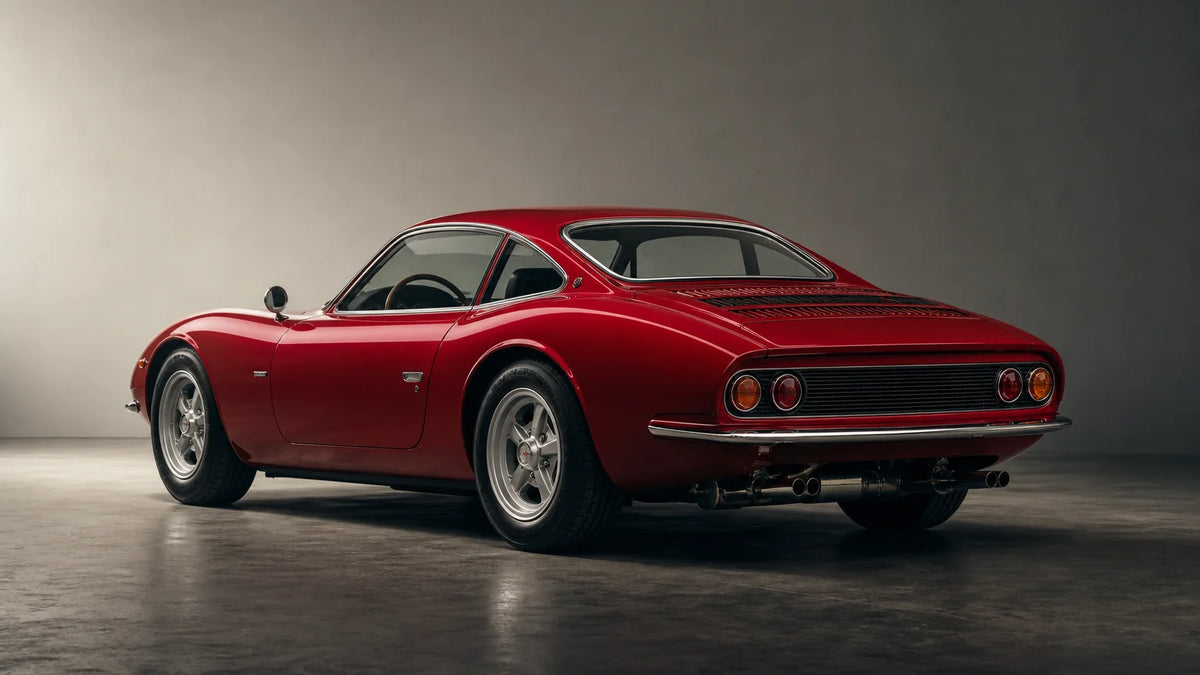
The styling came from Pininfarina, while Scaglietti built the bodywork. The result was a low, glassy berlinetta with a long rear deck, pronounced rear haunches, and an exceptionally clean side profile. Its visual restraint is one reason the model remains relevant to collectors who value proportion as much as performance.
Why the early L-series is particularly desirable
Not every early Dino 246 GT is identical. Ferrari produced the coupe in three principal series, known as L, M, and E. The L-series appeared during the earliest 246 GT production period and is generally recognized by its center-locking wheels, slim bumper treatment, and other early details.
Only 357 L-series cars were produced. That figure places the early cars below the later production series in terms of known volume. A 2026 auction description also identifies the L-series as the rarest 246 series, with early cars distinguished by their center-locking wheels and specific bumper and headrest details.
Rarity alone does not guarantee a better car. An L-series example with incorrect wheels, altered bodywork, weak documentation, or poor structural repairs may be less desirable than a later car with excellent provenance. The strongest cars combine early specification with documented originality, correct details, and a sympathetic restoration.
Engine, performance, and driving character
The 246 GT’s defining mechanical feature is its 2.4-liter V6. It sits transversely behind the cabin and drives the rear wheels through a five-speed manual transaxle. Three Weber carburetors supply the engine, while the chassis uses independent suspension and disc brakes at all four corners.

Period performance remains impressive because the car is compact and relatively light. Ferrari’s historical figures show 195 horsepower and a 235 km/h top speed. Contemporary road tests also praised the Dino for its balance and cornering ability rather than relying only on straight-line acceleration.
The engine’s character is central to the experience. It revs freely, responds directly to throttle inputs, and produces a sharper mechanical voice than a larger V12. The mid-engine layout also places more mass near the center of the car, helping the Dino feel agile on winding roads.
That layout requires respect. A mid-engine classic can react quickly to abrupt inputs, especially when tires, suspension components, alignment, or bushings are old. A properly sorted car should feel progressive and precise, not nervous or unpredictable.
Production, series differences, and the GT versus GTS
Production figures vary between references because some sources count body styles or production groupings differently. A period automotive review published through the European Union’s Erasmus Plus platform lists 2,487 Dino 246 GT coupes and 1,274 246 GTS models, for a combined total of 3,761 cars from 1969 to 1974. The same review places the 246 GT within Ferrari’s transition toward higher-volume road-car production.
The GT is the fixed-roof berlinetta. The GTS arrived later with a removable roof panel and a more open driving experience. The GTS can command a different market position, but the GT remains attractive to collectors who prefer the purity, rigidity, and uninterrupted profile of the closed coupe.
Within the GT range, the M-series introduced further detail changes, while the E-series became the most numerous version. Differences can include wheel design, windshield-wiper arrangement, engine ventilation, fuel-system details, trim, and market-specific equipment.
When evaluating a car, the correct question is not simply whether it is an L, M, or E. You should ask whether its current specification matches its chassis history. A well-documented car with consistent details is easier to understand, maintain, and value.
What is a 1969 Ferrari Dino 246 GT worth in 2026?
Classic-car values depend heavily on specification and condition. In 2026, a published market benchmark for the Dino 246 GT was approximately $400,980. That figure is a broad market reference, not a guaranteed selling price, and it does not account for every difference in provenance, originality, mileage, or restoration quality. The 2026 market benchmark should therefore be treated as a starting point.
Early L-series examples can command a premium when they retain correct features and strong documentation. Matching engine and gearbox numbers, factory colors, original trim, desirable options, and a clear ownership history can all affect the result. Conversely, a car with extensive but poorly documented restoration work may require a significant adjustment.
The quality of the restoration is particularly important. A recent mechanical rebuild can be valuable when supported by detailed invoices, specialist identification, and photographs. A cosmetic repaint without structural documentation is less reassuring. You should distinguish between work that preserves the car and work that merely improves its appearance.
For broader collector context, our feature on the 1965 Ferrari 275 GTB offers another example of how period Ferrari design, provenance, and specification shape the appeal of a historic machine.
What should you inspect before buying?
A serious inspection should begin with the chassis number and its supporting records. Confirm that the number is consistent across the body, documentation, and available historical references. Then review ownership history, registration documents, restoration invoices, and evidence of long-term maintenance.

- Provenance: verify the chassis identity, ownership history, factory specification, and available heritage documentation.
- Structure: inspect the sills, floor sections, suspension mounting points, bulkheads, and areas vulnerable to corrosion or previous accident repair.
- Mechanical condition: assess the engine, transaxle, carburetors, cooling system, brakes, steering, suspension, and electrical components.
- Restoration quality: review paint thickness, panel alignment, trim fit, interior materials, and photographs showing work before reassembly.
Rust and undocumented repairs can become expensive because access is difficult and correct materials are not always straightforward to source. The car should be inspected by a specialist familiar with the Dino platform, not only by a general classic-car technician.
Driving evaluation is equally important. The gearbox should engage cleanly, the engine should pull evenly, and the cooling system should remain stable in traffic. Excessive vibration, irregular carburetor response, poor braking balance, or unstable handling deserves investigation before purchase.
Collectors who want to compare the Dino with other historically significant machines can also explore our broader selection of classic cars. The useful comparison is not simply by price. It is by design integrity, mechanical character, provenance, and the kind of ownership experience each car creates.
Is the 1969 Dino 246 GT the right classic Ferrari for you?
The Dino suits a collector who values compact dimensions, responsive handling, and a highly expressive V6. It is less suitable for someone seeking effortless modern performance, extensive cabin space, or low-maintenance ownership.
The car rewards regular use when it is properly maintained. However, its age means that seals, hoses, ignition components, suspension parts, cooling systems, and electrical connections require ongoing attention. Ownership should be planned as the care of a complex historic machine, not as the purchase of a static decorative object.
An L-series car may appeal most strongly to collectors who prioritize rarity and early production details. A later GT may offer a more accessible entry into the model while preserving the essential Dino experience. In either case, the best choice is the most coherent example you can document and maintain.
A considered choice for collectors
The 1969 Ferrari Dino 246 GT remains significant because it unites advanced packaging, elegant design, and an engaging V6 driving experience. Its value in 2026 depends on more than rarity. Provenance, structural integrity, correct specification, and the quality of past work should guide every decision. A careful inspection can turn an attractive opportunity into a defensible long-term acquisition.
Bring Ferrari Design Into Your Space
For collectors, the appeal of a Dino often extends beyond its specifications. Its proportions, mechanical details, and racing heritage can also inspire the way you shape a private interior, study, or automotive collection.

Our Ferrari 308 wheel coffee table translates that design language into a functional object for a considered space. It is a natural choice for readers who appreciate automotive engineering, distinctive materials, and carefully curated mobility culture.
Frequently Asked Questions
How many 1969 Ferrari Dino 246 GT cars were built?
The broader Dino 246 production run included 2,487 GT coupes and 1,274 GTS models, for a commonly cited combined total of 3,761 cars. Only 357 examples belonged to the early L-series.
What engine does the Dino 246 GT use?
The car uses a 2.4-liter, 65-degree V6 mounted transversely behind the cabin. It is paired with a five-speed manual transaxle and triple Weber carburetors.
What makes an L-series Dino 246 GT desirable?
L-series cars are the earliest 246 GT examples and are distinguished by details such as center-locking wheels and early bumper treatment. Their desirability increases when the specification, chassis history, and restoration records remain consistent.
Is the Dino 246 GT expensive to maintain?
Maintenance can be substantial because the car is more than five decades old and requires specialist knowledge. Structural repairs, engine work, electrical issues, and correct restoration materials can all affect the ownership budget.
Can TheArsenale help source a rare classic car?
Yes. We provide access to a curated mobility marketplace and personalized assistance for rare and high-value machine sourcing. Availability, pricing, delivery, registration, and maintenance arrangements depend on the specific vehicle and transaction.