Electric Hypercar for Sale: 2026 Buyer’s Guide and Costs
If you are searching for an electric hypercar for sale, expect a specialist acquisition rather than a conventional showroom purchase. The right route combines documented performance, clear production history, confirmed road status, and a seller able to address international questions. Our electric hypercars for sale collection gives you a focused starting point for that search.
The category is expanding, but its numbers should be read carefully. Grand View Research estimates that the global hypercar market will reach $21.5 billion in 2026, after an estimated $20.1 billion in 2025, while forecasts vary according to definitions and methodology. That difference makes vehicle-level due diligence especially important.
What qualifies as an electric hypercar for sale in 2026?
An electric hypercar sits at the highest end of battery-electric performance, design, engineering, and exclusivity. It normally combines a carbon-fiber structure, multiple electric motors, advanced torque management, high-output battery systems, and a deliberately limited production strategy.
However, not every fast electric vehicle is a hypercar. A high-powered performance car may deliver impressive acceleration while offering greater production volume, broader availability, and more practical ownership. A genuine hypercar is defined by the complete package, including low-volume electric performance, engineering ambition, distinctive design, and a level of scarcity that changes how you buy it.
Road use is another important distinction. Some electric hypercars are built for public roads, while others are intended primarily for private circuits, exhibitions, or development programs. Before you evaluate the powertrain, confirm whether the specific vehicle is registered, registrable, or restricted to non-public use in your jurisdiction.
Why price and availability require a different buying strategy
The price of an electric hypercar reflects more than its battery capacity or power output. Production volume, carbon-fiber construction, bespoke engineering, design authorship, battery technology, customization, delivery status, and provenance can all influence the final figure.
Recent industry research illustrates the category’s direction. Mordor Intelligence estimates that battery-electric hypercars could advance at an 18.29% compound annual growth rate from 2025 through 2031, even though internal-combustion models held the larger share of hypercar revenue in 2025. This helps explain why new electric flagships attract intense attention while remaining difficult to access.
Availability is often as important as budget. A vehicle may be publicly listed, available by reservation, allocated privately, under construction, or already sold. You should request the exact status in writing, along with the production number, expected completion date, specification, deposit terms, and cancellation conditions.
Our network includes more than 250 builders, designers, brands, and suppliers. We also work with collectors and high-value buyers through direct sales support, which can be useful when the machine you want is not openly listed or requires a tailored sourcing process.
Which performance figures actually matter?
Headline power attracts attention, but it should not dominate your decision. For an electric hypercar, the more useful question is how the powertrain manages energy, heat, traction, and repeatable performance.
- Power delivery: peak horsepower matters, but motor control and traction management determine how effectively it reaches the road.
- Battery capacity: a larger battery may improve usable range, but it can also increase weight and affect handling.
- Torque vectoring: independent motor control can improve cornering response and stability.
- Thermal management: cooling systems influence whether performance remains consistent after repeated acceleration or track use.
- Chassis balance: suspension geometry, weight distribution, braking, and tire specification shape the driving experience beyond straight-line speed.
Range should also be interpreted according to your intended use. A track-focused machine may prioritize power density and aerodynamic load, while a road-oriented model may offer a larger battery, greater comfort, and more usable distance between charges. Manufacturer figures are useful for comparison, but your decision should include climate, driving style, charging access, and expected annual mileage.

How to confirm road legality and international usability
For many buyers, street-legal status is the first practical filter. A road-registered vehicle normally requires approved lighting, mirrors, indicators, tires, braking equipment, safety systems, and documentation appropriate to its market. The exact requirements differ between countries and sometimes between states or provinces.
Do not treat the phrase “street legal” as universal. Ask where the vehicle is currently registered, under which approval route, and whether that approval transfers to your intended country. You should also confirm whether modifications, right-hand-drive configuration, battery certification, or import rules could affect registration.
Our guide to street-legal hypercars for sale can help you frame these questions before a purchase conversation. We can also help you identify the documentation that should be requested from the builder, seller, or current owner, although final registration decisions remain with the relevant local authorities.
International buyers should also clarify shipping, customs, taxes, insurance during transit, delivery location, and after-sales arrangements. A global marketplace can connect you with unusual vehicles, but no seller should imply that one registration or delivery process applies everywhere.
What should you verify before committing funds?
An electric hypercar deserves the same level of scrutiny as any high-value collectible asset. The most important documents should be available before you sign a purchase agreement or transfer a substantial deposit.
- Battery health: request diagnostic data, remaining capacity information, charging history, and details of any battery replacement or repair.
- Production provenance: confirm the builder, production number, ownership chain, delivery records, and original specification.
- Service history: review maintenance records, software updates, tire changes, brake work, and any track use.
- Identity documents: match the vehicle identification number, chassis number, invoices, certificates, and registration records.
- Inspection: commission an independent specialist inspection covering the carbon structure, high-voltage system, cooling circuits, suspension, and bodywork.
- Contract terms: clarify deposits, delivery milestones, warranty coverage, returns, transport responsibility, and dispute jurisdiction.
Battery documentation deserves particular attention because replacement costs can be substantial and degradation may affect both performance and value. A low-mileage vehicle is not automatically a healthy vehicle. Storage conditions, charging habits, software status, and repeated high-load use can all influence its condition.

How scarcity changes the value equation
Limited production can support desirability, but scarcity alone does not guarantee appreciation. The strongest collector interest usually combines low volume with meaningful engineering, recognizable authorship, documented provenance, original condition, and a clear place in automotive history.
Market forecasts also show why definitions matter. Global Market Insights estimates that battery-electric hypercars represented 26.7% of the hypercar market in 2024 and projects the segment to grow from $1.5 billion to $3.0 billion by 2035. This is a market forecast, not a guarantee of individual vehicle performance or resale value.
When assessing a collectible electric hypercar, consider whether its production run is genuinely capped, whether the builder has delivered previous vehicles, and whether replacement parts and technical support are realistic. A rare machine with unclear documentation may be less attractive than a better-supported model with a slightly higher production volume.
You can explore our perspective on limited-edition hypercars for sale when scarcity and long-term collectability are central to your decision. The essential principle remains simple: treat potential appreciation as a possible benefit, never as a promised return.
Why a curated marketplace can improve the acquisition process
Open listings provide breadth, but they can also create noise. A buyer may spend considerable time filtering out vehicles that are unavailable, track-only, poorly documented, incorrectly described, or unsuitable for the intended jurisdiction.
A curated marketplace addresses the discovery problem by concentrating rare mobility objects in one environment. It can also give you a direct path to sales assistance, sourcing support, physical experiences, and vehicles that may not yet be publicly listed.
We have completed more than 11,000 transactions since 2017 and serve clients internationally. Our Private Membership provides access to vehicles before public listing, which can be valuable when a low-volume electric hypercar changes hands privately or is offered through a limited allocation.
For buyers who are still defining their priorities, our hypercar buying guide provides a useful framework for balancing performance, rarity, road usability, provenance, and ownership objectives. The purpose is not to replace independent verification. It is to make your questions more precise before you enter a negotiation.
Make the decision around evidence, not acceleration
Choosing an electric hypercar for sale is ultimately an exercise in matching ambition with documentation. Define your intended use, confirm battery health and provenance, verify road status for your jurisdiction, and calculate the complete ownership cost before you commit. The most compelling machine is not always the one with the largest number. It is the one whose performance, rarity, support, and legal usability align with your priorities.
Discuss Your Electric Hypercar Acquisition
Once you know which performance, road-use, and collectability criteria matter most, the next step is to identify a machine that fits them. Rare electric hypercars often require direct sourcing, careful documentation, and a conversation tailored to your intended market.

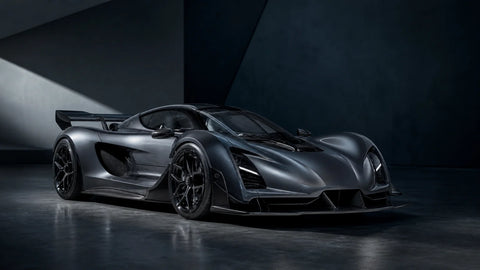
Our RAESR Tachyon Speed is a hand-built, street-legal electric hypercar developed in Southern California, with 1,250+ horsepower, 1.4 megawatts of peak power, carbon-fiber bodywork, and a city range above 150 miles. To discuss availability and acquisition requirements, explore the RAESR Tachyon electric hypercar with our sales team.
Frequently Asked Questions
How much does an electric hypercar cost?
Prices vary significantly according to production volume, specification, provenance, battery technology, and delivery status. Rare electric hypercars generally sit in the high-value collector segment, so you should budget for insurance, transport, storage, charging, maintenance, and possible import costs as well as the purchase price.
Are electric hypercars street legal?
Some are built for public-road use, while others are intended for private circuits or display. Always confirm the vehicle’s current registration, approval route, and eligibility for registration in your country before purchasing.
What battery information should I request?
Ask for battery state-of-health data, charging history, software records, warranty details, and documentation of any repairs or replacement work. An independent specialist inspection can provide additional confidence before funds are transferred.
Can I find an electric hypercar before it is publicly listed?
Yes, some low-volume machines change hands through private allocations or specialist networks before appearing publicly. Our Private Membership provides access to vehicles before public listing, subject to availability and applicable terms.
Can TheArsenale help source a specific electric hypercar?
Our sales team assists collectors and high-value buyers with machine inquiries and sourcing. You can share your preferred performance, design, production, road-use, and geographic requirements so the team can assess what may be possible.