Electric Motorcycle Design: Principles for Better Riding
Electric motorcycle design is not simply a matter of replacing a combustion engine with a battery and motor. It is a chance to reconsider the motorcycle’s architecture, proportions, riding position, and relationship with its rider. Our coverage of electric motorcycle design reflects this broader view, where engineering decisions become part of the machine’s visual character.
Between 2017 and 2022, electric cycles increased their share of total motorcycle trade from 12 percent to 33 percent, according to the WIPO report. That shift makes design discipline increasingly important. The most convincing electric motorcycles do not hide their technology. They make the technology useful, legible, and desirable.
What changes when the engine disappears?
A traditional motorcycle often communicates its identity through an engine, fuel tank, exhaust system, gearbox, and intake path. These components influence the frame, seat, bodywork, weight distribution, and even the rider’s expectations. Electric propulsion removes or reduces many of those constraints.
The result is greater freedom, but also a more demanding design problem. A smaller number of mechanical parts does not automatically produce a better motorcycle. The designer must still create a strong structure, protect sensitive components, manage heat, support the rider, and preserve the visual tension that makes a motorcycle feel active rather than appliance-like.
The central question becomes architectural: where should the battery, motor, controller, charger, cooling system, suspension, and storage areas live? Each answer affects the motorcycle’s silhouette and behavior. A low battery can support stability, but it may reduce ground clearance. A large battery can improve range, but it can also create visual mass and increase overall weight.
Good electric motorcycle design therefore begins with a clear use case. A lightweight urban motorcycle needs different proportions from a high-performance road machine or a dual-purpose model. The intended speed, terrain, daily distance, charging access, passenger use, and storage needs should be defined before the styling language is fixed.
How do battery and motor packaging define the silhouette?
The battery is usually the dominant component in an electric motorcycle. Its size, shape, cooling requirements, access points, and protection structure influence almost every surrounding surface. Designers cannot treat it as an invisible box because its volume affects the frame, seat height, wheelbase, body panels, and center of gravity.
Battery packaging should balance three goals: usable energy, controlled mass, and service access. A long, low battery may support a stable stance, while a taller pack can preserve wheelbase and create room for other components. Neither solution is universally correct. The best arrangement depends on the motorcycle’s purpose and the rider’s expected posture.
Motor position also matters. A hub motor can simplify the drivetrain and create a clean central architecture, while a centrally mounted motor can support weight concentration and more familiar chassis behavior. The decision affects suspension response, unsprung mass, belt or chain routing, maintenance access, and the way torque reaches the rear wheel.
A 2026 design study examined 176 electric motorcycles from 31 brands and used responses from 78 valid questionnaires. Its findings identified system integration, proportion, tension, perceived safety, visual futurism, and brand identity as important design dimensions. The morphology study supports a practical conclusion: isolated styling features matter less than how the complete motorcycle works as a visual and functional system.

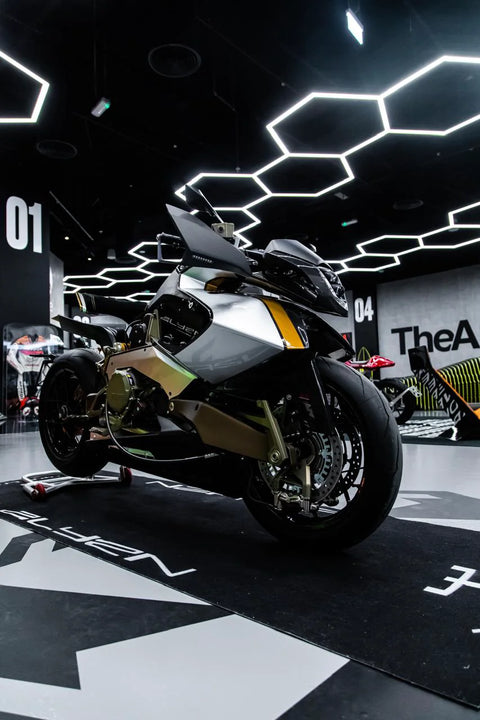
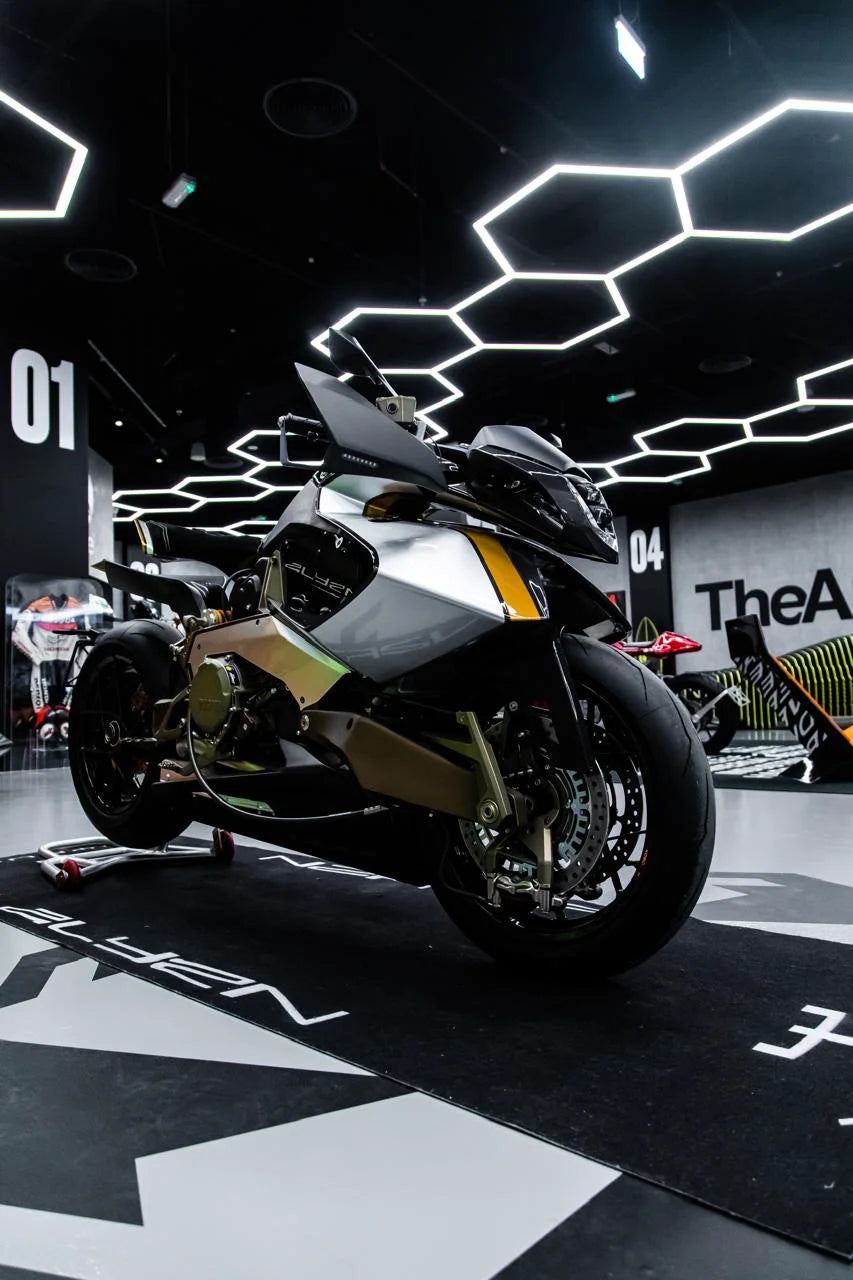
This is why exposed components can be valuable when they are arranged with intention. Visible cooling paths, structural members, wiring covers, or motor housings can communicate precision. Poorly integrated parts, however, can make the motorcycle look unfinished. Transparency in design should reveal purpose, not simply expose complexity.
Why should rider ergonomics lead the first sketch?
A motorcycle is experienced through the body. The rider interacts with the seat, foot controls, handlebars, tank or bodywork, display, throttle, brakes, and road surface at the same time. Electric propulsion changes the sound and power delivery, but it does not remove the need for balance, confidence, visibility, and physical control.
Rider ergonomics should therefore influence the package from the beginning. Seat height affects confidence at low speed. Handlebar reach affects steering precision and fatigue. Footpeg position changes hip and knee angles. The width of the central structure affects how easily the rider can stand over the motorcycle or move around it during a stop.
Electric motorcycles also create new opportunities for usability. A narrow central body can make the machine approachable for a wider range of riders. A quiet powertrain can support a calmer urban experience, although designers must ensure that lighting, mirrors, indicators, braking feedback, and rider alerts remain clear in busy environments.
Displays should communicate essential information without competing with the road. Battery state, estimated range, riding mode, charging status, warnings, and navigation can be useful, but excessive information increases cognitive load. A restrained interface often feels more premium because it prioritizes the decisions that matter while riding.
Formal usability testing is especially valuable here. A concept that looks elegant in a studio can feel awkward when a rider must reverse it, park it, mount it in protective clothing, or connect a charging cable at night. The design brief should include these ordinary moments, because they determine whether the motorcycle feels intuitive after the first ride.
Where do performance, handling, and energy management meet?
Electric motors deliver torque quickly, which can make acceleration feel immediate and controllable. That benefit must be matched by a chassis capable of managing the resulting forces. Frame stiffness, suspension calibration, tire selection, braking performance, and traction control work together to determine whether the motorcycle feels composed or abrupt.
Weight distribution is particularly important. Batteries may be heavier than the systems they replace, even when the overall powertrain is mechanically simpler. Placing mass near the motorcycle’s center can improve directional changes, while excessive weight at the front or rear may affect steering response and suspension behavior.
Performance design also includes thermal management. The motor, inverter, battery cells, charger, and wiring can generate heat under sustained use. Cooling pathways need to protect the battery and maintain consistent output without creating unnecessary bulk, noise, or visual clutter.
Range is not only a battery capacity question. It depends on speed, acceleration, rider weight, terrain, temperature, aerodynamics, tire pressure, regenerative braking, and accessory loads. A motorcycle designed for touring may prioritize energy storage and weather protection. An urban motorcycle may benefit more from low mass, easy charging, and compact proportions.
Research published in 2026 combined test rides with a survey of European motorcyclists to examine electric touring and adoption concerns. The 2026 touring research reinforces the value of evaluating electric motorcycles in realistic riding conditions rather than relying only on laboratory specifications.
How can functional design become a convincing visual language?
Electric motorcycles do not need to imitate conventional motorcycles to appear authentic. They can retain familiar cues such as two wheels, a visible steering system, a purposeful seat, and a balanced stance while expressing their technology through different surfaces and proportions.
Functional styling starts when the form explains the machine. A sharp shoulder may protect a battery enclosure. A narrow waist may create rider movement. A broad lower body may signal energy storage or structural strength. A clean rear section may communicate the absence of an exhaust system without relying on decorative futurism.
Proportion matters more than novelty. A motorcycle can appear advanced through its wheelbase, body height, tire relationship, lighting arrangement, and visual center of gravity. Designers should avoid adding angular surfaces merely to signal the future. Surface changes should support airflow, protection, access, cooling, or emotional character.
Materials can reinforce this language. Aluminum, composite panels, recycled polymers, technical textiles, rubber, glass, and exposed fasteners each communicate different qualities. The strongest combinations create contrast without making the motorcycle visually busy. A restrained palette can make advanced geometry easier to understand.
Our editorial work on electric motorcycle engineering and design approaches the subject through this connection between mechanical purpose and visual identity. For collectors and enthusiasts, that connection often determines whether a machine feels like a coherent object rather than a collection of advanced components.

Which safety and lifecycle details belong in the design brief?
Safety should shape the architecture, not merely the owner’s manual. Battery protection, electrical isolation, crash structures, braking systems, lighting, visibility, thermal control, and water resistance all influence the form of an electric motorcycle.
Design for service is equally important. A battery may require inspection, replacement, or controlled removal. Cooling channels can collect dust and debris. Charging connectors need protection from weather and misuse. Fasteners, covers, sensors, and high-voltage components should be accessible to qualified technicians without requiring unnecessary disassembly.
Lifecycle design deserves more attention as electric motorcycles mature. A 2026 study of end-of-life motorcycles found that composite plastics and lithium-ion batteries can make recycling more difficult for electric models. The 2026 recycling study points to a clear design implication: material separation, repairability, battery access, and responsible dismantling should be considered before production begins.
Charging design also affects daily ownership. The location of the port, cable clearance, weather protection, indicator lights, and connector ergonomics can determine whether charging feels effortless or inconvenient. Designers should test the complete interaction in garages, public spaces, apartment parking areas, and roadside conditions.
Finally, regulatory requirements vary by market. Lighting, mirrors, braking, electromagnetic compatibility, battery safety, noise expectations, rider equipment, and registration rules may differ internationally. A global design should leave room for compliant variations without compromising the core identity of the motorcycle.
Design the complete riding experience
Electric motorcycle design is most successful when the battery, motor, chassis, interface, rider, and service journey are treated as one connected system. The most memorable forms are not created by styling technology after the engineering is complete. They emerge when engineering constraints are understood, refined, and turned into useful visual character. Before approving a concept, evaluate its packaging, ergonomics, thermal behavior, charging interaction, safety systems, material choices, and long-term service needs together.
Explore Machines Shaped for the Future
Once you understand how architecture influences riding character, the next step is to examine motorcycles as complete design objects. A considered selection can reveal how different builders balance proportion, engineering, materials, and emotional appeal.

We curate rare and future-oriented mobility machines for enthusiasts, collectors, and anyone interested in the next language of movement. Browse our selection of electric motorcycles and discover machines presented through a wider culture of design, engineering, and mobility.
Frequently Asked Questions
What is the main principle of electric motorcycle design?
The main principle is integration. Battery, motor, frame, rider position, cooling, charging, safety, and visual identity should be developed together rather than treated as separate stages.
How does battery placement affect an electric motorcycle?
Battery placement affects weight distribution, seat height, wheelbase, handling, protection, cooling, and service access. It also influences the motorcycle’s overall silhouette and the amount of freedom available for bodywork.
Are electric motorcycles easier to design than combustion motorcycles?
They can offer more architectural freedom because they use fewer moving parts and do not require a conventional fuel system or exhaust route. However, battery mass, thermal control, electrical safety, and charging integration create their own complex design challenges.
What should you check when evaluating an electric motorcycle concept?
Examine the riding position, component access, weight distribution, charging interface, thermal strategy, braking system, display clarity, lighting, and expected service process. A strong concept should remain convincing when viewed both as a sculpture and as a usable vehicle.
How can TheArsenale help you explore electric motorcycle design?
Our curated marketplace and Transmission editorial platform connect mobility enthusiasts with rare machines, builders, and design-led stories. This provides a broader way to study how engineering, materials, performance, and visual identity shape the next generation of motorcycles.