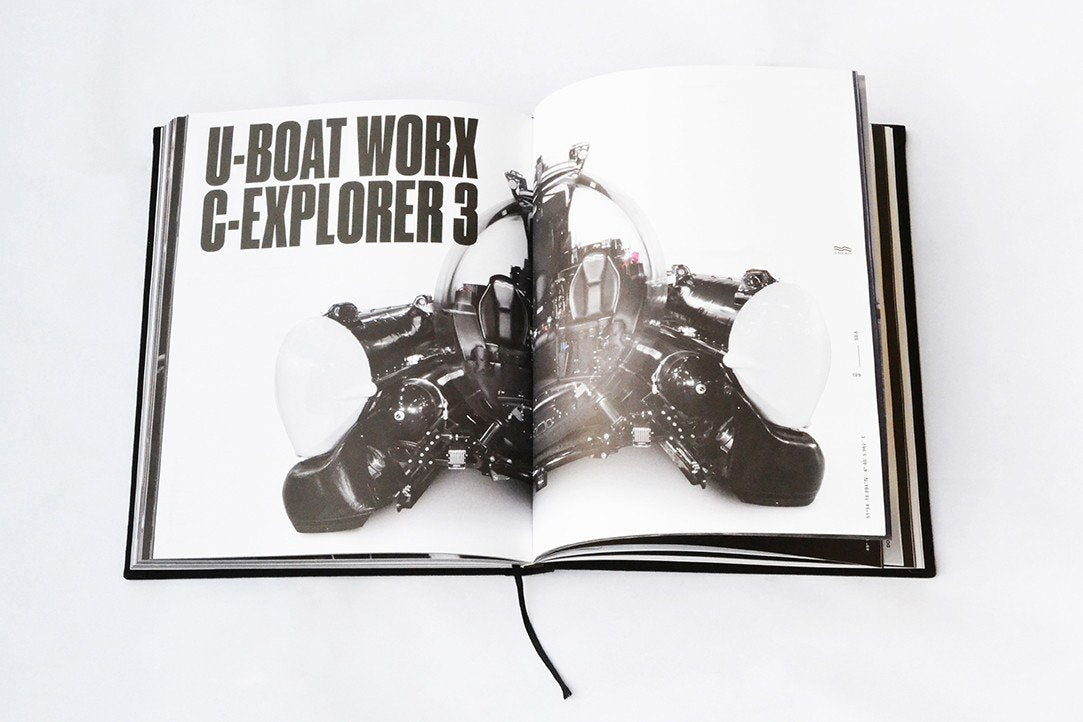
The Five Person Exploration Submarine: A Buyer's Guide

The deep ocean remains one of the least mapped environments on Earth, yet demand for private access to it is climbing quickly. A vessel that seats five turns a solitary dive into a shared expedition, which is why families, research teams, and luxury operators increasingly look toward a five person exploration submarine rather than a single-seat craft. If you are comparing capacity against depth and endurance, our overview of the largest personal submarines is a useful starting reference.
Interest is not anecdotal. According to recent market research, the global personal submarine market reached USD 1.47 billion in 2024 and is projected to expand at a 9.2% compound annual rate through 2033. Rising affluence, better battery technology, and genuine curiosity about the subsea world are driving that growth, and five-seat platforms sit at the heart of it.
What Defines a Five-Seat Exploration Submersible
A five-seat submersible is a manned vehicle engineered to carry one pilot and four passengers below the surface in a sealed, one-atmosphere cabin. Unlike a diver, occupants experience no pressure change, so no decompression is required. These craft are distinct from tourist submarines that seat dozens; they are compact enough to be launched from a large yacht or a dedicated support vessel.
Manufacturers configure the same hull in different ways. Triton, for example, notes that its 1650/7 model can be arranged with seven seats for group viewing or five seats spaced for a more exclusive experience. That flexibility illustrates a core truth of this segment: the number of occupants is a design choice balanced against interior volume, buoyancy, and depth rating.

How Deep Can a Five-Person Craft Go?
Depth is where the trade-off between capacity and engineering becomes clear. Adding seats increases the volume that the pressure hull must protect, which typically limits how deep a passenger-heavy craft can safely descend. Most five-seat models therefore target the upper and middle ocean rather than the abyss.
The published ranges illustrate the spread. U-Boat Worx lists five-occupant vessels such as the Cruise Sub 5 rated to 500 metres and a deeper variant reaching 1,700 metres, while its C-Researcher 5 is rated to 300 metres. Triton's five-seat configuration is engineered for 500 metres. In practice, a deep-diving passenger submersible that carries five people usually operates between 300 and 1,700 metres, which already covers the vast majority of coral walls, wrecks, and mesopelagic marine life that explorers wish to observe.
If your ambition is full ocean depth, expect fewer seats. The record-setting craft that reach the Mariana Trench carry two people, because extreme pressure demands a thicker, heavier, and smaller hull. Understanding this relationship early prevents disappointment later, and our guide on how to buy a personal submarine walks through matching depth to intended use.
Why Demand for Multi-Seat Submersibles Is Rising
The appetite for shared underwater exploration is expanding faster than many adjacent luxury categories. One industry analysis valued the wider personal submarines market at USD 168 million in 2025, forecasting growth to USD 522 million by 2035 at a 12% compound annual rate. Established builders including Triton, U-Boat Worx, and SEAmagine are named as the principal manufacturers shaping that landscape.
Several forces converge here. Wealthy travellers, oceanographers, private island owners, and resort operators now view a submersible as both a research tool and a signature experience. Advances in electric propulsion, battery performance, and composite materials are producing lighter, more efficient craft, which lowers the barrier to ownership and operation. A five-seat cabin fits this shift neatly, because it accommodates a scientist and subjects, a film crew, or simply a family, without the cost and complexity of the largest commercial submarines.

Comparing Five-Seat Models and Access Routes
Because specifications vary widely, a side-by-side view helps clarify where each option sits. The table below summarises representative five-seat configurations and how they differ on the metrics that matter most, alongside the curated acquisition route we provide.
| Option | Occupants | Typical depth range | Best suited to |
|---|---|---|---|
| Our curated submersible marketplace | 5 (and other configs) | Matched to your brief, 300 m to 1,700 m+ | Buyers wanting early access and vetted selection |
| Configurable acrylic-hull model | 5 to 7 | To 500 m | Flexible group viewing and charter |
| Cruise-oriented five-seat sub | 5 | 500 m to 1,700 m | Extended exploration dives |
| Research-oriented five-seat sub | 5 | To 300 m | Shallow-water science and observation |
A single specification sheet rarely tells the whole story, since finish, warranty, and support arrangements differ between builders. When you are ready to weigh live availability against these criteria, our range of Aurora 3C: can you really own a personal submarine? explains the ownership process in plain terms.
Choosing the Right Exploration Submarine
Start with intended use, because it governs every other decision. A film production values steady hover and camera ports; a research group prioritises payload and sampling arms; a private owner may weigh interior comfort above all. Match the mission first, then narrow depth rating accordingly.
Weight is the second gate. A submersible must be launched and recovered, so the vessel's mass has to align with your yacht crane or support ship capacity. Compact five-seat craft can weigh from roughly 8,000 kilograms upward, which directly affects logistics and cost.
Consider the market's dual nature as well. According to one industry report, military and surveillance applications account for an estimated 45 to 50% of global private submarine deployments, with research and tourism making up much of the remainder. That breadth means genuine exploration models must be sourced carefully to ensure they are purpose-built for observation rather than adapted from other roles. Verifying certification, service history, and manufacturer support is therefore essential before any commitment.
Bringing Your Underwater Ambitions Into Focus
Selecting a submarine that seats five for exploration is ultimately an exercise in balance: depth against capacity, weight against endurance, and comfort against mission. Define how you intend to dive, confirm the depth you realistically need, and verify that launch logistics align with your vessel. With those parameters settled, the field narrows quickly, and the remaining choice becomes a matter of finish, support, and availability rather than guesswork.
Take action with TheArsenale
If you have decided that a shared, multi-seat descent suits your ambitions, the next step is access to vetted vessels rather than open-ended searching. We curate high-end ocean exploration machines and connect serious buyers with the right craft for their brief.

Through our submarines for exploration collection and Private Membership, you gain access to selected vehicles before they are listed publicly, with a sales team that typically replies in under thirty minutes. Available in Monaco, Dubai, Doha, and online, we help you move from research to ownership with clarity and confidence.
Frequently Asked Questions
How many people can a five-seat exploration submarine carry?
These vessels are designed for one pilot and four passengers within a sealed, one-atmosphere cabin. Some hulls are configurable, allowing operators to switch between five spacious seats and a higher-density layout depending on the dive.
How deep can a five-person submersible dive?
Most five-seat models operate between 300 and 1,700 metres, depending on hull engineering. Deeper full-ocean-depth records are set by smaller two-person craft, because extreme pressure requires a thicker and heavier hull with less interior volume.
Do passengers need diving experience to ride in one?
No diving certification is required, because the cabin maintains normal surface pressure throughout the dive. Occupants breathe ordinary air and experience no decompression, so the vessel is accessible to guests who cannot scuba dive.
How much does a five-seat exploration submarine cost?
Pricing varies significantly with depth rating, build quality, and customisation, so figures are quoted per project rather than as a fixed list price. We recommend defining your mission and depth needs first, then requesting availability so the quote reflects the correct specification.
Where can I buy a five-person exploration submarine?
You can approach manufacturers directly or work through a curated marketplace. Our submarine collection and Private Membership give access to vetted vessels before public listing, which streamlines comparison across depth, weight, and configuration.