How to Buy a Custom Motorcycle: A Practical Buyer’s Guide

A custom motorcycle can be visually compelling and still be unsuitable for your daily routes, body position, or maintenance expectations. If you are searching for how to buy a custom motorcycle, begin by defining your purpose, then use our guide to how to choose a custom motorcycle to refine the style, powertrain, and quality criteria that matter most.
The safest purchase is rarely the machine with the most dramatic specification sheet. It is the motorcycle whose design, mechanical condition, paperwork, and ownership costs are clear before you commit. A planning resource from Bike EXIF’s planning guide also emphasizes the importance of choosing the project base carefully and treating structural modifications as serious engineering work.
What should your custom motorcycle actually do?
Start with a written riding brief. Note how often you will ride, where you will ride, how far you usually travel, whether you carry a passenger, and how much storage you need. A motorcycle intended for short urban trips can prioritize visual impact and compact dimensions. A machine for touring requires a different approach to seating, suspension, fuel range, weather protection, and luggage.
Your riding position deserves particular attention. Low clip-on handlebars, rear-set foot controls, a narrow seat, and a long reach may suit a short weekend ride. They can become tiring during a daily commute. Similarly, a hardtail frame, minimal fenders, or a single-seat layout can create a distinctive silhouette while reducing comfort and practicality.
Think about maintenance before you think about paint. Ask whether you can access replacement parts locally, whether the engine has established technical support, and whether the builder used standard components or unusual fabricated pieces. A rare part can enhance exclusivity, but it can also extend repair times and increase ownership costs.
Which buying route fits your priorities?
There are three common ways to acquire a custom motorcycle. You can buy a completed build, commission a motorcycle around your specifications, or configure a factory motorcycle with approved options. Each route changes the balance between personalization, waiting time, inspection access, and financial risk.
- Finished custom: You can inspect the completed motorcycle, understand its final proportions, and often arrange a test ride or independent evaluation. Personalization is limited to available inventory, but the finished result is easier to assess.
- Commissioned build: You can select the donor platform, riding position, materials, colors, and mechanical upgrades. The trade-off is a longer process, evolving costs, and the need for written approval at every major stage.
- Factory-customized motorcycle: You start with a current production model and select supported colors, accessories, and equipment. An official builder tool illustrates this more standardized process, including configuration and quote requests.
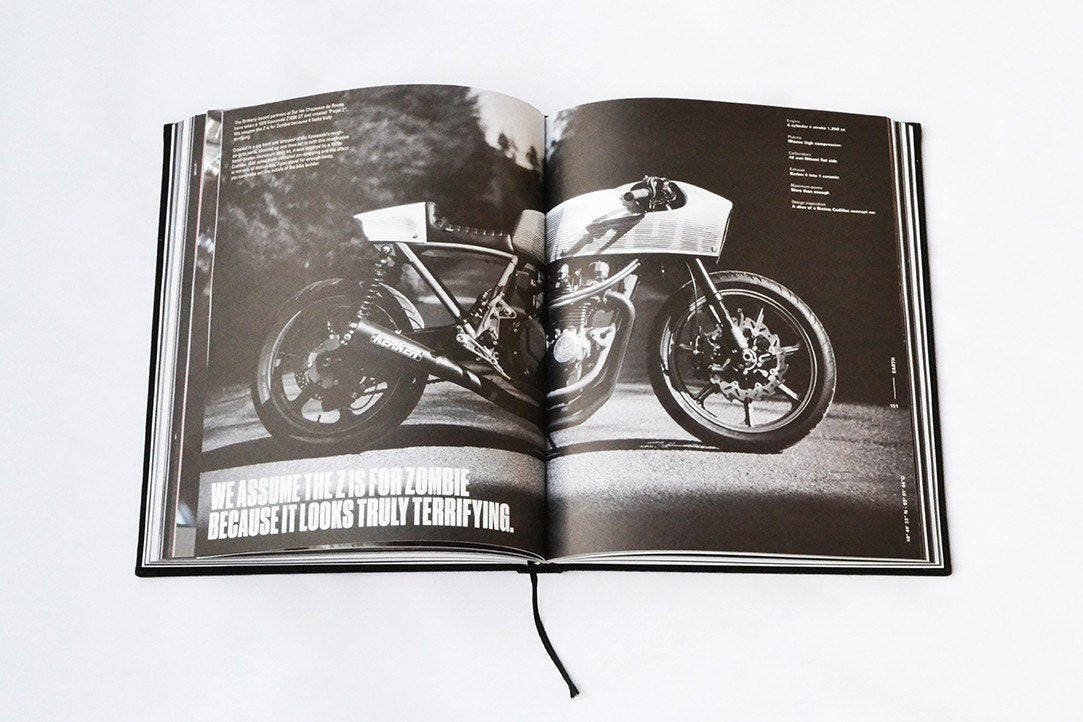
For many buyers, a completed motorcycle provides the clearest path because you can evaluate the actual build rather than relying only on sketches or promises. Our custom motorcycles for sale selection can help you compare finished machines by design language, base platform, and intended character.

A commissioned build makes more sense when you have a precise brief that cannot be met by existing inventory. Before you place a deposit, agree on the donor motorcycle, component standards, design milestones, payment schedule, delivery assumptions, and the process for approving changes. A vague brief creates room for misunderstandings on both sides.
How much should you budget beyond the purchase price?
The displayed price is only one part of the decision. Calculate the total acquisition cost, including inspection, transport, insurance, registration, taxes, import charges, initial servicing, protective equipment, and possible corrective work.
Customization costs rise when the project involves structural fabrication, engine changes, bespoke bodywork, specialist paint, suspension upgrades, or one-off electrical work. Cosmetic changes are usually easier to price than integrated mechanical work. A new tank may appear simple, but its fitment can affect the seat, fuel system, frame clearance, wiring, and paint schedule.
Ask for an itemized proposal that separates the motorcycle, parts, labor, taxes, shipping, and optional upgrades. Confirm whether the quoted amount includes testing, road preparation, technical documentation, and final adjustments. If the seller cannot explain what is included, treat the quote as an estimate rather than a fixed commitment.
Reserve a contingency for discovery work, especially when the motorcycle uses an older donor platform. Corrosion, seized fasteners, damaged threads, worn bearings, hidden accident repairs, and incomplete wiring can emerge only after disassembly. Our bespoke motorcycle pricing guide provides a useful framework for thinking about how design ambition and build complexity affect the final cost.
Which style and powertrain suit your riding?
Style should support the way you ride, not dictate it. A bobber usually emphasizes simplicity, a low stance, and a shortened visual profile. A café racer typically favors a more forward riding position and a streamlined appearance. A scrambler can offer a taller stance and more adaptable equipment, while a chopper often prioritizes dramatic proportions over compact maneuverability.
Consider the consequences of each choice. A long front end may reduce steering agility. A wide rear tire may change handling and replacement costs. A minimal seat can limit passenger use. High exhaust routing may improve clearance but can increase heat exposure. Every visual decision should be tested against ergonomics, braking, suspension, and the roads you actually use.
The powertrain decision requires the same discipline. Combustion motorcycles offer established fueling infrastructure, familiar servicing, and a broad supply of replacement components. Electric motorcycles can provide quiet operation, immediate torque, and simplified drivetrain maintenance, but range, charging access, battery condition, and replacement costs require careful evaluation.
Do not judge an electric custom motorcycle only by its battery capacity. Ask how the battery is cooled, how the management system is supported, whether the charger is included, and what happens if a control component fails. For a combustion motorcycle, ask about compression, oil pressure, fueling, cooling, clutch operation, and the service history of the donor engine.
How can you verify build quality and provenance?
The most attractive motorcycle deserves the most methodical inspection. Begin with the donor motorcycle. Request its identification number, title history, service records, mileage evidence, previous ownership information, and details of any accident or salvage history.
Then ask for a modification record. You should know which parts were removed, which were rebuilt, and which were replaced. A credible builder should be able to explain frame work, steering geometry, suspension changes, braking upgrades, electrical modifications, engine work, and fuel-system changes in plain language.
Inspect the frame and mounting points closely. Look for consistent welds, clean joints, appropriate reinforcement, and evidence that the structure was designed rather than improvised. Pay attention to alignment between the wheels, frame, swingarm, handlebars, and controls. A motorcycle can have beautiful paint and still require expensive structural correction.
Electrical work is another important indicator. Wiring should be secured, protected from heat and abrasion, and routed away from moving components. Connectors should be appropriate for their environment. Fuses, relays, grounding points, switches, and battery terminals should be accessible enough for future service.
Examine suspension and braking components as a system. Confirm that the brake lines are correctly routed, the calipers are aligned, the discs are within specification, and the suspension settings suit the motorcycle’s weight and intended use. An independent mechanic should evaluate the motorcycle before payment whenever practical.
Strong build provenance also supports future value. Keep invoices, photographs, engineering notes, parts lists, certificates, manuals, and correspondence together. Our one-off custom motorcycles for sale content can help you understand why documentation and builder identity matter when a motorcycle is acquired as a collectible object as well as a riding machine.

What paperwork must you confirm before payment?
Paperwork should be reviewed before you send a deposit. Confirm that the seller has the legal right to sell the motorcycle and that the identification number on the frame matches the title, invoice, registration record, and insurance documents.
Ask whether the motorcycle remains registered under its original classification or has been reclassified after modification. Local rules can differ for altered frames, imported motorcycles, home-built machines, and vehicles assembled from multiple parts. A specialist manufacturer’s registration FAQ demonstrates this broader principle by noting that classification can depend on where the vehicle is registered.
If you are buying internationally, identify the responsible party for export documents, customs clearance, import taxes, destination registration, and delivery to your address. Ask whether the quoted transport is insured and whether the motorcycle is crated, secured, and protected against moisture or impact.
For a commissioned project, make the contract precise. It should identify the base motorcycle, agreed specifications, ownership of custom designs, payment milestones, estimated completion date, change-order procedure, warranty terms, and remedies for a material failure to deliver the agreed result.
How do you inspect, negotiate, and complete the purchase?
Arrange a viewing in person whenever possible. Start the motorcycle cold if the seller permits it. Observe starting behavior, idle stability, smoke, warning lights, clutch engagement, gearbox operation, steering resistance, brake feel, and unusual vibration. A short ride should assess straight-line stability, low-speed balance, braking response, and heat management.
If you cannot visit, request a live video inspection rather than relying only on edited photographs. Ask the seller to show the identification number, cold start, controls, lights, tires, chain or belt, brake components, battery area, underside, and any repaired section. The goal is not to eliminate every risk. It is to reduce the information gap before money changes hands.
Use negotiation to clarify risk, not simply to reduce price. Ask whether the seller will correct defects, supply missing documents, include a service, or arrange an independent inspection. A transparent seller may be more valuable than a lower initial price with unclear responsibilities.
Payment should follow a documented sequence. Verify the contract, seller identity, bank details, invoice, title status, and delivery terms. Avoid pressure to transfer funds before you have received essential documentation. Keep written records of every specification and approval, especially when the motorcycle is still being built.
When should you walk away from a custom motorcycle?
Walk away when the seller cannot provide a coherent ownership history, refuses an inspection, minimizes frame modifications, or gives contradictory information about the motorcycle’s identity. Missing paperwork can sometimes be corrected, but you should understand the process and cost before proceeding.
Be cautious when the motorcycle has impressive photographs but limited technical information. A custom build is not automatically well engineered because it is rare, expensive, or displayed at an event. Look for evidence of controlled fabrication, careful assembly, road testing, and responsible after-sales communication.
You should also reconsider the purchase if the motorcycle does not fit your riding brief. A collectible machine may be ideal for display and occasional use, yet unsuitable for commuting. A highly personalized build may be difficult to resell if the design sacrifices comfort, reliability, or legal usability.
The right decision combines emotion with verification. If the motorcycle satisfies your purpose, budget, engineering expectations, documentation requirements, and ownership plans, you can proceed with greater confidence. If one of those foundations remains unclear, patience is usually the more valuable choice.
Make the purchase methodical
Learning how to buy a custom motorcycle is primarily an exercise in sequencing. Define the riding purpose first, select the appropriate buying route, price the complete ownership commitment, and inspect the machine as both a design object and a mechanical system. Confirm provenance, paperwork, registration requirements, and delivery responsibilities before payment. The most satisfying custom motorcycle is not merely distinctive. It is a machine you understand, can maintain, and can use as intended.
Take action with TheArsenale
Once your criteria are clear, the next step is to compare motorcycles that reflect your expectations for design, rarity, engineering, and provenance. We support collectors and enthusiasts who want a more considered route to acquiring unusual mobility objects.

Explore our curated custom motorcycles collection to review available machines and identify a direction for your search. When you require a more tailored conversation, our team can assist with high-value acquisition questions and help you evaluate whether a finished motorcycle or a bespoke project is the better fit.
Frequently Asked Questions
What should I decide before buying a custom motorcycle?
Decide how and where you will ride, whether you need passenger capacity, and how much maintenance you will accept. These answers will guide the motorcycle’s style, ergonomics, powertrain, and equipment.
Is it better to buy a finished motorcycle or commission a build?
A finished motorcycle is easier to inspect because the result already exists. A commissioned build provides greater personalization, but it requires a precise brief, staged approvals, and stronger control of costs and timing.
How can I tell whether a custom motorcycle is well built?
Review the donor history, modification record, frame work, wiring, suspension, brakes, and service documentation. An independent mechanical inspection is strongly advisable before you complete the purchase.
What documents should I request from the seller?
Request the title, identification number, invoice, registration history, service records, modification details, and any import or customs documents. Confirm that the motorcycle’s classification remains suitable for registration and insurance in your location.
Can TheArsenale help me find a rare custom motorcycle?
Yes. We curate motorcycles and other rare mobility objects, and our team can support questions related to high-value acquisitions, available machines, and sourcing requirements.