How to Choose an Electric Bike: A Complete 2026 Guide
The electric bicycle has moved from novelty to mainstream transport with remarkable speed. Understanding how to choose an electric bike now matters to millions of riders weighing commuting, fitness, and cargo needs against a crowded market of models and price points. Before comparing spec sheets, it helps to clarify what kind of rider you intend to be, because that single decision shapes every choice that follows. If your ambitions lean toward trails, our guide to how to pick an e-MTB for your riding style is a useful starting reference.
The scale of this shift is real. The global e-bike market is projected to grow at a compound annual rate of 9.2% through 2033, according to Grand View Research. That momentum has produced an enormous range of options, which is exactly why a structured approach protects your budget and your satisfaction.
Start with how you will actually ride
Every good decision begins with an honest question: where will this bike spend most of its life? A daily commuter crossing flat city streets has different needs from a weekend rider tackling gravel or a parent hauling groceries and children. Commuter and city models prioritize versatility, fenders, lights, and comfortable ergonomics, while cargo bikes trade agility for load capacity and stability.
Terrain and climate weigh heavily here. Hilly routes reward a wider gear range and a stronger motor, whereas flat urban grids forgive lighter, simpler builds. If you intend to store the bike indoors or lift it onto a train, weight and folding capability become decisive. Mapping your typical week before you shop prevents the common mistake of buying more bike, or less, than your life requires.

Understand the three e-bike classes
Regulation, not marketing, defines the categories that govern where you may legally ride. In the United States, e-bikes fall into three classes based on speed and how power is delivered. Class 1 models provide pedal-assist up to 20 mph and engage the motor only while you pedal. Class 2 models also cap at 20 mph but add a throttle, allowing acceleration without pedaling. Class 3 models reach 28 mph and are frequently restricted from bike paths and off-road trails.
These distinctions carry practical consequences. Faster machines may require a helmet, a speedometer, or even a license depending on your jurisdiction, so confirming local rules before purchase is essential. Pedal-assist remains the dominant preference: in 2026, pedal-assist propulsion is projected to account for roughly 80% of the segment, per Future Market Insights. For most beginners, a Class 1 or Class 2 bike offers the most forgiving and widely permitted entry point.
Motor and battery: the heart of the machine
Two motor architectures dominate the market. Hub motors, mounted in the rear wheel, deliver a smooth, tailwind-like push and generally cost less. Mid-drive motors, integrated at the pedals, route power through the bike's gears, which improves hill climbing and can conserve battery on longer rides. Neither is universally superior; the right choice depends on your terrain and how natural you want the pedaling sensation to feel.
Battery capacity, measured in watt-hours, determines range. Larger batteries travel farther but add weight, and a full recharge typically takes between one and five hours. Prioritize batteries carrying recognized safety certification, since poorly tested cells are a documented fire risk. When you evaluate a model, consider not only its stated range but how that range holds up on hills, at higher assist levels, and in cold weather, where real-world figures often fall short of the label.
Set a realistic budget
Sticker shock is common for first-time buyers. Quality electric bikes generally start around $1,000 and climb steeply from there, with specialty models reaching several thousand dollars. To frame the investment, the United States e-bike market was valued at roughly USD 4.06 billion in 2026, according to Mordor Intelligence, reflecting both rising demand and premium pricing.
Price often correlates with component quality, motor refinement, and after-sales support. Beware of unknown internet-only brands that may vanish before you need warranty service. A trusted local shop, by contrast, can handle assembly, fitting, and repairs. Design and engineering coherence also matter more than raw specifications; our exploration of what makes an e-bike design "work" illustrates how integration separates a durable machine from a fragile one.
Match the type to your mission
Once class, motor, and budget are clear, the body style falls into place. The table below compares common categories against the criteria that matter most, alongside where our own curation fits for buyers seeking rare, high-end machines.
| Type | Best for | Trade-off |
|---|---|---|
| City / Commuter | Daily transport, errands | Heavier than sport models |
| Cruiser | Relaxed leisure riding | Limited gearing for distance |
| Mountain (eMTB) | Trails and steep climbs | Trail access restrictions |
| Cargo | Hauling loads and passengers | Large, heavy, less agile |
| Folding | Storage, mixed transit | Smaller wheels, stiffer ride |
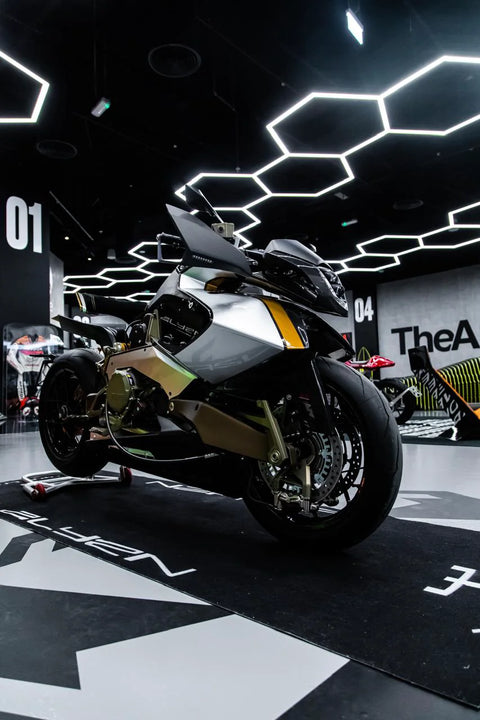
| TheArsenale curated e-bikes | Collectible, high-end mobility with early access | Premium positioning |
For off-road ambitions, our overview of choosing an electric mountain bike shows how frame, suspension, and power combine for demanding terrain. Whichever category you favor, the type should serve the mission you defined at the outset, not the other way around.

Smart features, safety, and the test ride
Modern electric bikes increasingly ship with connected technology: GPS tracking, motion alarms, geofencing, and remote lockout. These systems deter theft and add convenience, though some rely on subscriptions worth factoring into ownership costs. To understand which capabilities genuinely earn their place, our look at smart e-bike features (what to look for) separates meaningful additions from gimmicks.
Safety fundamentals remain non-negotiable. Choose a helmet meeting recognized standards, invest in lights to both see and be seen, and select a robust lock. Above all, test-ride before buying. Milestones such as e-bike sales surpassing one million units in the United States in 2022, documented by the Department of Energy, confirm how mainstream these machines have become, yet no statistic replaces the feel of a bike beneath you. A short ride reveals fit, brake response, and ride quality that no specification sheet can convey.
Bringing your decision together
Knowing how to select the right electric bike comes down to a disciplined sequence: define your rides, choose the appropriate class, weigh motor and battery against your terrain, set a realistic budget, then confirm the fit with a test ride. Prioritize safety certification, reputable support, and honest range expectations over headline numbers. When those elements align with how you genuinely intend to ride, the result is a machine that rewards you every time you roll out.
Take action with TheArsenale
If your search for the right electric bike has grown into an appetite for something genuinely rare, your standards may reach beyond the mass market. We curate high-end mobility and collectible machines for riders who value design, engineering, and exclusivity as much as everyday capability.

As a luxury mobility marketplace, we give our Private Membership access to vehicles before they are listed publicly, with free shipping and a team that typically replies in under thirty minutes. Explore our curated electric bikes collection to discover machines selected for performance and craftsmanship, and to find a ride that reflects the way you move through the world.
Frequently Asked Questions
What is the difference between Class 1, Class 2, and Class 3 e-bikes?
Class 1 offers pedal-assist up to 20 mph, and Class 2 adds a throttle at the same top speed. Class 3 reaches 28 mph but is often barred from bike paths, so you should confirm local regulations before you buy.
Should I choose a hub motor or a mid-drive motor?
A hub motor is generally more affordable and delivers smooth, steady power on flat terrain. A mid-drive motor routes power through the gears, improving hill climbing and range, which makes it the stronger choice for hilly or off-road riding.
How much should I expect to spend on a quality electric bike?
Reliable models typically begin around $1,000, with premium and specialty machines reaching several thousand dollars. Investing in recognized components and reputable after-sales support usually costs less over time than repairing a bargain bike that fails early.
Where can I find rare or high-end electric bikes?
Beyond mainstream retailers, curated marketplaces serve buyers seeking exclusivity and craftsmanship. Our electric bikes collection focuses on high-end and collectible machines, and our Private Membership offers access to select vehicles before they are listed publicly.
Is a test ride really necessary before buying?
Yes, a test ride reveals fit, comfort, brake feel, and motor response that no specification sheet can capture. Whenever possible, ride the exact model, or a close equivalent, on terrain similar to your intended routes before committing.