How to Choose an Electric Jetboard: A Practical Guide
An electric jetboard can look simple on a product page, yet its ride depends on a precise balance of rider weight, board volume, power, and water conditions. If you are comparing options, how to choose an electric jetboard starts with the rider rather than the headline speed. Our electric jetboard buying guide can provide additional context while you build your shortlist.
Published specifications are useful, but they do not tell the whole story. A compact board may be agile but demanding, while a larger hull may offer easier starts and more predictable handling. Battery claims also vary with rider weight, throttle use, temperature, and water conditions, so the right decision requires a broader ownership view.
What should you assess about the rider first?
Begin with your fully equipped riding weight, including a wetsuit, flotation vest, helmet, and any regular equipment. Compare that figure with the manufacturer’s approved rider or total-load limit. Treat the maximum rating as a boundary, not as the ideal operating point.
A rider close to the limit may experience slower acceleration, deeper trim, shorter range, and less responsive handling. Beginners usually benefit from additional capacity because a stable platform makes standing, restarting, and recovering from mistakes easier. Confirm whether the published limit includes equipment and whether the board is intended for one rider only.
- New riders: Prioritize stability, buoyancy, predictable acceleration, and a forgiving deck.
- Experienced riders: Consider compact dimensions, sharper turning, foot straps, and stronger power delivery.
- Heavier riders: Look for enough volume, motor output, and battery capacity to maintain planing performance.
- Shared users: Choose according to the heaviest regular rider, then confirm whether the design suits different skill levels.
How do water conditions change the right board?

Imagine using the same board on a sheltered lake and in open coastal chop. The lake may reward a lighter, more compact setup, while changing wind, wakes, and surface movement can make extra stability more valuable. Your usual launch location should influence the hull before you consider cosmetic details.
Higher-volume boards generally sit higher in the water and offer more support at low speed. They can be easier for learning and relaxed cruising, although they may feel less agile during aggressive turns. Shorter, lower-volume boards often reward experience with faster directional changes, but they can demand better balance and more precise throttle control.
Also consider how you prefer to ride. A relaxed rider may value smooth power delivery and a comfortable deck. A performance-focused rider may accept a steeper learning curve for sharper response. Ask the manufacturer how the board behaves in flat water, small chop, and the conditions you expect to encounter most often.
Which motor and battery specifications matter most?
Do not choose solely by maximum speed. A useful comparison considers propulsion system, acceleration, continuous power, battery capacity, charge time, and how those figures change with rider weight. A board that reaches a high headline speed may still be unsuitable if it is difficult to launch or delivers limited usable range.
Published ride times commonly cover a broad range, often from approximately 25 to 60 minutes. Treat that figure as a testing reference rather than a guarantee. Full-throttle riding, repeated acceleration, heavier loads, cold temperatures, and choppy water can reduce practical session time.
Battery design deserves particular attention. Check whether the pack is removable, whether a spare battery is available, how long a full charge takes, and whether replacement packs are expected to remain supported. Our guide on how to buy an electric surfboard can help you structure this technical comparison.
- Compare battery capacity in watt-hours, not only advertised ride time.
- Ask whether the board reduces power automatically at a low charge level.
- Confirm the recommended charging environment and storage temperature.
- Check the expected battery replacement process and associated costs.
- Review whether the controller shows battery status clearly while riding.
Which safety and construction details should you verify?
Safety should be assessed as a system. A reliable board should include a leash or tether with a magnetic kill switch that stops propulsion when the rider falls. The system should also prevent accidental activation when the safety key is disconnected.
Ask how the battery compartment is sealed, how connectors are protected, and whether the propulsion system shields moving components. Waterproofing claims should be supported by clear operating instructions. You should also understand what the manufacturer requires after saltwater use, including rinsing, drying, inspection, and connector care.
Before ordering, verify the following points:
- Magnetic safety key or engine cutoff system.
- Secure leash attachment suitable for the intended riding position.
- Helmet and approved flotation equipment recommendations.
- Clear battery charging, storage, and transport instructions.
- Documented maintenance procedures for fresh, salt, or brackish water.
- Replacement availability for batteries, controllers, chargers, and propulsion parts.
For a broader view of performance-led options and equipment priorities, compare our best electric surfboards selection with the requirements of your own riding profile.
How much does ownership really cost?

The purchase price is only one part of the decision. Add the charger, spare battery, transport case, safety equipment, storage solution, shipping, taxes, import charges, and possible service costs. International buyers should request a delivered quote because the final amount can change substantially by destination.
Weight also affects practicality. A powerful board with a large battery may offer stronger performance, but it can be difficult to carry from a vehicle to the water. Check the combined weight of the board and battery, the available handles, and whether a trolley or second person will be necessary.
After-sales support can matter as much as the specification sheet. Look for an established distributor, clear warranty terms, documented service procedures, and a realistic route for battery or motor repairs. A lower initial price may be less attractive if parts are difficult to obtain or technical questions go unanswered.
Before comparing final prices, ask these questions:
- Is the quoted price inclusive of tax, shipping, and import charges?
- What equipment is included in the standard package?
- Are spare batteries and chargers available in your region?
- Where are warranty repairs handled?
- How long are replacement parts expected to remain available?
- What maintenance is recommended after each session?
What local rules must you check before buying?
Powered boards can be classified differently by country, state, province, or waterway. Some authorities may treat them as personal watercraft or motorized vessels, while access rules can differ between coastal waters, lakes, rivers, and private property.
Contact the relevant boating authority and the manager of your intended launch site before placing an order. Confirm registration, identification markings, operator age, safety equipment, speed limits, navigation zones, insurance, and any restrictions on powered boards. Do not assume that permission on one body of water applies elsewhere.
Battery transport also deserves planning. Large lithium batteries may be subject to special carrier requirements and may not be accepted as ordinary passenger luggage. Ask the manufacturer how the battery should be shipped, stored, and transported before arranging travel or delivery.
When your research is complete, reduce the choice to two or three boards and compare them against the same criteria. The best match is the one that satisfies your practical conditions with enough margin for learning, changing water, maintenance, and future use.
Choose for the ride you will actually have
Choosing an electric jetboard is less about finding the fastest specification and more about matching the complete system to your real habits. Start with rider weight and skill, then assess volume, water conditions, propulsion, battery behavior, safety, transport, support, ownership cost, and local rules. A board that fits those conditions will be easier to control, easier to maintain, and more rewarding over time.
Take action with TheArsenale
Once you understand your rider profile, water conditions, and ownership priorities, the next step is to review a machine that fits those requirements. We bring together rare and future-oriented mobility objects through a curated marketplace, with personal sales assistance available for high-value acquisitions.

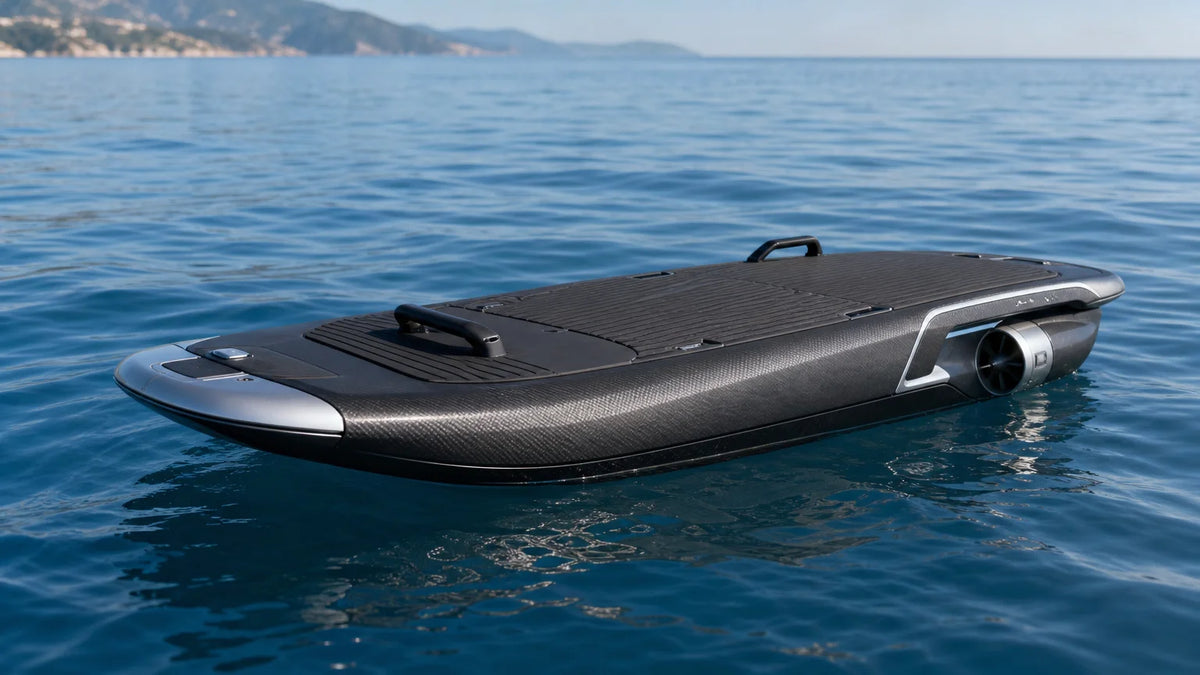
For a direct next step, explore our Mako electric jetboard. Our team can help you discuss the machine, clarify acquisition details, and consider whether its format suits your intended use. You can also browse our wider collection of electric watercraft before making a final decision.
Frequently Asked Questions
Is a larger electric jetboard easier for beginners?
Usually, a larger and more buoyant board offers greater stability at low speed and makes standing easier. It may be less agile than a compact performance board, so choose based on both your learning needs and long-term riding style.
How important is rider weight when choosing a jetboard?
Rider weight affects flotation, acceleration, planing, handling, and battery consumption. Compare your fully equipped weight with the manufacturer’s stated limit, and choose a board with practical headroom rather than relying on the maximum rating alone.
How long does an electric jetboard battery last?
Usable ride time depends on battery capacity, rider weight, speed, water conditions, and throttle habits. Published figures often vary widely, so ask for realistic range expectations under conditions similar to your own.
What safety feature should every electric jetboard have?
A leash-connected magnetic kill switch is an essential feature because it can stop propulsion when the rider falls. You should also use suitable flotation equipment and a helmet, and follow the manufacturer’s operating instructions.
Do electric jetboards need to be registered?
Requirements vary by jurisdiction and waterway. Check with the relevant boating authority and launch-site manager for registration, identification, operator, equipment, and access rules before buying.