Mini Submarine for Sale: A 2026 Buyer's Guide to Ownership

Private underwater travel is no longer the exclusive province of navies and research institutes. If you have searched for a mini submarine for sale, you have joined a growing group of yacht owners and ocean explorers who want direct access to the depths. Before you compare hulls and depth ratings, you may wish to review our personal submarine listings to understand what the current market actually offers.
The financial scale of this niche is considerable. According to a market research report, the global personal submarine market reached USD 1.47 billion in 2024 and is projected to expand at a compound annual rate of 9.2 percent through 2033. That momentum reflects genuine demand rather than novelty, and it explains why more manufacturers are producing certified, owner-operable craft than at any point in the past.
What Defines a Compact Personal Submersible
A mini submarine, often called a personal submersible, is a compact craft measuring only a few meters in length. It is designed to carry one to three occupants and, in many cases, to fit within a superyacht tender bay. Buyers generally sort private craft into a handful of practical families.
- Leisure submersibles prioritize comfort and reef-level viewing, integrating closely with a yacht.
- Tourism submersibles carry larger groups for resort or cruise operations.
- Research and professional craft serve filmmakers, documentarians, and scientists who require greater depth and utility.
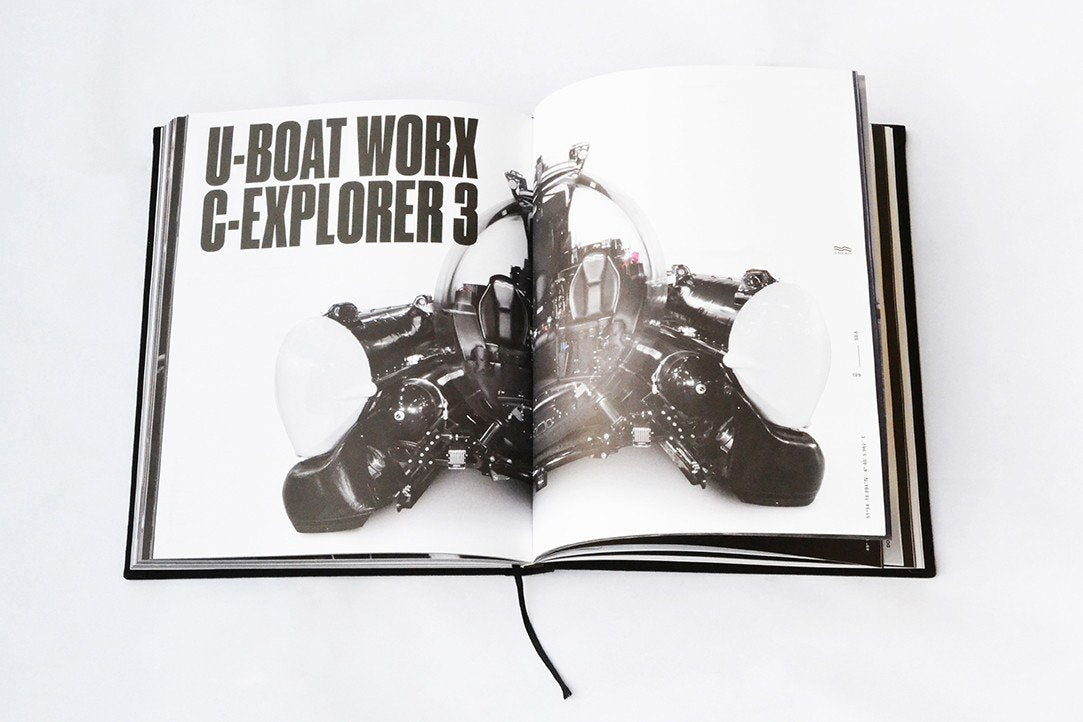
Most compact hulls are somewhat spherical, built around transparent acrylic domes that deliver panoramic underwater views. Because pressure increases sharply with depth, these vessels combine acrylic or composite pressure hulls with vertical thrusters, redundant life-support systems, and precise ballast control. If you are still narrowing your options, our guide on how to buy a mini submarine walks through the practical steps in order.

How Much a Mini Submarine Costs in 2026
Price is the first question most buyers ask, and the range is wide. A compact, owner-operated submersible generally begins in the high six-figure range, while ultra-deep and superyacht-scale vessels reach well into eight figures. The variables that move a quotation are consistent: depth rating, cabin volume, seat count, and the level of interior refinement.
Depth capability is the single biggest driver. A craft rated for a few hundred meters costs far less to engineer than one designed to reach thousands of meters, because pressure-hull thickness, materials, and testing all scale with depth. Capacity matters too, as a one-person glider and a five-person cabin represent entirely different structural challenges. To see how a specific three-seat vessel is positioned, you may consult our Aurora 3C personal submarine ownership guide.
Why the Market Keeps Expanding
Why is private underwater travel attracting so much capital? The straightforward answer is access. Wealthy buyers increasingly value environments that money alone rarely reaches, and a personal submersible delivers exactly that. The category has also matured technically, drawing on decades of proven pressure-hull and life-support engineering now adapted for leisure use.
Analysts describe a rapid evolution in buyer psychology. According to a luxury market analysis, the private submarine has shifted from a specialized research tool to a recognized symbol of exclusivity and adventure among affluent explorers. As wealth concentration accelerates globally, these bespoke vessels increasingly function as a form of luxury asset ownership rather than mere equipment. Separately, one 2026 industry forecast attributes continued expansion to rising underwater tourism, advances in propulsion, and the widening scope of marine research applications.
Comparing Ways to Source Your Submersible
There are three broad routes to acquiring a personal submarine: buying direct from a single manufacturer, working through a general broker, or sourcing through a curated luxury mobility marketplace. Each differs in selection breadth and access to inventory that is not publicly listed. The table below sets out the practical trade-offs.
| Sourcing route | Selection breadth | Early access to unlisted craft | Curated for luxury mobility |
|---|---|---|---|
| Single manufacturer | One product range | Limited | Partial |
| General broker | Varies by listing | Occasional | No |
| Our marketplace (TheArsenale) | Cross-category curation | Yes, via Private Membership | Yes |
A single manufacturer can only sell you its own range, which makes objective comparison difficult. Through our curation, we help you compare craft across categories and match a vessel to your intended dives, and through our Private Membership you may access vehicles before they are listed publicly. For a wider survey of channels, our overview of where to buy a mini submarine compares the leading options.

What to Verify Before You Buy
Imagine two buyers with identical budgets but very different goals: one wants to drift over shallow reefs, the other wants to reach deep shipwrecks. The right craft is not the same for both. A structured checklist keeps the decision grounded.
- Classification and certification. Confirm the vessel is classed by a recognized society such as Lloyd's Register, the American Bureau of Shipping, or DNV.
- Depth rating. Match the certified depth to your actual diving intentions, whether shallow reefs or deep exploration.
- Transport and launch. Personal submarines cannot be trailered casually; they require dedicated launch and recovery machinery aboard a yacht.
- Pilot training. Verify whether an owner-operator training pathway is included with the purchase.
- Manufacturer track record. Established builders dominate this market for a reason: safety history and after-sales support carry real weight.
The competitive field is well documented. According to a market landscape report, recognized builders including Triton Submarines, U-Boat Worx, DeepFlight, and several others anchor the recreational segment. Choosing among them is less about brand loyalty and more about aligning depth, capacity, and support with your intended use.
Making a Confident Purchase Decision
Buying a compact personal submarine rewards patience and precision. Define your diving goals first, then let depth rating, capacity, classification, and manufacturer support narrow the field. Treat price as the outcome of those engineering decisions rather than the starting point. A certified craft from an established builder, matched carefully to how you intend to explore, will serve you far better than a purchase driven by specifications alone. Verify credentials, confirm training, and plan for transport before you commit.
Take action with TheArsenale
Choosing the right submersible is easier when the market is curated for you rather than scattered across manufacturers and unverified listings. If you are ready to move from research to acquisition, we can connect your diving goals to the appropriate craft.

Explore our curated collection of personal submarines, where our Private Membership grants access to vehicles before they are listed publicly. Our sale team is available around the clock and usually replies in less than thirty minutes, so your enquiry receives a prompt, informed response.
Frequently Asked Questions
How much does a mini submarine typically cost?
Entry-level compact submersibles generally begin in the high six-figure range, while larger and deeper craft reach several million dollars or more. The final figure depends primarily on depth rating, cabin capacity, and interior refinement.
Do you need a licence to operate a personal submersible?
Owners are usually trained through a manufacturer or specialist pilot programme before operating their own craft. Requirements vary by jurisdiction and by the classification of the vessel, so you should confirm local regulations early.
How deep can a compact personal submarine dive?
Recreational models commonly reach depths between roughly 100 and 500 meters, while specialised craft can descend much further. The certified depth rating you select should reflect your actual exploration goals rather than headline figures.
Can a mini submarine be stored on a yacht?
Many compact submersibles are designed to fit within a superyacht tender bay and launch from the aft deck. Dedicated crane or launch machinery is required, so integration should be planned before purchase.
Where can you buy a certified personal submarine safely?
Certified craft are available directly from established manufacturers, through brokers, or via a curated marketplace. Through our marketplace and Private Membership, we help you compare vessels across categories and access inventory before it is publicly listed.