GEx: The 130-Metre Yacht Designed Around Four Helicopters
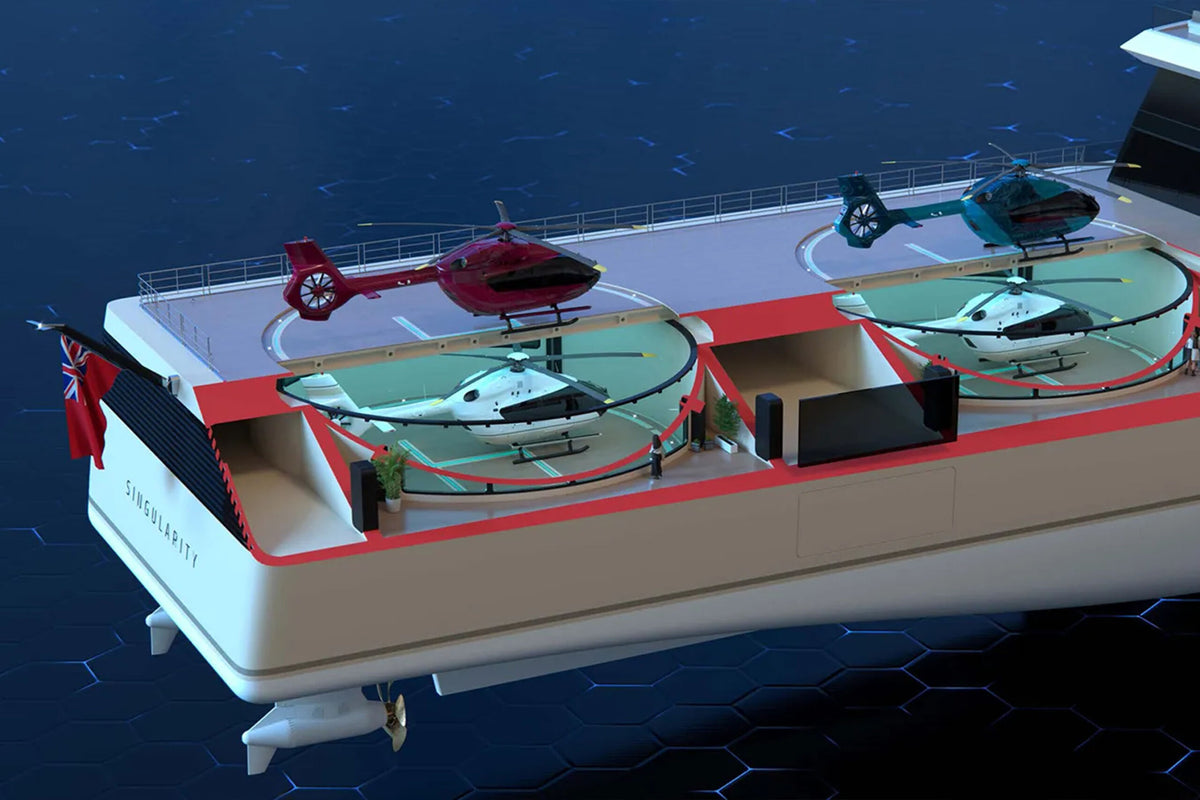
What happens when a superyacht is designed around aircraft operations from the very first sketch? GEx, a 130-metre explorer concept by Alexander McDiarmid Design, starts with that question. Its defining proposition is an aviation system planned into the vessel’s architecture: two flight areas, two below-deck hangars and capacity for four Airbus ACH145 helicopters.

That brief changes the usual order of priorities. A helipad is often treated as one amenity among many; on GEx, aircraft storage, movement and access help shape the yacht itself. The concept was developed with Lateral Naval Architects, Ghost Yachts and Maritime Aviation, bringing naval architecture and aviation expertise into the same early design conversation.
A hangar built into the yacht
GEx proposes space for two helicopters on the flight deck and two more in enclosed hangars below. Lifts would move the aircraft between levels, while a dedicated aviation lounge is intended to connect guests directly with the hangars. The concept’s four-aircraft capacity refers to the layout shown in the design, not to helicopters ordered or owned for a vessel.
The arrangement is striking because it brings aviation into the yacht’s volume rather than leaving it on top as a single landing pad. Enclosing aircraft below deck could protect them during long passages and severe weather, while keeping the main flight areas available for operations. It also creates a demanding architectural and engineering puzzle: hangars, lifts and flight decks need substantial space, and their weight and openings must be resolved alongside hull structure, stability and guest circulation.

Designed for distance, not just arrival
The project is presented as an ice-class polar explorer. In that context, helicopters suggest more than a dramatic arrival: they could extend the reach of an expedition when shore access is limited. But a concept drawing cannot establish real-world operating range or safety. Weather, flight planning, crew qualifications, fuel and local aviation rules would all shape how such a system could be used.
Likewise, “ice-class” describes the project’s ambition at concept stage; it is not evidence that a completed yacht has received a class notation or operational approval. No shipyard, construction contract or delivery programme has been announced. The dimensions and layouts remain part of a design proposal, not a vessel under construction.
Keeping the yacht in the picture
GEx’s challenge is to accommodate specialist equipment without letting the yacht read as a floating hangar. The exterior renders use a long, layered profile, with a central superstructure that gives the large vessel a distinct silhouette. The aviation facilities are prominent, but they sit within a broader expedition brief that also includes observation spaces and the familiar life-on-board expected of a superyacht.

That balance is where GEx becomes more than a checklist of extraordinary features. The aircraft are not simply accessories to a yacht; they are a reason to reconsider where the deck begins, where enclosed volume sits and how guests and crew move through the vessel. The design team’s central question is whether a yacht can make serious aviation feel integral to life at sea.
For now, GEx remains an invitation to imagine that possibility. Its four-helicopter arrangement is an unusually clear statement of intent, while the open questions around engineering, certification and construction keep the project in the realm of design exploration. The concept’s most interesting achievement may be the way it turns an operational requirement into the starting point for an entirely different kind of yacht.
Sources
- Alexander McDiarmid Design — GEx project and original concept imagery.
- Yacht Kings — project details and partner firms.
- Superyacht Guide — design status and technical caveats.