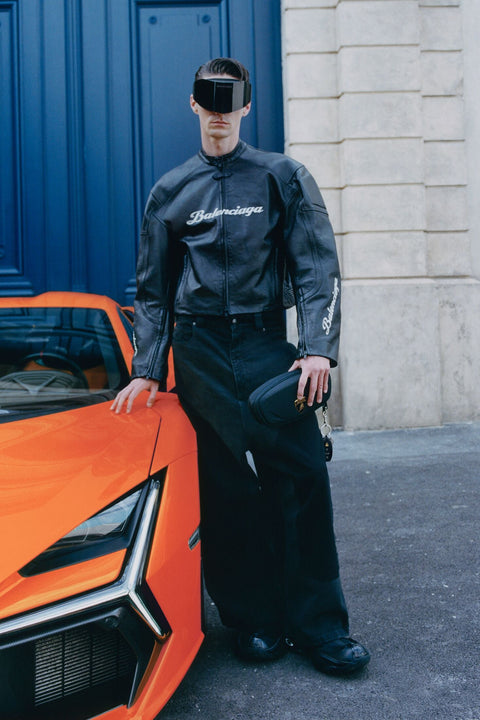
Louis Vuitton x Singer: When the Art of Travel Enters the Porsche 911
What if a road trip could be designed as carefully as the car that carries it? At Monterey Car Week 2026, Louis Vuitton and Singer answered with two one-off Porsche 911s and an entire travelling world shaped around them. The collaboration began with a small object: a dashboard clock. It grew into a meeting of automotive engineering, leather craft, watchmaking, fashion and luggage design.
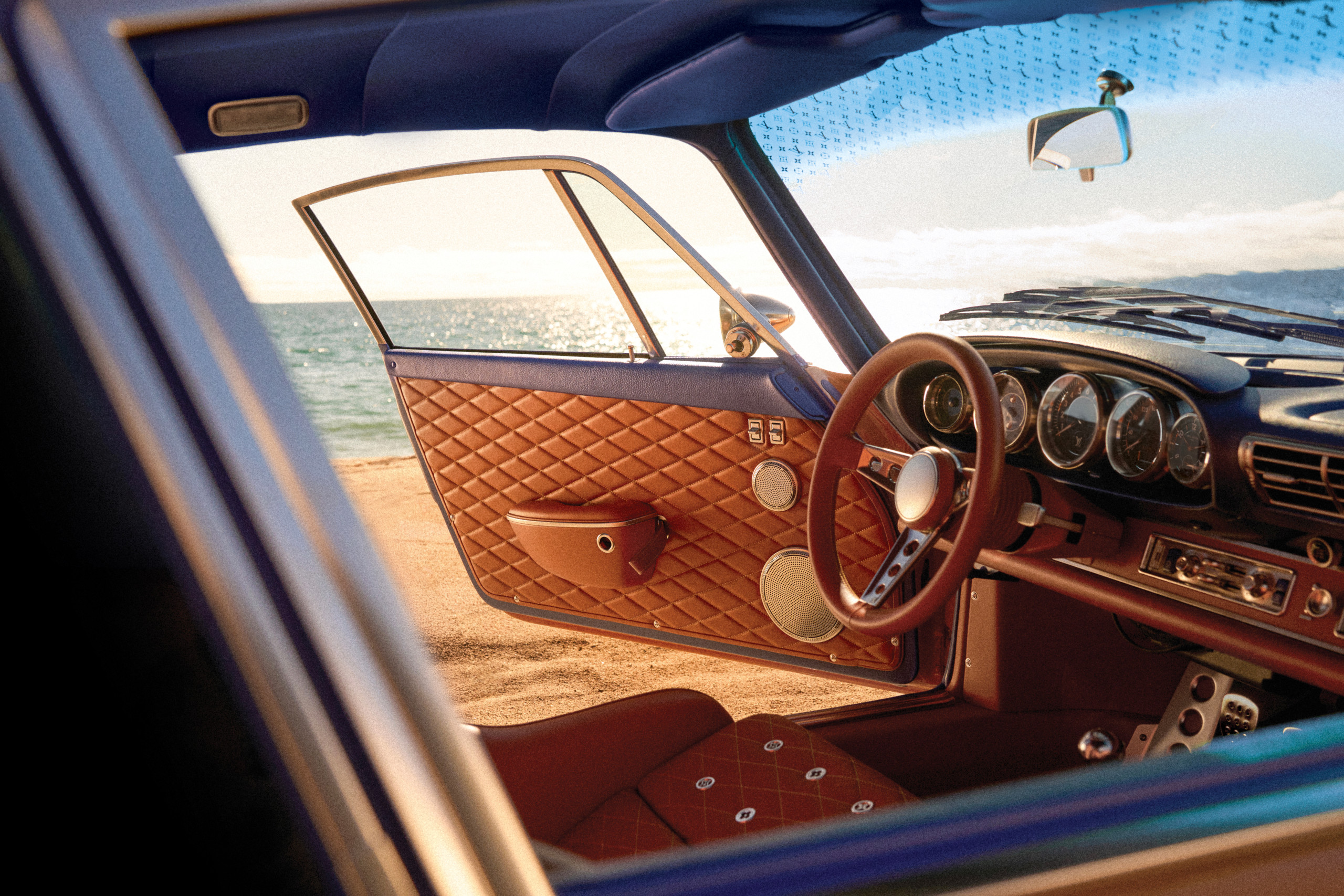
That origin matters. Rather than begin with a logo or a limited-edition colour, the project started with a mechanical timepiece made by Louis Vuitton’s La Fabrique du Temps workshops. As the clock took shape, the teams found a broader question: could the house’s expertise in watchmaking and leather goods influence the car’s functional details as well as its appearance?
Two 911s, two ideas of travel
The first car, the Porsche 911 Reimagined by Singer – Classic, is a coupé based on a Type 964. Its saffron, cobalt-blue and yellow palette draws on Louis Vuitton’s visual identity and the colours of historic travel trunks. Singer’s roof rack is designed to carry a trunk, skis or a bespoke surfboard, turning the car’s silhouette into a statement about setting off rather than simply arriving.
The second, the Porsche 911 Reimagined by Singer – Classic Turbo, takes a different route. Conceived with Nicolas Ghesquière, Louis Vuitton’s Artistic Director of Women’s Collections, the white cabriolet draws on the forms and materials of classic motorboats. Natural leather, wood detailing, gold accents and an open cabin give it a quieter, more nautical character.
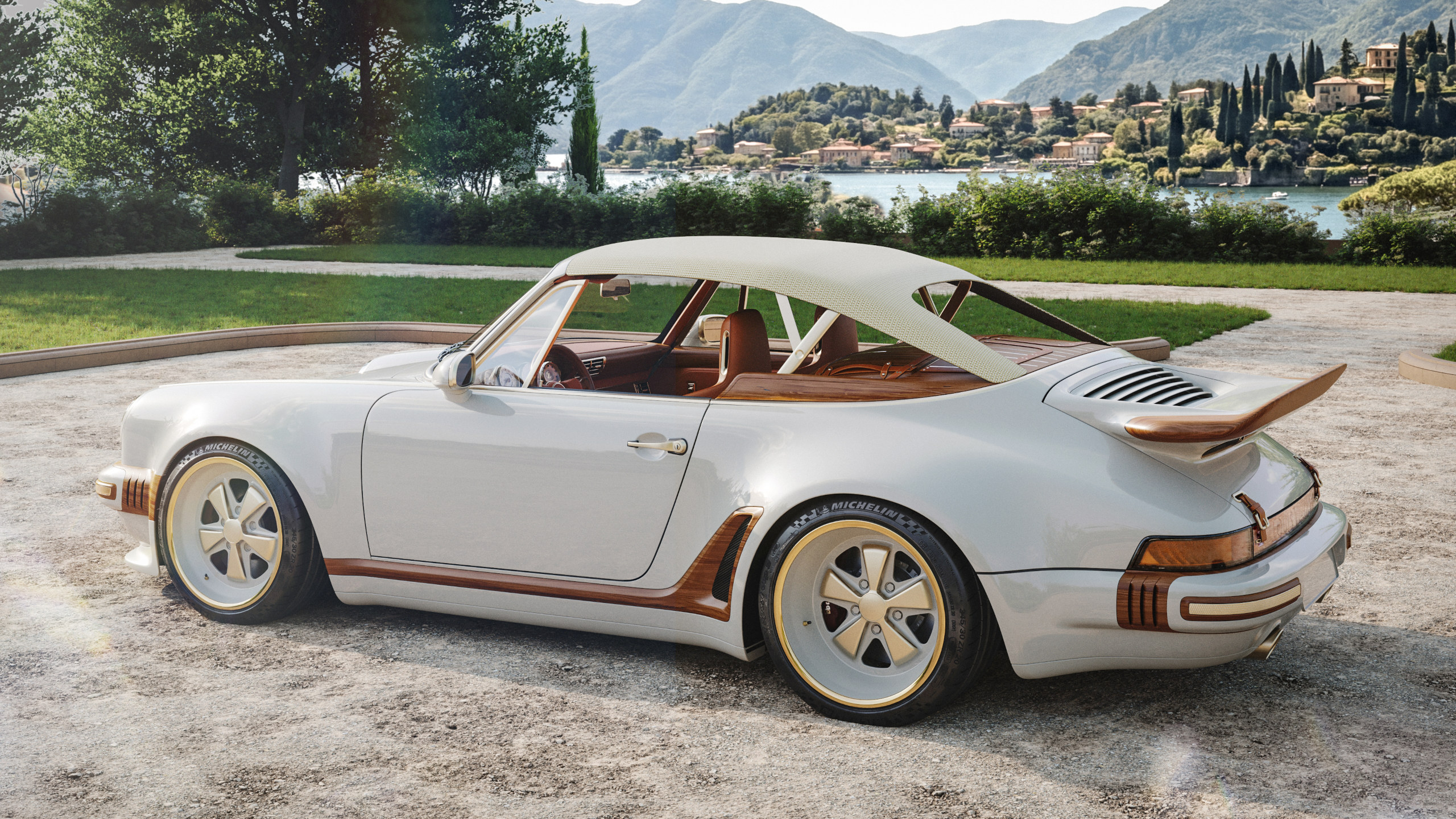
The contrast is useful: one car is an invitation to pack and roam; the other treats the drive as an open-air encounter with light, landscape and material. Neither reads as a conventional fashion-house makeover. Their differences give the collaboration room to speak in two visual registers while keeping Singer’s 911 architecture at the centre.
A clock becomes an instrument panel
The Tambour-inspired dashboard clock is detachable and can be used as a desk clock after the drive. Its design became the starting point for a wider rethink of the instruments: the speedometer, rev counter and auxiliary gauges were redrawn to share the clock’s graphic language. Singer says that work took a year, a reminder that translating a watchmaking vocabulary into a readable, durable automotive interface involves more than styling.
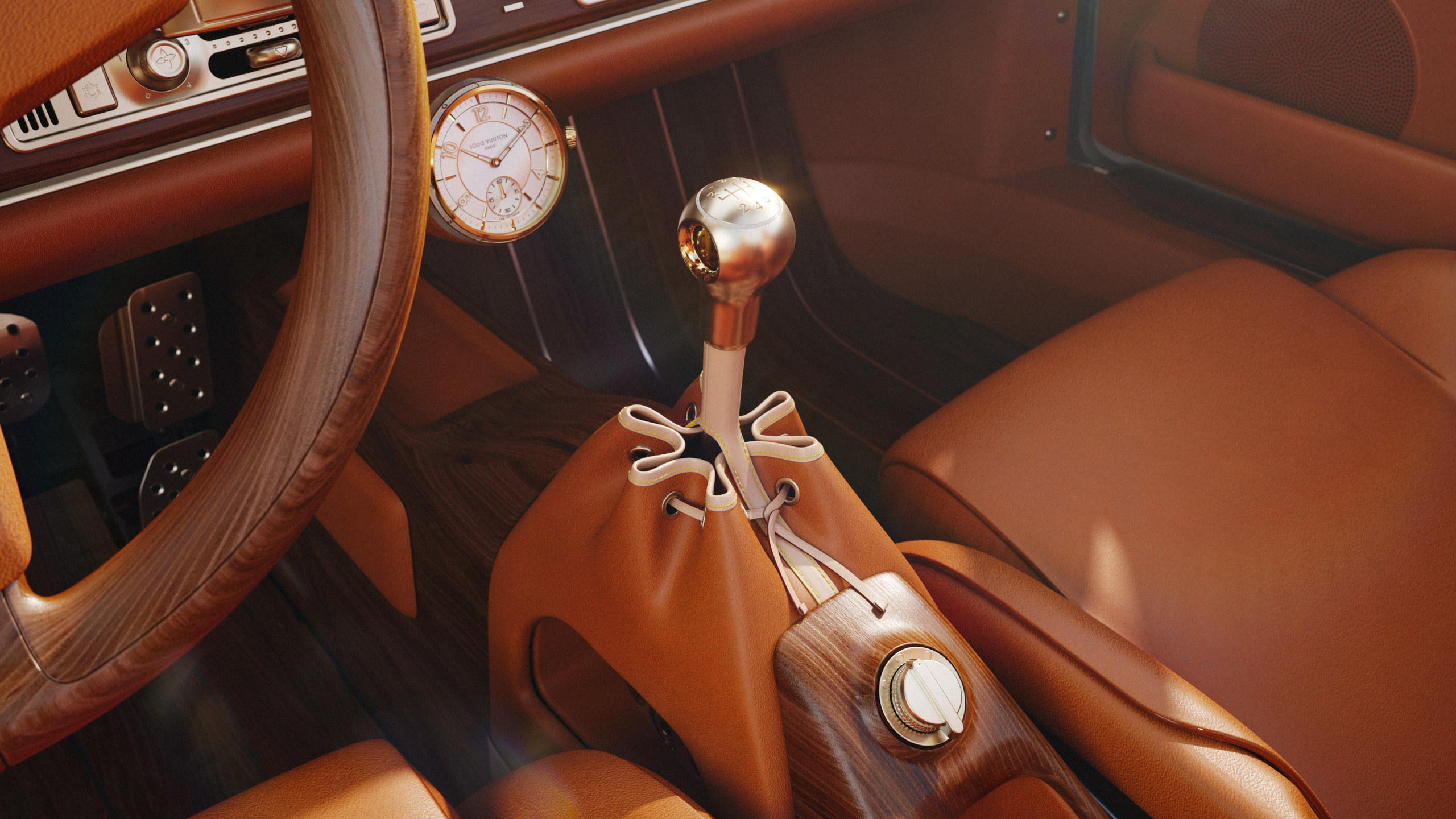
The same thinking reaches the touchpoints drivers use without looking. Metal switches, locks, vents and controls replace many ordinary plastic fittings; their finishes draw on techniques associated with fine watchmaking. In the Classic, natural-toned leather and yellow stitching echo the house’s luggage craft, while diamond embossing recalls the quilted interiors of historic trunks. The small details are not decoration laid over the car: they are the surfaces, controls and objects encountered during a journey.
When the wardrobe belongs in the car
Louis Vuitton and Singer extended the brief beyond the two vehicles with made-to-measure travel collections. The pieces include driving jackets, gloves, helmets, footwear, watches, bags and fitted luggage. For the saffron coupé, the roof rack and front luggage compartment have been considered as part of the same system as the clothes and equipment: a surfboard and skis are designed to travel with the car, while bags are shaped to fit its storage spaces.
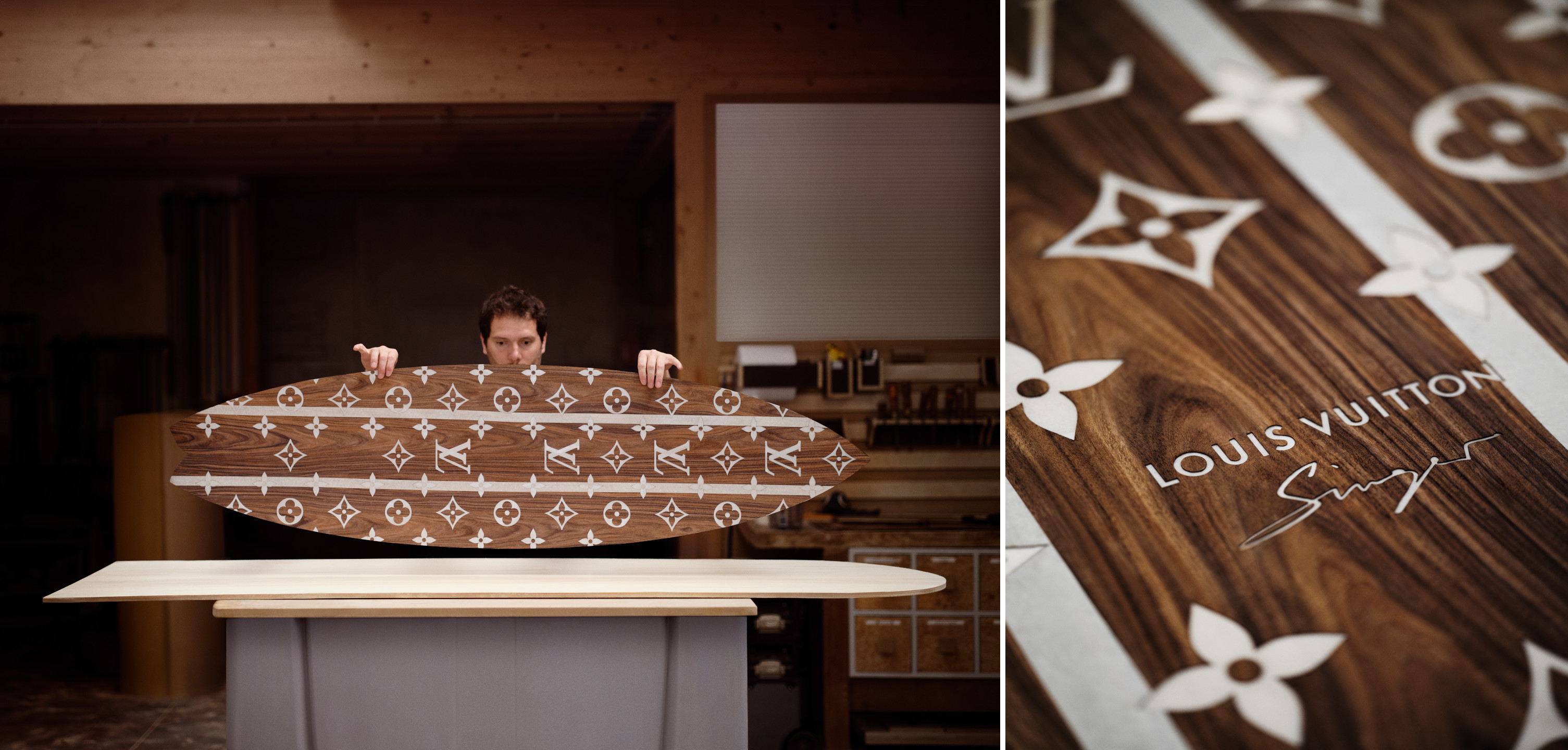
This is where the title’s idea becomes more than a slogan. Travel is treated as a design brief with practical consequences: what fits in the car, what the driver wears, how the cabin feels, and what objects remain useful once the engine is switched off. The collection’s strongest gesture is the relationship between parts, not any single monogram.
A collaboration, not a Porsche factory edition
There is an important distinction behind the familiar 911 shape. These are “Porsche 911 Reimagined by Singer” vehicles, re-engineered and restored by Singer in collaboration with Louis Vuitton. They are not a Porsche factory special edition, and Porsche states no involvement in the project. Singer’s own press material notes that it is not affiliated with Porsche AG; the Porsche name is used to identify the cars’ heritage and base architecture.
The two cars were revealed as unique collaborations, not as a production collection available to order from Louis Vuitton. Neither brand has announced a public price. That exclusivity can make the project feel remote, but the design conversation it opens is accessible: what changes when fashion contributes to the ergonomics, materials and rituals of using a car, rather than stopping at the paintwork?
For Singer, the 911 becomes a travelling interior and a platform for unusually deep personalisation. For Louis Vuitton, travel moves off the luggage tag and into the vehicle’s controls, storage and surfaces. The result is a Porsche-derived object whose real subject is the journey: not just the distance ahead, but the carefully assembled world that goes with you.
Sources
- Singer Vehicle Design — Louis Vuitton Takes the Road with Singer, official project announcement, design details and image credits.
- Wallpaper* — design reporting and project imagery credited to Singer Vehicle Design and Louis Vuitton.
- Design Milk — independent design coverage and additional project photography credited to Singer Vehicle Design.