HALF: David Carvalho Is Building Mobility, Not Just Vehicles
HALF is one of those rare projects that does not begin with a vehicle. It begins with a better question: what does a territory actually need to move, carry, serve and connect?
I spend my life looking at mobility projects. Some are beautiful. Some are fast. Some are technically spectacular. But the projects that stay with me are the ones that understand that mobility is not only about building another object. It is about changing what an object can do for people.
That is why I believe so strongly in HALF.
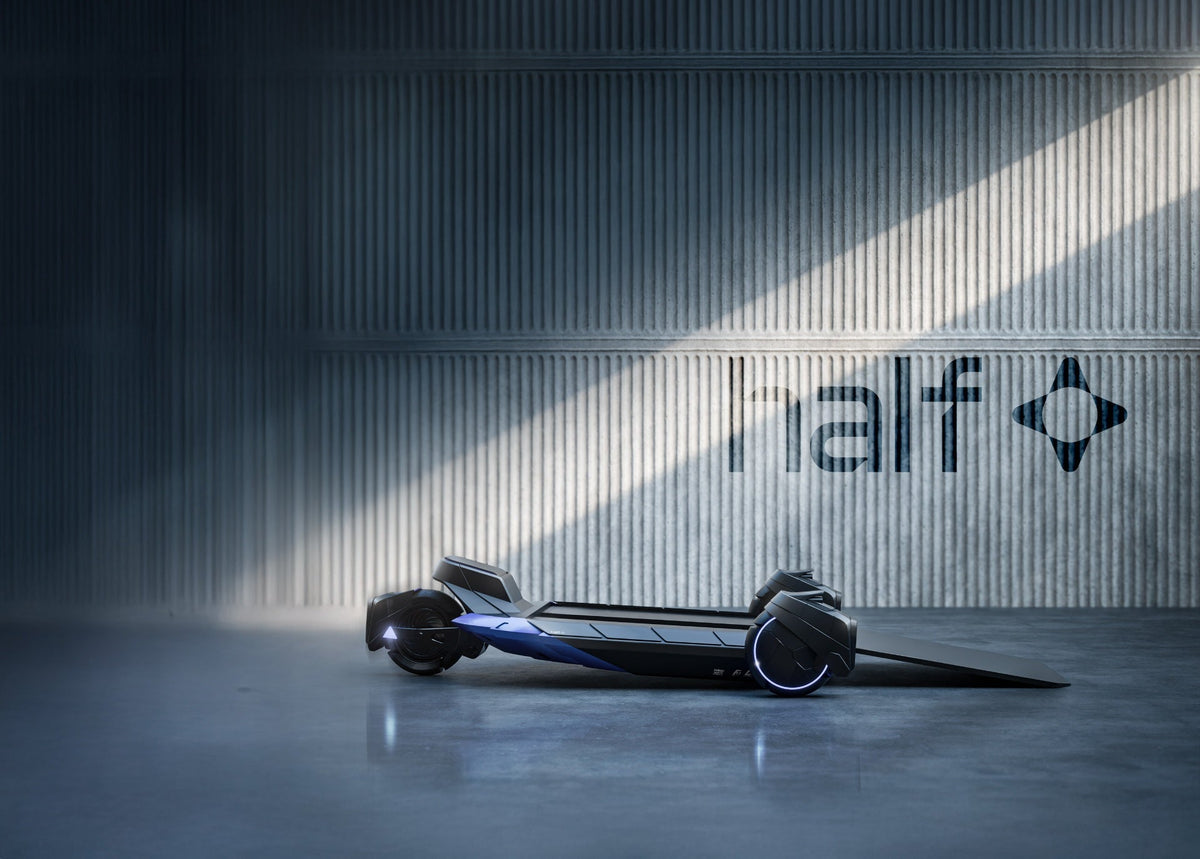
HALF is not trying to become the next conventional car. It is building something more useful: a lightweight, open and modular mobile base designed to become whatever a place, a community or a business really needs.
And behind this idea is someone I have enormous respect for: David Carvalho, Co-Founder of HALF.
David is one of those rare people who combines design culture, technological intelligence and a real sensitivity for human use. He understands that the future does not need to be louder, heavier or more aggressive. It needs to be more intelligent, more adaptable and more generous.
Build Mobility, Not Vehicles
The sentence that defines HALF is also the one that makes the project special:
Build Mobility, Not Vehicles.
HALF provides the mobile base: light, electric, modular and designed to carry a wide range of applications. The UpperHALF becomes the specific module placed on top of that base: a logistics pod, a passenger cabin, a maintenance unit, a marina vehicle, an agricultural platform, an event machine or a local service vehicle.
Instead of creating a different vehicle for every single use, HALF proposes one adaptable technical foundation. That is not just good design. It is a different way of thinking about ownership, manufacturing, maintenance and local services.
According to the HALF Platform, the base weighs approximately 100 to 120 kg, uses interchangeable 4.8 kWh batteries and can support 400 to 500 kg of payload depending on the configuration. Its open technical architecture is designed to accept custom modules, energy and data connections, and future autonomy functions.
The Future Will Not Be One Machine for Every Problem
For too long, the automotive industry has treated every mobility need as an excuse to build a new vehicle.
A delivery needs a van. A marina needs a utility vehicle. A resort needs a shuttle. An event needs a branded mobility object. A farm needs another machine. A remote territory needs a compromise.
HALF proposes something much more elegant: one platform, many functions.
This matters because the real mobility challenge is not simply electrification. It is waste: waste of materials, energy, capital, space and vehicles that spend most of their life carrying almost nothing.
HALF approaches that problem with humility and intelligence. The platform is designed for last-mile logistics, difficult terrain, agriculture, marinas, hospitality, maintenance, events and local services. Its role is not to be the fastest machine in the world. Its role is to be the right machine.
A Platform for Territories, Not Just Cities
What I particularly love about HALF is that it does not only think about dense urban centres. It thinks about the places that are too often left behind by conventional mobility: rural communities, tourist destinations, golf courses, ports, marinas, large private estates, industrial sites and remote services.
HALF can be adapted locally. That is where its real promise begins.
David has described the project as a contemporary return of the “mule”: not a machine that replaces people, but one that carries, follows, assists and supports them. It is a beautiful idea because it puts technology back in its proper place: at the service of daily life.
Sophianet described HALF as a “mule of the 21st century”, capable of carrying passengers, luggage, goods and heavy loads while adapting to territories where traditional public services are limited.
David Carvalho’s Vision Is Bigger Than a Product
David’s path makes sense when you look at HALF. Public reporting traces part of his background to Pininfarina, before he joined Link2Concept and helped develop HALF through a combination of design thinking, embedded systems and artificial intelligence.
He did not come to the project with the ambition of creating another supercar. He came with the instinct to rethink what mobility should be useful for.
This is also why HALF feels different. It has an emotional intelligence that many technical projects lack. It is not only a chassis. It is not only a logistics device. It is not only an autonomous platform. It is an invitation to imagine mobility as a shared resource: adaptable rather than fixed, repairable rather than disposable, local rather than anonymous.
HALF is developed through an ecosystem led by Link2Concept, where Alain Grandjean is President and David Carvalho is Co-Founder of HALF. The project brings together design, prototyping, lightweight engineering, batteries and autonomy through partners including Factory Unit, Motion Engineering, HawAI.tech and LMX Projects.
A New Kind of Desirable Mobility
At TheArsenale, we are drawn to machines that make us feel something. But feeling does not have to come from noise, excess or speed alone. It can come from relevance. It can come from an object that feels perfectly designed for the world we are entering.
HALF has that quality. It is visually sharp, technically credible and socially meaningful. It can become a work companion, a service platform, a hospitality tool, a logistics ally or a cultural object. It can carry a brand, equipment, people, supplies or imagination.
That is why I support this project with all my energy. And that is why I support David with friendship, admiration and deep respect.
He is not merely presenting a new mobility product. He is helping define a more sober, more human and more intelligent language for movement.
The Machine Is Only Half the Story
The name is perfect.
HALF is only half of the solution. The other half belongs to the people, companies, territories and creators who decide what the platform can become.
A marina may build its own UpperHALF. A hotel may create a new guest experience. A local community may deploy a shared service. A farmer may configure a practical working tool. A brand may create a mobility object with a genuine purpose. A new generation may discover that useful can also be beautiful.
This is where HALF becomes more than a platform.
It becomes a movement.
And I cannot wait to see where David Carvalho, Alain Grandjean and Link2Concept, and the entire HALF ecosystem take it next.
Images courtesy of HALF Platform / Link2Concept.