THE FUTURE ON TWO WHEELS — YAMAHA’S MOTOROID AND THE NEXT CHAPTER IN MOTORCYCLE DESIGN

The Yamaha Motoroid 2 autonomous motorcycle concept is among the most ambitious two-wheeled experiments of 2025, combining reinforcement-learning AI, facial recognition, gesture control, and a self-balancing mechanical architecture into a single expressive prototype. Shown at the Japan Mobility Show, the MOTOROiD 2 can stand up, move, and interact with its owner without a rider on board, responding to faces and hand gestures like a loyal, metallic companion. It is not yet a production announcement: it is Yamaha's exploration of what motorcycles could become when engineering intelligence meets emotional design.
How the Motoroid 2 Balances Itself
Yamaha's AMCES (Active Mass Center Control System) is the core innovation enabling the Motoroid 2's autonomous stability. The system continuously adjusts an internal mass to counteract lean forces, keeping the machine upright at rest and at low speed without a rider or kickstand. A unique Leaf structure and pivoting swingarm allow the rear half of the motorcycle to move independently of the front, giving the machine its creature-like, organic movement quality. A hub-driven rear wheel and translucent bodywork with integrated blue mood lighting complete the visual identity of a machine that looks as alive as it behaves.

AI Recognition and Human-Machine Interaction
Beyond balance, the Motoroid 2 uses AI image recognition to identify its owner by face and respond to gestures, enabling the motorcycle to approach, follow, or present itself without physical input. This opens possibilities for riderless parking maneuvers, accessibility-focused assist modes, and entirely new rituals of ownership. Yamaha describes the underlying philosophy as "Jin-Ki Kanno" (the bliss of being one with your machine), but extends that concept past riding to include the relationship between human and machine across the full ownership experience. If this technology matures into production hardware, it could change how motorcycles assist riders with mobility challenges or operate in autonomous delivery and logistics scenarios.

Where Motoroid Fits in Yamaha's Broader 2025 Vision
Yamaha's 2025 concept lineup is remarkably diverse: alongside the Motoroid 2, the brand has shown hydrogen scooters, hybrid sportsbikes, battery electric platforms, tricycles, and minimalist urban e-bikes. Each concept addresses a different mobility segment, but the Motoroid 2 functions as the flagship of the range, the proof that Yamaha is thinking not just about drivetrains but about the entire future of the rider-machine relationship. Paired with evolving autonomy regulations and advances in battery tech, concepts like the Motoroid 2 define the direction of travel for the next decade of motorcycle design.
Discover Cutting-Edge Motorcycles at TheArsenale
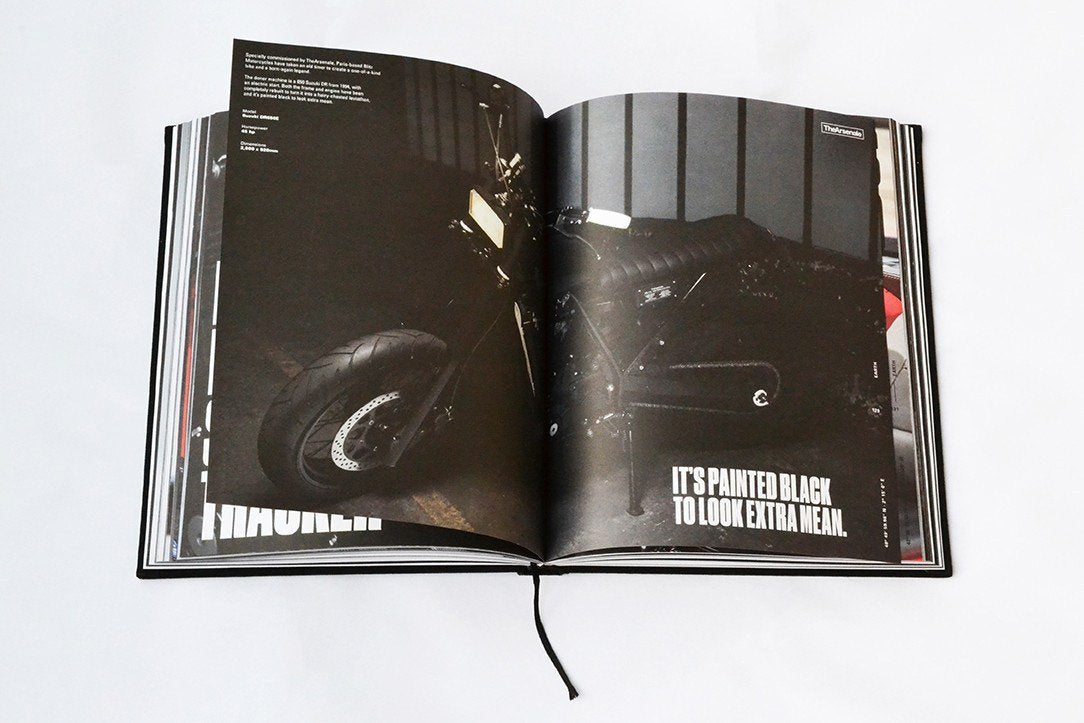
While the Motoroid 2 remains a concept, TheArsenale's motorcycles collection brings together production and near-production machines at the forefront of design and engineering. Among the highlights: the Arc Vector Angel Edition electric motorcycle, the Lazareth Yamaha R1, and the Manx7 by TheArsenale electric cafe racer represent the spectrum from wild performance to elegant electrification. The future on two wheels is already taking shape.
Photo: Yamaha