Art Made From Car Parts: A Guide to Unique Automotive Pieces
An engine cover can become a wall sculpture, a wheel can become a table, and a gearbox can become a conversation piece. If you are searching for art made from car parts, begin with a source that treats mechanical objects as design, such as our art on wheels by Machine Revival, then judge each work on material authenticity, fabrication quality, and provenance.
Unique work sits between sculpture, industrial design, and collectible automobilia. In a July 2026 report, the San Francisco Chronicle described a neighborhood art environment where furniture made from car parts appeared alongside large repurposed sculptures. That example shows why search terms alone are not enough. The right piece depends on whether you want a functional object, a display work, or a custom creation tied to a specific vehicle.
What makes art made from car parts genuinely unique?
A genuine automotive art piece does more than attach a few mechanical objects to a base. It gives those objects a new visual or functional role while retaining enough of their original identity to create a connection with engineering and movement.
Look for genuine components such as wheels, pistons, crankshafts, brake discs, suspension pieces, gauges, exhaust parts, or gearbox housings. The artist should explain which parts were used and how they were transformed. A clear material story makes the work more meaningful than a decorative object that merely imitates an automotive appearance.
In 2022, a PBS program report included art made from car parts within a broader exploration of creative work using unexpected materials. The useful lesson is that the source material can remain visible while its original purpose changes. A part can become a figure, a landscape detail, a structural support, or a symbol of speed.
Uniqueness also comes from the maker’s decisions. Hand welding, visible tool marks, asymmetry, patina, and small variations can make each piece different. In contrast, a mass-produced object may use the same arrangement repeatedly, even when it is marketed as industrial decor.
Where should you look for unique automotive art?
Start with curated automotive art collections when you want a clear route through different scales, materials, and styles. Our automotive art collection provides a useful starting point for comparing machines, sculptural objects, and design-led pieces within a mobility-focused context.
Specialist studios are another strong option. These makers often work directly with salvaged parts and may accept requests for a specific vehicle, racing discipline, mechanical component, or interior setting. Their catalogues can include sculptures, lighting, wall pieces, clocks, trophies, and smaller collector objects.
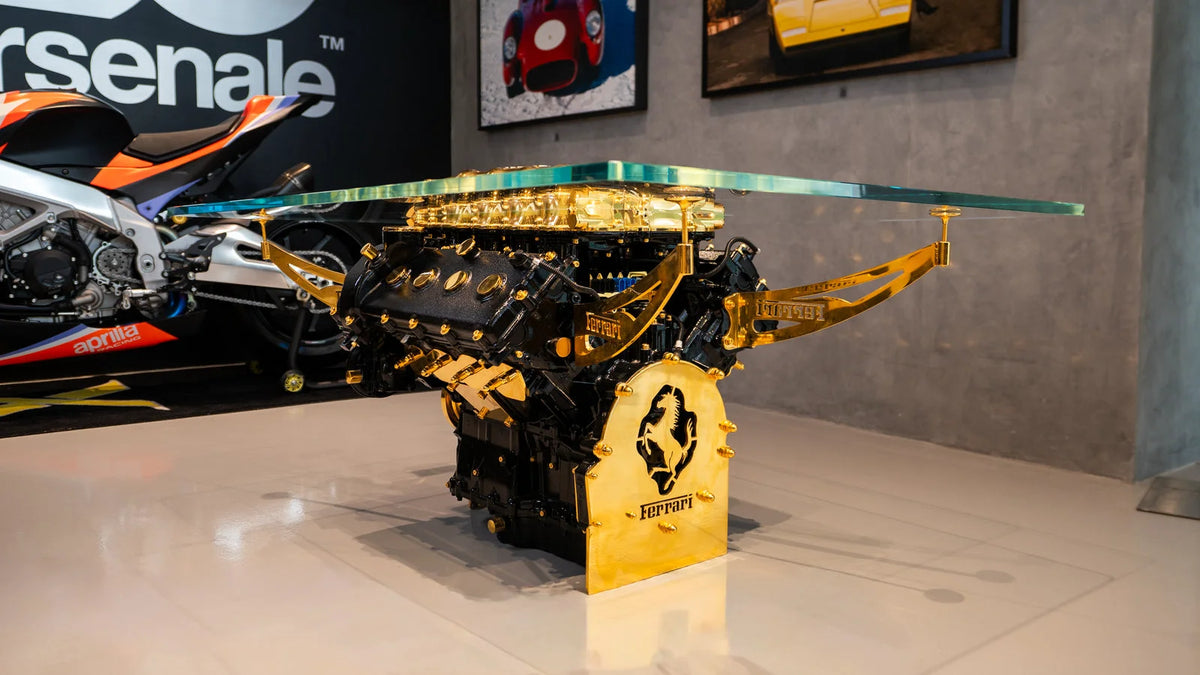
For functional work, our car-part furniture for sale shows how automotive components can move beyond display and become part of an interior. This format suits buyers who want a piece to serve a practical purpose while remaining visually connected to automotive culture.

Exhibitions and mobility-focused activations can help you understand scale and finish before purchasing. They also reveal how a work changes in a room, showroom, garage, or public setting. When buying internationally, an exhibition may not provide immediate availability, but it can help you identify the right artist or style for a later commission.
How do you assess authenticity and craftsmanship?
Begin with the material list. A serious description should identify the main parts rather than relying only on phrases such as “inspired by racing” or “industrial style.” If the object includes a recognizable engine component, ask whether it is original, restored, modified, or reproduced.
- Provenance: Ask where the parts came from and whether their vehicle history is known.
- Construction: Examine welds, joins, fasteners, supports, and the stability of the finished object.
- Finish: Confirm whether the surface is intentionally raw, polished, painted, powder coated, or sealed.
- Scale: Check the exact dimensions and weight before planning delivery or installation.
- Function: If the work is furniture or lighting, confirm that it has been designed for safe everyday use.
A rough finish is not automatically a defect. Scratches, oxidation, and visible machining can be part of the artistic language. The important distinction is whether the finish is deliberate and stable, or whether the piece appears incomplete.
You should also inspect the relationship between the parts. Strong work usually has a clear visual hierarchy, with the largest component establishing the form and smaller elements adding structure or detail. When every part competes for attention, the object can look assembled rather than composed.
Which format suits your space?
The best format depends on the room, the viewing distance, and the role you want the piece to play. A sculptural centerpiece can anchor a collection room or entrance, while smaller works may suit an office, library, studio, or private garage.
A published analysis of Malaysian artists’ creative practices examines how scrap materials, including car parts and metal waste, can be recontextualized in ecological art. Its broader relevance is clear: the material can communicate both mechanical history and a considered approach to reuse. Read the published analysis when you want to think about the environmental and cultural meaning behind reclaimed materials.
- Sculpture: Choose this when form, silhouette, and visual impact matter most.
- Furniture: Choose this when you want an engine, wheel, or mechanical assembly to become part of daily life.
- Wall art: Choose this when floor space is limited or the component has a strong graphic shape.
- Small objects: Choose these for desks, shelves, gifts, or collections built around individual parts.
For a vehicle-led reference, our art on wheels: Craig Rodsmith’s BSA Bantam shows how a machine can be viewed as an art object rather than simply as transport. This perspective is useful when you want the complete vehicle, rather than an isolated part, to remain the central subject.
When is a custom commission the better choice?
A ready-made work is usually the simplest route when you want to compare finished objects and purchase based on appearance. A custom commission is more suitable when the piece needs to reference a particular vehicle, family history, racing memory, business identity, or interior design brief.
Before contacting a maker, prepare a concise brief. Include the part or vehicle you want to use, the preferred dimensions, the location where the work will be displayed, the desired finish, and whether the object must remain functional. Reference images can communicate your taste, but the artist should still be free to determine how the component works within the final composition.
Consider the emotional value of the parts as well. A steering wheel from a first car, a piston from a competition engine, or a dashboard from a family vehicle may matter more than a rarer component with no personal connection. The most successful commissions often combine a strong story with a practical understanding of scale and structure.

Ask about revision stages, deposit requirements, completion estimates, packaging, and ownership of any unused parts. A clear agreement protects both sides and prevents confusion when the work involves valuable or irreplaceable components.
What should you confirm before an international purchase?
International availability does not guarantee simple delivery. Automotive components can be heavy, irregularly shaped, delicate, or difficult to package. Before purchasing, request the packed dimensions, total weight, delivery method, insurance arrangements, and installation requirements.
Surface treatment deserves particular attention. Bare steel may continue to develop patina, while polished metal can show fingerprints and minor marks. Painted or sealed finishes may require gentler cleaning. Ask which products are safe and whether the work should be kept away from moisture, direct sunlight, or large temperature changes.
For furniture and lighting, confirm the safety details separately from the artistic description. A table should have a stable base and suitable glass or surface material. A lamp should include appropriate electrical components and a clear explanation of how it is installed.
You should also clarify customs responsibilities, taxes, import paperwork, and any restrictions that may apply to used mechanical parts. These details vary by destination, so a written shipping quotation is preferable to a general statement that international delivery is available.
How can you choose a piece with lasting appeal?
Choose an object that works at three levels: it should look compelling from across the room, reward close inspection, and retain a meaningful connection to mobility. A recognizable component provides the first layer, while craftsmanship and narrative create the second and third.
Avoid buying only because a part appears unusual. Ask whether the proportions suit your space, whether the finish matches your interior, and whether the object will remain interesting after the initial novelty fades. A well-designed piece should feel intentional even to visitors who are not automotive enthusiasts.
It is also worth considering documentation. A signed certificate, material list, artist statement, or build photographs can support provenance and make the work easier to understand later. These details are especially valuable when the object is intended for a serious collection or acquired as a gift.
Choose a story, not just a spare part
The strongest automotive art pieces transform mechanical history into a new experience. Look for genuine components, thoughtful composition, durable construction, and a clear explanation of how the work was made. Whether you choose sculpture, furniture, wall art, or a commission, the right object should connect engineering, memory, and design. When you evaluate the material, maker, function, finish, and delivery requirements together, you are more likely to find a piece that remains distinctive long after purchase.
Take action with TheArsenale
Once you have defined the material, scale, and role you want, a curated mobility platform can make the search more focused. At TheArsenale, we approach automotive objects as part of a wider design and mobility culture, helping collectors move from inspiration to a considered piece.

To bring that idea into a room, explore our Ferrari 308 wheel coffee table. It translates an authentic automotive component into a functional statement piece, showing how engineering history, display value, and everyday use can meet. For a different brief, you can continue exploring our wider art and mobility universe.
Frequently Asked Questions
Where can you find unique art made from car parts?
You can find it through curated automotive art collections, specialist metal studios, exhibitions, and direct commissions. TheArsenale’s automotive art collection is a useful starting point when you want a mobility-focused selection.
What types of car parts are commonly used in art?
Artists commonly use wheels, pistons, gears, brake discs, exhaust components, suspension parts, gauges, engine housings, and seat belts. The most effective pieces usually let the original character of at least one component remain visible.
How can you verify that a piece is genuinely unique?
Ask the maker for a material list, provenance details, photographs of the build process, and information about whether the design is repeated. A signed certificate or artist statement can also help establish the work’s identity.
Can you commission a sculpture from parts of your own car?
Many specialist makers accept commissions, although their services and technical limits vary. Provide the available parts, desired dimensions, display location, preferred finish, and any personal story you want the work to express.
What should you ask about shipping and care?
Request packed dimensions, total weight, insurance details, installation requirements, customs responsibilities, and care instructions. You should also confirm whether the finish is sealed and how the work should be protected from moisture, heat, and direct sunlight.