Bespoke Bicycle Buying Guide: Choose a Custom Build
A bespoke bicycle should feel like a precise answer to the way you ride, not an expensive collection of fashionable parts. If standard sizing, stock geometry, or ordinary equipment leaves you compromising, our best custom bicycles can provide useful inspiration for understanding how design, engineering, and individuality come together.
The important question is not whether a custom bicycle looks distinctive. It is whether the frame, position, components, and practical details support your actual roads, distances, physical needs, and ambitions. This bespoke bicycle buying guide explains how to make that decision with discipline, from the first riding brief to the final inspection.
What should a bespoke bicycle solve for you?
Begin with the problem, not the paint scheme. A bespoke bicycle makes sense when you need a combination of fit, handling, load capacity, riding position, or visual character that is difficult to find in a standard model.
Your riding brief should describe how you use a bicycle in real conditions. Include your typical distance, road surface, climbing, weather, luggage, riding frequency, and preferred pace. If you regularly ride long paved routes, your priorities may include stable handling, efficient aerodynamics, comfortable contact points, and clearance for wider tires. If you mix pavement with gravel, the brief may require lower gearing, stronger wheels, additional tire clearance, and a more relaxed position.
Physical considerations deserve equal attention. A difference in leg length, torso length, flexibility, shoulder width, or hand position can affect the relationship between saddle, pedals, handlebars, and brake controls. A competent builder will not treat your height as the complete fit specification. They will ask about previous bicycles, discomfort, injuries, flexibility, riding posture, and the adjustments you have already tried.
In April 2026, the National Bicycle Dealers Association announced a consumer report focused on changing purchasing behavior, product perceptions, and service expectations. The NBDA's 2026 report is directed at retailers, but its subject is relevant to buyers too. The purchase is not only about the object. It also includes advice, assembly, maintenance, communication, and support after delivery.
- Fit problem: You cannot achieve a comfortable, stable position with standard sizes and ordinary adjustments.
- Use problem: Your riding combines requirements that stock bicycles rarely combine effectively.
- Performance problem: You need particular handling, stiffness, compliance, clearance, or load capacity.
- Ownership problem: You value repairability, provenance, long-term service, and a direct relationship with the maker.
- Design problem: You want a machine with a coherent visual identity rather than a generic configuration.
If none of these problems applies, a well-selected production bicycle may provide better value and faster delivery. Bespoke construction should have a clear purpose. Personalization alone is not a sufficient reason to accept a longer wait or a higher total cost.
Should you choose custom, semi-custom, or production?
Imagine three buyers with the same budget. The first needs an unusual fit and specific handling. The second wants a standard frame with selected colors and components. The third wants to ride immediately and prefers a proven size range. These buyers should not choose the same purchasing route.
A production bicycle is built around predetermined sizes, geometry, and specifications. It can be an efficient choice when your body proportions and riding needs fit the available range. Production models also make comparison easier because geometry charts, test rides, reviews, replacement parts, and resale information are generally more accessible.
A semi-custom bicycle usually combines a standard frame platform with selected finishes, components, wheels, gearing, or contact points. This approach can offer meaningful personalization without commissioning a fully individual frame. It may be appropriate when the standard geometry is already close to your needs.
A fully custom bicycle is designed around your measurements, position, use case, and preferences. The builder may determine tube lengths, angles, clearances, stack, reach, wheel size, cargo provisions, and mounting points specifically for you. The process requires more communication because the frame cannot be evaluated only by comparing its appearance with another model.
The distinction between custom geometry and cosmetic customization is essential. A custom paint color does not make a bicycle fit your body. A personalized saddle does not correct unsuitable reach. A premium groupset does not automatically improve handling. Ask the builder exactly which elements are custom, which are selected from a catalogue, and which are fixed by an existing frame platform.
For collectors and design-focused buyers, the visual and cultural dimension can also matter. Our luxury designer bicycles for sale provide context for evaluating bicycles as design objects, where engineering, rarity, materials, and presentation form part of the ownership experience.
Which frame material and geometry fit your riding?
Frame material influences weight, stiffness, vibration response, durability, repair options, and visual character. Geometry determines how those properties become handling. You should evaluate both together rather than choosing a material by reputation alone.
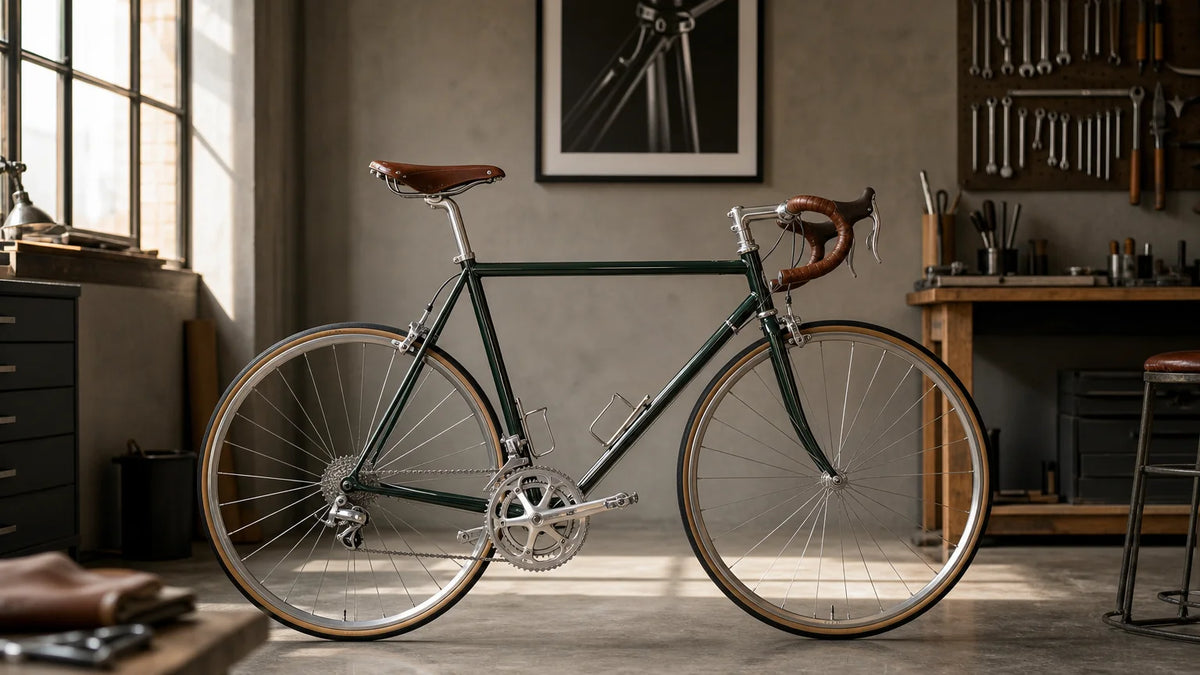
Steel frames remain relevant when you value durability, repairability, visual detail, and a distinctive ride quality. Steel can support slender tube profiles and extensive fabrication choices. It may also suit touring, all-road, commuting, and long-distance use where practicality matters as much as low weight.
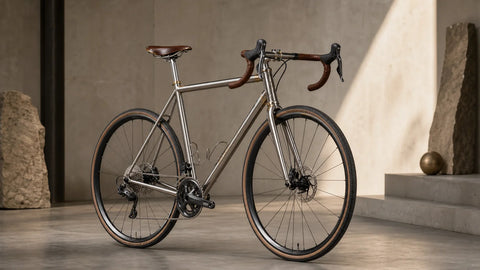
Titanium frames appeal to riders seeking corrosion resistance, long service life, low maintenance, and a refined appearance. Titanium construction can be costly and requires a builder with appropriate expertise. The finish is often understated, but the material can support a highly individual ownership proposition.
Carbon fiber frames allow complex shapes, controlled stiffness, aerodynamic integration, and low weight. They can be highly effective for road racing, endurance riding, and performance-oriented applications. However, repair procedures, proprietary components, internal routing, and replacement availability deserve careful discussion before purchase.
Aluminum can provide a practical balance of weight, stiffness, cost, and availability. It is often associated with production bicycles, but that does not make it unsuitable for a tailored build. The quality of the design, construction, fork, wheels, finishing kit, and fit remains more important than the material label alone.
Geometry should be discussed in terms of consequences. A longer wheelbase may improve stability but reduce quickness. A taller front end may support comfort but alter weight distribution. More tire clearance can expand your routes but may increase weight. A lower, more aerodynamic position can improve speed but may demand greater flexibility and core control.
Do not ask only for a frame size. Ask for the intended stack, reach, seat angle, head angle, wheelbase, trail, tire clearance, and riding position. Then ask the builder to explain how each measurement supports your riding brief. Our carbon road bike buying guide can help you organize these questions when a performance road bicycle is part of your shortlist.

How much should you budget for a bespoke bicycle?
There is no single universal price for a bespoke bicycle because the total depends on design labor, frame material, construction method, finishing, components, wheels, paint, fitting, assembly, shipping, and after-sales work. The correct question is not “What does the frame cost?” It is “What is the complete cost of the finished bicycle?”
Separate the budget into clear categories before you contact a builder:
- Design and fitting: Include consultations, measurements, fit sessions, geometry development, and any travel required.
- Frame and fork: Confirm whether the quoted price includes the fork, headset, frame hardware, and standard finish.
- Paint and finishing: Establish the price of colors, graphics, polishing, special coatings, and custom details.
- Components: Account for drivetrain, brakes, cockpit, saddle, seatpost, pedals, and accessories.
- Wheelset and tires: Match the wheels to your rider weight, terrain, tire width, and intended use.
- Assembly: Include professional building, tuning, fitting, packaging, and final inspection.
- Delivery and support: Ask about shipping, taxes, import costs, warranty handling, and future service.
Market size should not be confused with an individual purchase budget. Grand View Research estimates that the global bicycle market was worth USD 84.3 billion in 2025 and projects USD 92.3 billion for 2026. Its market estimate for 2026 provides broad industry context, but it does not determine what a bespoke build should cost.
Request an itemized quotation with assumptions stated in writing. Ask whether the builder can substitute components if availability changes, whether the deposit is refundable, when the balance is due, and what happens if the agreed delivery date moves. A low initial quote may become expensive if paint, wheels, custom fittings, or international delivery are excluded.
It is also sensible to reserve a maintenance fund. Custom bicycles still need replacement chains, brake pads, tires, cables, bearings, seals, and periodic adjustment. Proprietary parts may increase service time or reduce availability. Conventional standards can make future maintenance easier, particularly if you travel or use more than one workshop.
Which components deserve the closest inspection?
A frame is only one part of the finished machine. The component ecosystem determines how the bicycle shifts, brakes, turns, carries you, and remains serviceable over time.
Start with gearing. Consider the steepest terrain you will ride, your preferred cadence, luggage, fitness, and whether you expect your use to change. Compact road gearing may suit mixed terrain, while lower ratios can be valuable for climbing, touring, or gravel. Electronic shifting may offer clean operation and precise control, but battery management, replacement costs, compatibility, and service should be understood in advance.
Brakes should match your climate, route, speed, and load. Hydraulic disc brakes can provide consistent control across changing conditions, while other systems may be easier to inspect and maintain. The correct choice depends on the entire bicycle, not on a specification hierarchy.
Wheels deserve particular attention because they influence acceleration, comfort, cornering, durability, and tire choice. A lightweight race-oriented wheelset may not be appropriate for rough roads or heavy luggage. Ask about rim width, spoke count, internal rim dimensions, tire compatibility, rider weight limits, and replacement parts.
Contact points often determine whether you enjoy the bicycle. Saddle shape, handlebar width, bar reach, stem length, crank length, pedal system, and grip position all affect comfort and control. A builder should explain which parts are adjustable after delivery and which choices require a new component.
If you are considering electric assistance, evaluate the motor, battery, control system, charger, software, local service network, and transport requirements. Our electric bike buying guide can help you compare assistance systems with the practical demands of everyday ownership.
How do you evaluate a builder before paying a deposit?
The builder relationship is part of the product. You should assess communication, technical clarity, previous work, delivery planning, and support with the same care you apply to the frame specification.
Review completed bicycles that resemble your intended use. A builder may produce excellent racing frames but have limited experience with loaded touring, electric systems, unusual accessibility requirements, or complex cargo provisions. Ask to see examples with comparable geometry, materials, clearances, and finishing requirements.
Pay attention to the questions the builder asks you. A serious consultation should explore how you ride, not simply which color you prefer. The builder should be willing to explain trade-offs without presenting every option as necessary. You should also receive a clear description of the design approval process, measurement method, deposit schedule, production stages, and final fitting.
Lead times can change because custom work depends on labor, material availability, paint capacity, component supply, and the builder’s existing queue. Ask for an estimated range rather than relying on an optimistic single date. Confirm how progress updates will be handled and whether design changes remain possible after approval.
Serviceability deserves special attention. Ask which parts are proprietary, where replacement components can be obtained, and whether the builder supports repairs after the original purchase. In 2026, specialist retailers in a European industry survey reported strong expectations for workshop activity. The ZIV market data reported a 13.5% increase in workshop sales during 2025 and noted that 78% of surveyed specialist retailers expected workshop business to develop positively in 2026.
For an international purchase, clarify export packaging, insurance, customs responsibility, tax treatment, assembly after arrival, and the process for resolving transit damage. Written documentation is especially important when the builder and buyer are in different countries.
What should you check before accepting delivery?
Collection day should confirm the agreed specification, not introduce it. Bring the original quotation, geometry summary, component list, paint references, and any approved design drawings.
- Confirm the frame material, model, finish, and identification details.
- Check that the drivetrain, brakes, wheels, tires, cockpit, saddle, and accessories match the agreed specification.
- Inspect paint, alignment, cable routing, fasteners, brake hoses, and exposed frame surfaces.
- Verify that wheels run true and that shifting and braking operate correctly.
- Confirm tire clearance, bottle mounts, rack mounts, fender mounts, and other practical provisions.
- Record the initial saddle height, handlebar position, stem length, and cleat setup.
- Obtain warranty terms, service instructions, maintenance intervals, and replacement part information.
- Arrange a follow-up fitting after several rides, because your position may require minor refinement.
The first rides should be deliberately short. Listen for creaks, assess hand and saddle comfort, test braking progressively, and note whether the steering feels stable at different speeds. Do not make several major adjustments at once. Change one variable, record the result, and discuss persistent problems with the builder or qualified mechanic.
A successful bespoke bicycle is not necessarily the lightest, most complex, or most visually elaborate. It is the one that makes your intended riding easier to repeat. That may mean a custom road machine, a durable all-road bicycle, a touring build, an electric bicycle, or a design-led collector piece.
Make the decision around the ride
A bespoke bicycle deserves careful planning because its value comes from alignment. Your riding brief should guide the geometry, material, components, budget, and builder relationship. Compare the complete ownership proposition, including fit, serviceability, delivery, and future support, rather than judging the frame by appearance or component prestige alone. The clearest bespoke bicycle buying guide principle is simple: commission custom work when it solves a real requirement and gives you a machine you will use often.
Take action with TheArsenale
Once you know the type of riding, design language, and ownership experience you want, the next step is to explore machines that reflect those priorities. A curated marketplace can help you compare distinctive bicycles without reducing the decision to a standard size chart or a single component group.

Explore bespoke bicycles through TheArsenale, where rare mobility objects are presented alongside design, engineering, and future-oriented ideas. Our marketplace connects enthusiasts and collectors with curated bicycles and electric bikes from builders, designers, and brands. For a more personal route, you can contact our team about availability, sourcing, and high-value acquisition requirements.
Frequently Asked Questions
Is a bespoke bicycle worth the additional cost?
It can be worthwhile when standard bicycles cannot provide the fit, geometry, use-specific features, or design identity you need. If your requirements are conventional and delivery speed matters most, a production bicycle may be a more practical choice.
How long does a custom bicycle take to build?
Timing depends on the builder’s queue, frame material, design complexity, paint schedule, component availability, and fitting process. Request a written estimated range and ask how delays or specification changes will be handled.
Should you choose steel, titanium, aluminum, or carbon fiber?
No material is correct for every rider. Choose according to your priorities for weight, ride response, durability, repairability, corrosion resistance, aerodynamic shaping, and long-term service.
Do you need a professional bike fit before ordering?
A professional fit can provide useful information, particularly if you have recurring discomfort or unusual proportions. The builder should still interpret those measurements within your riding style, flexibility, previous bicycles, and intended geometry.
Can TheArsenale help with a distinctive bicycle purchase?
Yes, TheArsenale curates bicycles and electric bikes within its luxury mobility marketplace. You can explore available machines or contact the team regarding sourcing and high-value acquisition support.