Best Steering Wheels for Sim Racing: 2026 Buyer's Guide
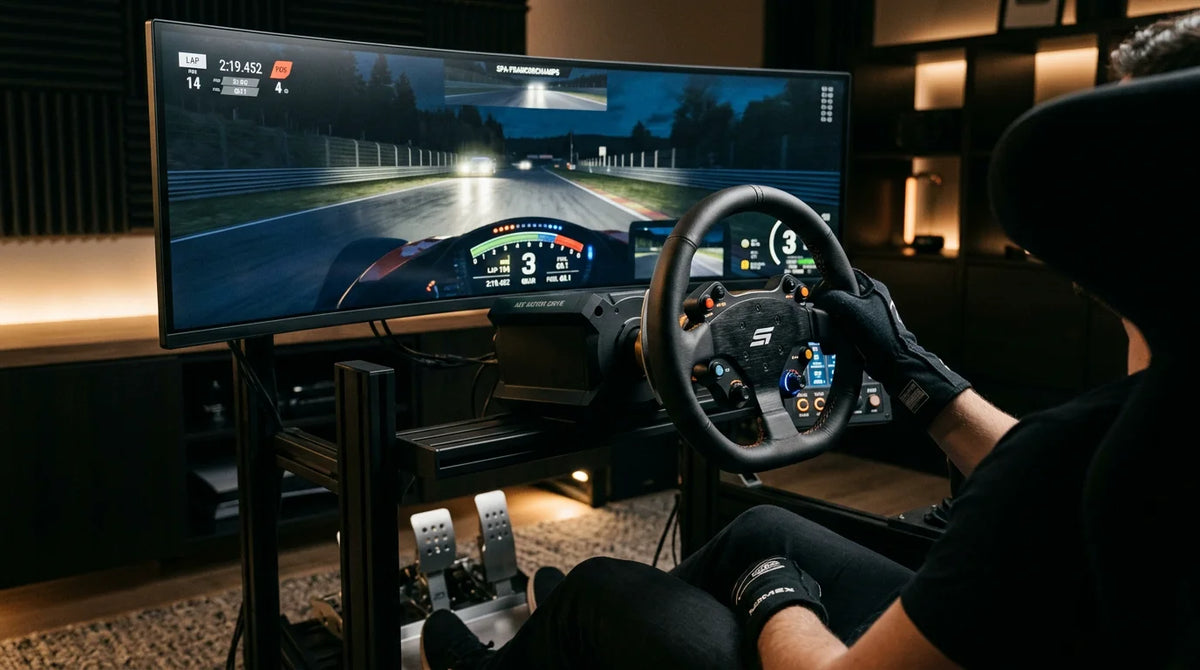
Force feedback technology is the single factor that decides how a wheel feels in your hands, and the gap between a budget bundle and a professional base is enormous. That gap matters because the racing simulator category is expanding quickly, and the field of contenders grows every quarter. Choosing among the best steering wheels now means weighing torque, drive systems and console compatibility together, not chasing one specification. For enthusiasts who treat driving as an art form, a wheel like our Mclaren MP4/4 steering wheel re-creation shows how far the craft can reach.
The stakes are financial as well as sensory. The global racing simulator market was valued at roughly USD 1.19 billion in 2025 and, according to Fortune Business Insights, is projected to climb from USD 1.30 billion in 2026 to USD 2.46 billion by 2034. That growth reflects how seriously drivers now approach their equipment, and why picking the right wheel repays careful research.
What separates a great sim racing wheel from a weak one
Ask any experienced driver and the answer is consistent: the drive system defines the experience. There are four current approaches on modern bases. Gear-driven wheels use small dual motors and helical gears, which introduce mechanical slop and a stepped, ratcheting sensation, with peak torque typically around 2.1 Nm. Belt-driven wheels run pulleys and belts to smooth that motion, but the rubber belt also absorbs the sharpest fine detail before it reaches your hands.
Direct drive wheels connect the rim straight to the motor shaft, so fidelity is absolute and the base sustains its rated torque without thermal throttling. A newer variant, direct axle drive, uses an axial flux motor that nearly eliminates internal cogging. The wider appetite for this hardware is visible in the numbers: the gaming steering wheel segment grew to about USD 22.28 billion in 2024 at an 8.3% annual rate, per Research and Markets. More power on the market means more choice, but also more confusion.

Direct drive, belt or gear: the choice that defines your setup
Consider two wheels quoted at the same torque figure. They can still feel completely different, because the drive path and the encoder resolution shape the signal long before your hands read it. A high-resolution magnetic encoder reports your exact steering position to the physics engine, so you feel the precise moment the rear tyres break traction rather than a delayed, generic tug.
Direct drive is where the serious immersion lives. An 11 Nm base can throw you around in your seat and hold that force all stint, while a budget geared wheel drops power as its small motors heat up. The trade-off is cost. This premium tier is fuelling the fastest growth in the category, which MarketsandMarkets expects to rise from USD 0.5 billion in 2024 to USD 1.1 billion by 2030 at a 15.6% annual rate. If you are commissioning a bespoke cockpit and want tailored components, our custom car parts for steering wheel setups can help you finish the build to a higher standard.
Comparing the leading wheels at a glance
Torque and drive type are the two specifications that separate the field most clearly. The table below summarises widely available bases and where our own approach sits for collectors who value craftsmanship alongside performance.
| Wheel or offering | Peak torque | Drive type | Best suited to |
|---|---|---|---|
| Gear-driven entry bundle | 2.1 Nm | Gear-driven | Beginners on a budget |
| Belt-driven mid-range | 3.5 to 6 Nm | Belt-driven | Casual to intermediate drivers |
| Budget direct drive | 5 Nm | Direct drive | First serious upgrade |
| Flagship direct drive | 11 to 15 Nm | Direct drive | Committed sim racers |
| TheArsenale re-creation wheels | Collector-grade | Heritage craftsmanship | Collectors and design-led buyers |
Headline torque is only a starting point. Manufacturer figures are usually published peaks, and sustained output is typically lower, which is why a geared 2.1 Nm wheel and a direct drive 5 Nm base sit in different worlds despite a small numeric gap.
Pedals and platform licensing: where lap times are really won
The single biggest performance upgrade to a console setup is often the brake pedal, not the wheel itself. There are three sensor approaches. Potentiometer pedals measure distance travelled and tend to flicker as dust enters over the years. Hall-effect pedals measure travel without physical contact and solve that flicker problem. Load-cell pedals measure how hard you press rather than how far, which mirrors a real hydraulic brake and builds genuine braking muscle memory.
Platform compatibility is equally decisive. Sony requires a licensed authentication chip in any wheel that works on PS5, and that chip usually lives in the wheelbase rather than the rim. This matters because demand is broad and international; the wider sim racing hardware market was valued at about USD 1.5 billion in 2024 and is forecast to reach USD 3.5 billion by 2033, according to Verified Market Reports. Verify the exact platform edition before you buy, because a PC-only base will not authenticate on a console.

Matching a wheel to your budget, rig and ambitions
Start with an honest assessment of how far you intend to go. A gear-driven bundle with three pedals gets a newcomer racing for the least money and remains a reasonable first step. A belt-driven mid-range wheel adds smoothness and accuracy for drivers developing consistency. Once you crave the finest telemetry, a direct drive base becomes the natural destination.
Rim diameter is mechanical leverage rather than styling. A smaller rim makes a modest motor feel stronger, while a larger GT-style rim needs a more powerful base to feel weighty and correct. Match the rim to the base, plan your cockpit around the components you will keep, and treat pedals and quick releases as long-term investments rather than afterthoughts.
Final thoughts on choosing your wheel
The finest sim racing wheels are not simply the most powerful; they are the ones matched thoughtfully to your platform, your pedals and your ambitions. Decide first whether direct drive fidelity justifies its cost, confirm the correct console licensing, and prioritise a quality brake sensor, because that is where consistency and lap times are truly earned. Buy the base you will grow into rather than out of, and let your cockpit evolve around a component you genuinely intend to keep.
Take action with TheArsenale
Whether you are refining a competitive cockpit or curating a driving space that reflects genuine motorsport heritage, the details you choose define the experience. We bring the same discernment to mobility and collectible design that you bring to your setup.

Explore our steering wheel accessories and curated collectible pieces, from heritage re-creations to engine-art design objects. As a luxury mobility marketplace with Private Membership access to vehicles before they are listed publicly, we serve enthusiasts who value craftsmanship, provenance and the culture of driving. Reach our team at any hour to discuss a piece worthy of your collection.
Frequently Asked Questions
Is a direct drive wheel worth the extra cost?
For dedicated sim racers, yes, because direct drive delivers precise feedback that gear and belt systems cannot match and holds its torque without overheating. If you are a casual player, a belt or hybrid bundle offers strong value. The decision hinges on how often you race and how much fidelity you want.
Which steering wheels work natively on PS5?
Only wheels carrying Sony's licensed authentication chip work on PS5, and that chip usually sits inside the wheelbase. Always buy the correct platform edition rather than assuming a PC base will connect. Confirm licensing on the product page before purchasing.
How much torque do I actually need?
Beginners are well served by 2 to 5 Nm, while committed drivers often prefer 8 Nm or more for a race-car-like feel. Remember that rim diameter and encoder quality affect the sensation as much as the raw number. More torque is not automatically better if the rest of the setup is unbalanced.
Does the pedal set really affect performance?
Yes, the brake pedal is frequently the single biggest performance upgrade you can make. Load-cell pedals measure pressure rather than distance, which builds reliable braking muscle memory and supports consistent trail braking. Upgrading pedals often improves lap times more than upgrading the wheel.
Can TheArsenale help with a collector-grade wheel setup?
We offer heritage steering wheel re-creations, accessories and custom components for enthusiasts who value design and provenance alongside performance. Our curation suits collectors building a driving space that reflects genuine motorsport culture. You may contact our team to discuss bespoke pieces at any time.