How to Choose an Electric Scooter: A 2026 Buyer's Guide
The market you are buying into is expanding quickly. The global electric scooters sector is projected to grow from roughly USD 52.8 billion in 2026 toward nearly USD 99 billion by 2033, which means more models, more features, and more confusing specification sheets every season. Knowing how to choose an electric scooter is therefore less about chasing the fastest machine and more about aligning a vehicle with your actual needs. If you are new to the category, our guide to electric scooter basics is a useful starting point.
Before comparing brands, it helps to understand which specifications genuinely affect your ride and which are simply marketing. This buyer's guide walks through the factors that separate a satisfying purchase from an expensive disappointment, grounded in verified data rather than manufacturer optimism.
Start With Your Route, Not the Spec Sheet
Consider a simple question: how far do you travel on a typical day, and on what surface? A rider covering three flat miles to a train station has almost nothing in common with someone climbing steep hills for a ten-mile commute. Defining this route first prevents overspending on power you will never use, or underspending on range you desperately need.
Adoption is accelerating for exactly these short, practical trips. The International Energy Agency projects that global e-scooter sales will surpass 70 million units annually by 2030, driven largely by urban commuters replacing car journeys. Map your regular distances honestly, add a safety margin, and treat that figure as your minimum requirement rather than a target to squeeze from the battery.
Range and Battery: Read the Real Numbers

Manufacturers advertise range under ideal laboratory conditions: a light rider, flat ground, moderate temperature, and the lowest speed setting. Your experience will differ. Independent testing consistently shows that scooters deliver a meaningful fraction of their claimed range once you factor in rider weight, hills, cold weather, and full-throttle riding.
A practical rule is to expect noticeably less than the advertised figure and to prioritise battery capacity, measured in watt-hours (Wh), over marketing claims. Budget models often carry small packs offering eight to ten real miles, while long-range commuter scooters hold larger batteries suited to daily use. If portability is your priority and range is secondary, a compact machine may suit you; our overview of an e-scooter for backpack and compact needs shows how far miniaturisation has advanced.
Motor Power, Speed, and Handling Hills
Top speed grabs attention, but motor power determines whether a scooter can actually climb, accelerate, and carry your weight comfortably. Wattage is the key figure here. Entry-level single motors around 250 to 350 watts handle flat city streets, whereas hills, heavier riders, and confident acceleration call for 500 watts or considerably more.
Battery technology and lighter lithium-ion cells are a central reason performance keeps improving across price bands. The category is forecast to expand at a compound annual rate of 11.2% through 2034, with battery innovation and connected features cited as primary drivers. Dual-motor configurations exist for enthusiasts, but for most commuters a well-matched single motor delivers ample real-world capability without the weight penalty.
Weight, Folding, and Everyday Portability
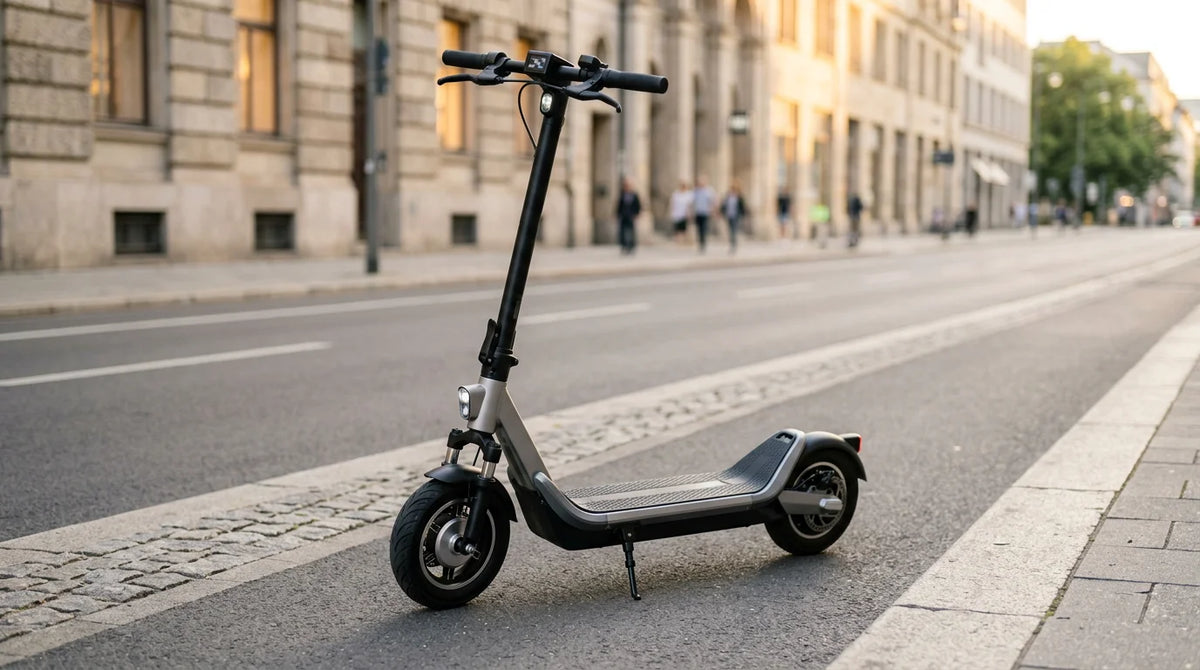
Picture carrying your scooter up two flights of stairs after a rainy commute. Weight suddenly becomes the specification you notice most. Lightweight commuter models sit near 27 to 40 pounds and fold in seconds, making multimodal travel with buses or trains realistic. High-performance machines can exceed 80 pounds, which transforms them from portable companions into vehicles you park rather than carry.
There is a genuine trade-off here: larger batteries and stronger motors add both capability and mass. Decide early whether you value effortless carrying or maximum performance, because very few scooters excel at both. For readers who enjoy following how design pushes this balance forward, our feature on the latest electric scooter models illustrates where the technology is heading.
Brakes, Tires, and Safety Features

Braking is where safety is won or lost. Disc brakes, especially hydraulic ones, provide the shortest and most consistent stopping distances, while cheaper drum or regenerative-only systems fade under repeated use. When comparing models, look for tested braking distances rather than the mere presence of a brake, because implementation quality varies enormously.
Tires matter almost as much. Pneumatic (air-filled) tires absorb bumps and grip wet surfaces, while solid tires never puncture but transmit every road imperfection to your wrists. Suspension, integrated lighting, turn signals, and a credible IP water-resistance rating round out the safety picture. For any scooter you intend to ride after dark or in traffic, treat bright lighting and reliable brakes as non-negotiable rather than optional extras.
Setting a Budget: Price Tiers Explained
Price broadly tracks capability. Understanding the tiers helps you avoid both false economy and unnecessary spending. The table below summarises what each band typically delivers, with our own curated position included for readers seeking a premium, design-led machine.
| Tier | Typical range | Typical top speed | Best suited to |
|---|---|---|---|
| Budget (under $500) | 8 to 12 miles | Around 15 mph | Light, flat, short commutes |
| Commuter ($500 to $1,500) | 15 to 25 miles | 18 to 25 mph | Daily urban riding, moderate hills |
| Premium ($1,500 to $2,500) | 25 to 40 miles | 30 mph and above | Longer commutes, heavier riders |
| Our Moxie special edition (TheArsenale) | Model-dependent | Model-dependent | Design-led buyers wanting a curated, collectible machine, with free shipping |
As a rule, the mid-range commuter band offers the strongest balance of quality, range, and value, which is why more models compete there than in any other segment. Spend at the level your route demands, and resist paying for extreme performance you will rarely use.
Bringing Your Decision Together
Knowing how to select the right electric scooter ultimately means letting your route dictate the specifications, not the other way around. Start with your realistic distance and terrain, insist on verified range and braking figures, weigh portability against power honestly, and then choose the budget tier that matches those needs. A scooter bought this way will still feel right years from now, because it was chosen for the way you actually travel rather than for a headline number on a box.
Take action with TheArsenale
Once you have defined the range, weight, and design qualities that matter to you, the next step is finding a machine that meets those standards without compromise. We curate high-end mobility for riders who value both engineering and character, and our team is available around the clock to guide your enquiry.

Explore our Moxie special edition electric scooter, a design-led addition to our luxury mobility marketplace. As a curated selection with free shipping and Private Membership access to vehicles before they are listed publicly, it is intended for buyers who want a distinctive, collectible ride rather than a mass-market commuter. Reach out and we will typically reply in under thirty minutes.
Frequently Asked Questions
What range should I look for in an electric scooter?
Base your minimum range on your daily round-trip distance plus a comfortable margin, since real-world range is usually well below the advertised figure. For most city commuters, a tested range of fifteen to twenty-five miles provides reassuring headroom. Riders covering only a few miles daily can safely choose smaller, lighter batteries.
How much motor power do I actually need?
Flat urban routes are well served by motors around 250 to 350 watts, while hills, heavier riders, or brisk acceleration call for 500 watts or more. Higher wattage improves climbing and confidence but adds weight and cost. Match the power to your terrain rather than to the highest number available.
Are more expensive electric scooters worth the cost?
Higher price generally buys better brakes, suspension, range, and build quality, so the value depends on how demanding your riding is. The mid-range commuter band offers the strongest balance for most people. Our curated selection at TheArsenale serves buyers who additionally prioritise design and exclusivity.
What safety features are essential when choosing a scooter?
Prioritise disc brakes with verified stopping distances, bright front and rear lighting, and a credible water-resistance rating. Pneumatic tires and suspension add meaningful comfort and grip on imperfect surfaces. If you plan to ride in traffic or after dark, treat these as requirements rather than upgrades.
How heavy should a portable electric scooter be?
If you intend to carry your scooter on stairs or public transport, look for a folding model in the 27 to 40 pound range. Machines above 60 pounds are better suited to being parked than carried. Remember that larger batteries and motors always add weight, so balance portability against the performance you truly need.