Electric Supercar Price Guide: What You Pay in 2026
Fewer than 200 units of the most sought-after electric hypercars will ever exist, and each one commands a price that rivals a Mediterranean villa. The market for battery-powered exotics has matured quickly, yet the numbers still surprise many buyers. Understanding the price of an electric supercar means looking beyond the sticker and into engineering, exclusivity and long-term value. If you want a broader frame of reference, our guide on how much does a hypercar cost sets the wider context.
These machines occupy a narrow band at the very top of the automotive world. Production runs are capped, waiting lists are private, and figures are rarely published openly. In fact, one Croatian maker sells its flagship by inquiry rather than with a fixed MSRP, according to a 2026 Autoblog review. That opacity is part of the appeal, but it also makes clear, verified benchmarks essential for any serious buyer.
What determines the electric supercar price today
The exact electric supercar price depends on a handful of measurable factors rather than marketing alone. Power output, battery capacity, carbon-fiber construction and the number of units produced each pull the figure upward. When a manufacturer commits to building only 20 or 150 cars, every unit must absorb the enormous fixed cost of research, tooling and homologation.
Brand heritage adds a further premium. A design house with nearly a century of history can price its first electric hypercar differently from an engineering startup. The result is a spread that runs from roughly two million to nearly five million dollars, with each model justifying its position through a distinct blend of performance and exclusivity.

Current price benchmarks for electric hypercars in 2026
Where does the money actually land? The clearest way to understand the market is to place the leading models side by side with their verified figures. Prices below reflect the most recent available data, each tagged with its source year, so you can compare like for like rather than relying on outdated numbers.
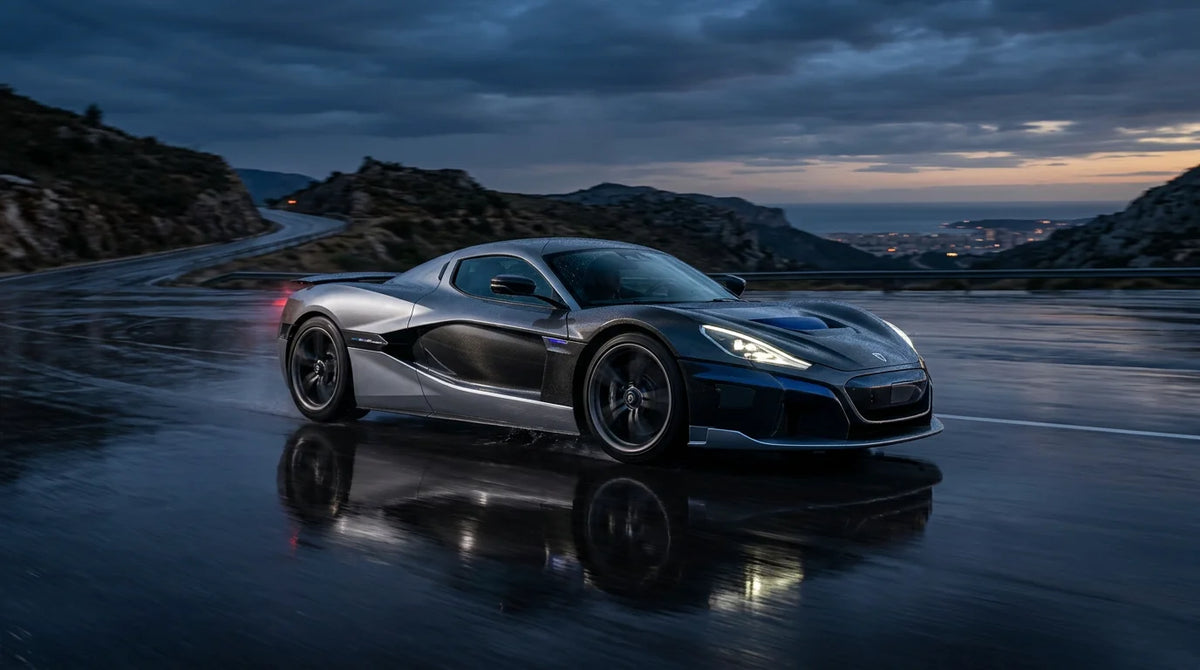
The 2026 Rimac Nevera carries a base figure of around 2.2 million dollars, Autoblog reports, with the Nevera R and a 10-unit Founder's Edition sitting above it. At the upper end, the Aspark Owl Roadster is estimated at over 3.5 million dollars for roughly 20 planned units, and it surpasses even the Lotus Evija at 2.3 million, according to Motor1.
| Electric hypercar | Approximate 2026 price | Planned units |
|---|---|---|
| Rimac Nevera | ~$2.2 million | 150 |
| Lotus Evija | ~$2.3 million | ~130 |
| Pininfarina Battista | ~$2.2 million | 150 |
| Aspark Owl Roadster | ~$3.5 million | ~20 |
| TheArsenale (marketplace) | Curated access, multiple models | Private early access |
As a marketplace rather than a single manufacturer, we curate several of these battery-powered exotics in one place, which is why our row reflects access breadth rather than a single price. For a closer look at how efficiency and cost intersect in this segment, our feature on the elextra electric supercar price and efficiency is a useful companion read.
What drives the cost of a battery-powered hypercar
Consider two cars that share the same heart. The Rimac Nevera and the Pininfarina Battista were both priced around 2.5 million dollars at launch, and TechCrunch noted in 2022 that Rimac supplies the Battista with the same 120-kilowatt-hour battery pack and powertrain the Nevera uses. Shared engineering shows how much of the final figure comes from the electric architecture itself.
Beyond the powertrain, the carbon-fiber monocoque, the quad-motor layout and the torque-vectoring software each demand bespoke development. Because these components cannot be amortized across millions of vehicles, the cost per car stays extreme. Limited production is not a marketing choice alone; it reflects the genuine expense of building machines this advanced.
Electric versus combustion at the top of the market
How do these figures compare with traditional hypercars? The gap has narrowed considerably. A seven-figure combustion flagship and a seven-figure electric flagship now occupy the same price bracket, and buyers increasingly weigh instant torque and silence against the sound and heritage of an engine.
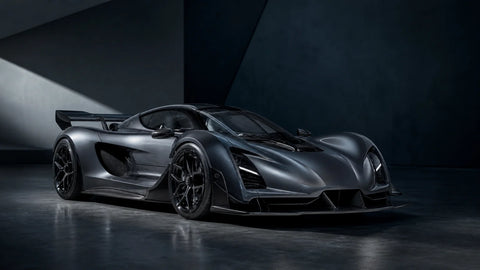
What sets the electric side apart is acceleration that combustion struggles to match, paired with the exclusivity of tiny production runs. Our listing for the raesr tachyon electric hypercar illustrates how a purpose-built electric platform can rival established names on both spectacle and specification, while keeping a distinct identity in a crowded field.

Value retention and the collector angle
Price is only half the equation for a serious collector; retained value matters just as much. Extremely low production numbers and strong design heritage tend to support residual values, which is why models from established design houses attract particular attention. Rarity, in this segment, functions as a financial cushion rather than a mere talking point.
The ceiling keeps rising, too. The Automobili Pininfarina B95, limited to just 10 units, is positioned at around 4.7 million dollars, HotCars reported in 2025, which signals continued upward pressure at the very top. For buyers, that trajectory reinforces why timing and early access can be as valuable as the purchase itself.
Making sense of the numbers
The price of an electric supercar in 2026 reflects genuine engineering scarcity, not inflated marketing. Expect a range from roughly 2.2 million dollars for the most established models to 3.5 million and beyond for the rarest roadsters. Before committing, verify the specific variant, confirm the production allocation, and weigh long-term value against pure performance. Approach the market with clear benchmarks, and the figures become far easier to justify.
Take action with TheArsenale
If you are ready to move from research to acquisition, the challenge is rarely the budget alone; it is access to the right car before it reaches the open market. That is precisely the gap we help you close for the world's most exclusive battery-powered machines.

As a luxury mobility marketplace, we curate high-end electric hypercars and offer Private Membership access to vehicles before they are listed publicly. Explore our curated electric mobility collection to discover current availability, and our team usually replies to enquiries in under 30 minutes across Monaco, Dubai, Doha and online.
Frequently Asked Questions
How much does an electric supercar cost in 2026?
Most flagship electric hypercars fall between roughly 2.2 million and 3.5 million dollars in 2026. The exact figure depends on power, battery size, production volume and brand heritage. The rarest open-top models can exceed four million dollars.
Which electric hypercar is the most expensive?
Among current models, the Aspark Owl Roadster is estimated at over 3.5 million dollars. The forthcoming Automobili Pininfarina B95, limited to 10 units, is positioned even higher at around 4.7 million dollars, according to 2025 reporting.
Why are electric supercars so expensive?
The cost reflects bespoke carbon-fiber construction, advanced multi-motor powertrains and very limited production runs. Because fixed development costs are spread across only a few dozen or a few hundred cars, each unit carries a substantial premium.
Do electric hypercars hold their value?
Extremely low production numbers and strong design heritage tend to support residual values in this segment. Models from established design houses often attract particular collector interest, which can help retained value over time.
How can I buy an electric supercar before public listing?
Access is often the hardest part, since figures and allocations are rarely published openly. Through our Private Membership, we provide access to vehicles before they are listed publicly, alongside a curated selection of high-end electric machines.