Italian Luxury Cars: Heritage, Power and the 2026 Market
Few objects fuse engineering and emotion as completely as a hand-built machine from Maranello, Sant'Agata or Modena. When you consider italian luxury cars, you are not simply weighing horsepower figures; you are weighing more than a century of design culture, motorsport pedigree and obsessive craftsmanship. If you are exploring the world of Italian luxury cars, it helps to understand what separates these marques from their German and Japanese rivals.
The numbers reinforce the prestige. According to Euromonitor research, premium and luxury cars in Italy are projected to grow at a 7% current value CAGR to reach EUR22.3 billion by 2030. That trajectory reflects sustained appetite for performance, exclusivity and design among high-income buyers worldwide.
What defines an Italian luxury car
The phrase covers a spectrum. At one end sit the grand tourers built for crossing continents in comfort; at the other, track-focused hypercars produced in tiny numbers. What unites these Italian performance vehicles is an emphasis on craftsmanship, expressive styling and a distinctive engine character that competitors rarely match.
Materials matter as much as mechanics. Cabins are finished in fine leather, machined aluminium and increasingly carbon fibre, while exterior surfaces are sculpted with an eye for proportion rooted in Italian design houses. The result is a category where the emotional dimension carries as much weight as the specification sheet. If you want a broader frame of reference, our overview of Italian luxury car brands places these makers in their global context.

The marques that define the category
Four names dominate the conversation, each with a distinct personality.
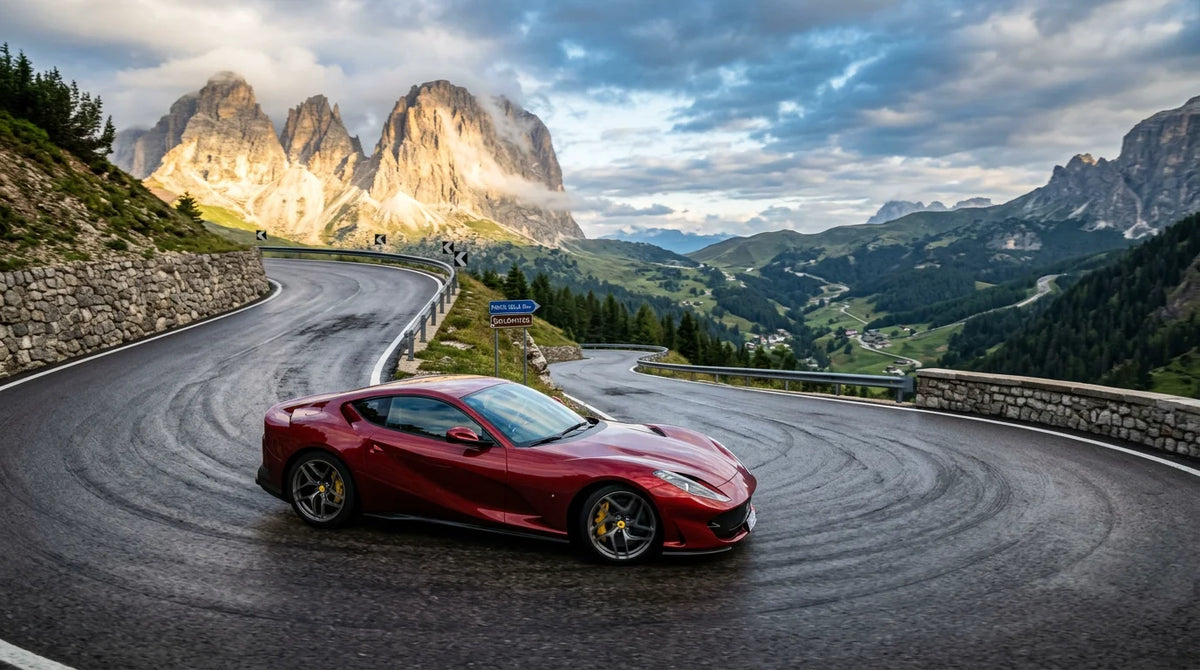
- Ferrari: Born in Maranello, the brand built its identity on Formula One success and now spans grand tourers, mid-engine sports cars and even the Purosangue, its first four-door model.
- Lamborghini: Founded by a frustrated tractor magnate, the marque pairs theatrical design with Audi-backed engineering, fielding the Revuelto hybrid and the Urus super-SUV.
- Maserati: The trident brand blends sporting heritage with everyday usability across sedans, crossovers and the MC20 supercar.
- Pagani: A boutique atelier producing carbon-fibre hypercars in extremely limited numbers, where each car commands a price comparable to a Bugatti.
Production scale underlines how rarefied this world is. According to industry data compiled by Gitnux, Maserati produced 5,601 vehicles in 2023, while Ferrari exported roughly 95% of its output, generating around EUR5.8 billion in export revenue that year. These are not volume manufacturers; scarcity is part of the proposition.
Engineering, design and exclusivity
Why do these vehicles command such premiums? The answer lies in the integration of motorsport-derived engineering with artisanal assembly. Many models still rely on the front-engine, rear-wheel-drive layout that allows for the large V8 and V12 powerplants associated with the category, a configuration prized for its balance and character.
Exclusivity is engineered as deliberately as performance. Limited build runs, extensive personalisation programmes and bespoke trim ensure that few cars leave the factory identical. For collectors who value access as much as ownership, our Luxury cars editorial explores how rarity shapes desirability and long-term value.
Italian luxury is less about specification and more about character: the sound, the line, the feeling of a machine built by hand rather than assembled by formula.
The 2026 market and where it is heading
The wider Italian automotive landscape is shifting, and the luxury tier is not immune. The sector is moving toward electrification and advanced connectivity, with environmentally conscious high-income buyers increasingly open to electric and alternative propulsion. Euromonitor analysts note that producers are prioritising sustainability and smart technology to meet evolving expectations.
Supply dynamics also play a role. According to Mordor Intelligence, Italian factory output fell sharply in 2024, a contraction that tightened supply in certain premium categories and helped support residual values. For buyers, this scarcity reinforces the investment character of well-chosen examples. The current trend in 2026, then, blends heritage with electrified powertrains rather than abandoning one for the other.

Comparing the leading Italian marques
The table below summarises how the principal players position themselves, alongside how we curate access to these machines.
| Marque / Platform | Signature focus | Typical output | Best for |
|---|---|---|---|
| TheArsenale (us) | Curated marketplace with early access | Hand-selected listings | Collectors seeking exclusive vehicles before public listing |
| Ferrari | Grand tourers and mid-engine sports cars | Low volume, export-led | Motorsport heritage and resale strength |
| Lamborghini | Theatrical supercars and super-SUVs | Limited series | Bold styling and presence |
| Maserati | Sport-luxury sedans and the MC20 | Several thousand units a year | Everyday usability with exclusivity |
| Pagani | Bespoke carbon-fibre hypercars | Handful per year | Ultimate rarity and personalisation |
If your priority is securing rare examples before they reach the wider market, our Garage Italia vehicles collection brings curated Italian craftsmanship together in one place.
Buying and collecting with confidence
For collectors, an Italian thoroughbred is both a passion and an asset. Provenance, mileage and originality drive long-term value, and the contraction in domestic production has only sharpened demand for the best examples. The broader Italian market itself is healthy: passenger car registrations rose 9.2% year to date through March, according to figures reported by ANFIA via MarkLines, signalling renewed momentum across the country's automotive sector in 2026.
Access, however, is often the real challenge. The most desirable cars are frequently spoken for before they are publicly advertised. Through our private membership, you gain visibility of exceptional machines ahead of public listing, a meaningful advantage in a market defined by scarcity.
Conclusion
Italian luxury cars remain a category apart, where craftsmanship, motorsport heritage and emotional design converge. With the sector projected to reach EUR22.3 billion by 2030, the appetite for these machines shows no sign of fading, even as electrification reshapes how they are built. The marques of Maranello, Sant'Agata and Modena continue to define what an exclusive performance vehicle can be. When access and curation matter as much as the car itself, our private membership gives you early sight of the rarest listings before anyone else. To begin your search, explore our curated cars and vehicles collection today.
Frequently Asked Questions
Which brands count as Italian luxury cars?
The core marques are Ferrari, Lamborghini, Maserati and Pagani, with Alfa Romeo offering more accessible sport-luxury models. Each combines distinctive design with a strong performance heritage.
Are Italian luxury cars a good investment?
Limited production and tightening supply support residual values for sought-after examples. Provenance, originality and rarity remain the strongest drivers of long-term value.
Where can I find exclusive Italian models before they are listed?
Through our private membership, you can access exceptional vehicles ahead of public listing. This early visibility is valuable in a market where the best cars are often sold privately.