Luxury Coffee Machine Buying Guide for Refined Home Brewing
A luxury coffee machine should do more than look impressive on a countertop. It should make your preferred drinks repeatable, fit your routine, and reward you every time you use it. Our guide to how to buy a luxury espresso machine begins with that principle: lasting value comes from the relationship between design, engineering, and daily use.
The market has also become more varied. The 2026 specialty coffee report from the National Coffee Association tracks specialty, espresso-based, and other coffee preferences as distinct consumer categories. That makes your first decision practical rather than purely aesthetic: identify the beverages and level of involvement you genuinely want before comparing finishes, controls, or price.
What actually makes a coffee machine luxurious?
Luxury is not defined by a shiny exterior alone. A truly premium machine should bring together stable brewing, thoughtful controls, durable materials, useful capacity, refined ergonomics, and credible support after purchase.
Build quality matters because the machine experiences heat, pressure, water, vibration, and repeated handling. Stainless steel panels, brass or steel brewing components, robust valves, insulated boilers, and well-designed touchpoints can improve both longevity and the pleasure of use. However, a heavy machine is not automatically a better machine. Internal design and service access deserve the same attention as visible materials.
Brewing consistency is equally important. The Specialty Coffee Association lists dedicated standards for home brewers and for semi-automatic and automatic espresso machines. Its coffee equipment standards provide a useful reference point because they frame quality around repeatability, performance, and measurable brewing behavior.
For a luxury buyer, the most useful question is therefore not, “What is the most expensive model?” Ask instead, “Which machine delivers the best balance of performance, presence, and ownership for the way I drink coffee?”
| Machine format | Best suited to | Primary strength | Main compromise |
|---|---|---|---|
| Manual espresso machine | Enthusiasts who enjoy technique | Maximum control over preparation | Requires time, practice, and a capable grinder |
| Semi-automatic machine | Users seeking craft with practical controls | Balance between involvement and consistency | Still requires dosing, tamping, and milk preparation |
| Fully automatic machine | Households prioritizing convenience | Repeatable drinks with limited manual work | Less direct control over extraction and texture |
| Capsule machine | Users who value speed and simplicity | Compact workflow and minimal preparation | Less flexibility in beans, recipes, and customization |
Which coffee ritual should your machine serve?
Imagine two mornings. In one, you want a precise espresso before leaving home. In the other, several people want cappuccinos, long coffees, or iced drinks. The right machine may be different in each scenario.
Begin by listing the drinks you prepare during a normal week. Straight espresso places greater emphasis on grind adjustment, dose control, temperature stability, and extraction timing. Milk drinks add another requirement, namely steam power, milk texture, wand ergonomics, and recovery between beverages.
If several people use the machine, consider user profiles, adjustable drink volumes, accessible water tanks, and simple cleaning cycles. If you live alone and enjoy the preparation ritual, manual control may bring more satisfaction than automation. If the machine serves a household or private office, convenience and repeatability may matter more than experimental control.
Luxury also involves visual continuity. A machine should suit the room where it lives, whether that is a contemporary kitchen, a private lounge, a studio, or a hospitality setting. Our guide to designer espresso machine prices is useful when you want to understand how design, materials, engineering, and exclusivity can influence the final investment.

How do temperature, pressure, and boilers affect the cup?
Temperature stability is one of the most important technical criteria in espresso preparation. Water that fluctuates significantly can produce inconsistent extraction, even when your grind, dose, and tamp remain unchanged.
Look for a machine with a credible temperature management system. Depending on the design, this may include electronic temperature control, a dedicated brewing boiler, a separate steam boiler, a thermoblock, or a heated group head. The correct choice depends on your volume and priorities.
A single boiler can suit occasional milk drinks, especially when space and simplicity matter. A heat exchanger can support simultaneous brewing and steaming through one main boiler, although its workflow requires a better understanding of temperature management. A dual boiler separates brewing and steam functions, which is useful when you prepare several milk drinks or want more precise control over espresso temperature.
Pressure deserves careful interpretation. A high maximum pressure figure does not automatically produce better espresso. What matters is controlled pressure at the coffee bed, a stable pump system, and the ability to repeat a suitable recipe. Some advanced machines also allow flow or pressure adjustment, which can be valuable for experienced users experimenting with different roast levels.
Steam performance is a separate consideration. Strong, dry steam can create smooth microfoam more quickly, while a compact wand may be easier to control for smaller drinks. If you value latte art, choose a manual steam wand with enough power and comfortable positioning. If speed matters more, an automatic milk system may be the more appropriate luxury feature.
Can the machine fit your kitchen and daily infrastructure?
A premium machine can become frustrating when its physical requirements are overlooked. Measure width, depth, height, clearance, tank access, drip tray removal, and the space needed to use the portafilter comfortably.
Height is especially important under kitchen cabinets. Some machines require you to remove or slide them forward before filling a top-mounted water reservoir. A machine with a rear tank may need additional clearance from the wall. A plumbed system can reduce refilling, but it requires suitable water access, drainage, and professional installation in many homes.
Electrical compatibility also matters for international buyers. Before purchase, confirm voltage, frequency, plug type, power requirements, warranty territory, and local service arrangements. Never assume that a machine designed for one market can be safely connected in another market through a simple plug adapter.
Consider sound as well. Pumps, grinders, fans, and steam systems can affect early mornings, open-plan rooms, and shared living spaces. A quiet machine may offer more practical luxury than an additional screen or decorative finish.
Why do the grinder and water deserve equal attention?
The machine cannot compensate for poor grinding. Espresso requires fine adjustments, consistent particle size, and a dose that can be repeated. If your grinder produces uneven grounds or large adjustment steps, even an advanced brewing system may deliver inconsistent results.
A built-in grinder saves space and simplifies the workflow. It can be appropriate when convenience and visual simplicity are your priorities. A separate grinder offers more flexibility, easier replacement, and a clearer upgrade path. Choose the arrangement that matches your willingness to manage separate equipment.
Water is just as important. Mineral content influences taste, scale formation, boiler health, and maintenance frequency. Use water that meets the machine maker’s specifications, and avoid treating filtration as an optional accessory in a high-value setup.
Consumer Reports updated its coffee machine buying guide in July 2026. It reported ratings for 175 coffee makers and highlighted ease of filling, controls, cleaning, reliability, and owner satisfaction as relevant evaluation areas. Its coffee maker testing guide reinforces a central lesson for luxury buyers: usability and maintenance should be evaluated alongside brewing performance.
Budget for the complete system rather than the machine alone. Depending on the format, you may also need a grinder, water filter, scale, tamper, milk pitcher, cleaning products, storage, and suitable cups. These details shape the daily experience more than a decorative panel that receives little practical use.

What should you budget for ownership and service?
The purchase price is only the beginning of a luxury coffee machine decision. Total ownership includes water treatment, cleaning products, replacement seals, filters, servicing, energy use, accessories, and possible repairs.
Ask how often the machine requires backflushing, descaling, milk system cleaning, grinder cleaning, and filter replacement. A complex machine may offer more capabilities, but it can also contain more parts and require more disciplined care.
Service access should be clear before you buy. Confirm the warranty period, covered components, authorized service locations, parts availability, return conditions, and support channels in your market. For an imported machine, shipping a heavy appliance across borders can turn a minor repair into a major inconvenience.
Energy use also deserves attention. Features that keep boilers hot can improve readiness and temperature stability, but they may consume more energy when the machine remains idle. Programmable schedules, standby modes, insulated boilers, and independent boiler controls can help align performance with actual usage.
Resale value is difficult to guarantee, but several factors can support it. Recognized craftsmanship, original accessories, documented maintenance, replaceable parts, clean ownership records, and timeless design can all help. Avoid choosing a machine solely because it is fashionable in 2026. A durable design with a serviceable architecture may age better than a device built around short-lived interface features.
How should you judge design, provenance, and price?
Price should reflect what you will use, not simply what you can display. Compare the machine’s daily workflow, materials, controls, capacity, service network, and expected maintenance before comparing decorative specifications.
Ask whether the machine has a clear design language and whether that language will remain appropriate in your home. A sculptural object can become part of the room, especially when its proportions, finishes, and controls feel intentional from every angle.
Provenance may matter when the machine is part of a wider collection. TheArsenale brings together rare machines, designers, builders, and brands through an international marketplace and physical concept stores. Its reported network includes more than 250 builders, designers, and brands, giving collectors a broader context for evaluating objects defined by engineering, rarity, and visual identity.
That perspective is useful when comparing an espresso machine with other collectible objects. The question becomes larger than beverage preparation. You are also considering authorship, material expression, mechanical character, and how the object contributes to a personal environment.
For a machine with a strong visual presence, review the object as carefully as you would review its specifications. Examine the proportions, controls, finish quality, maintenance access, and relationship between form and function. If the design remains compelling after those questions, the price becomes easier to assess rationally.
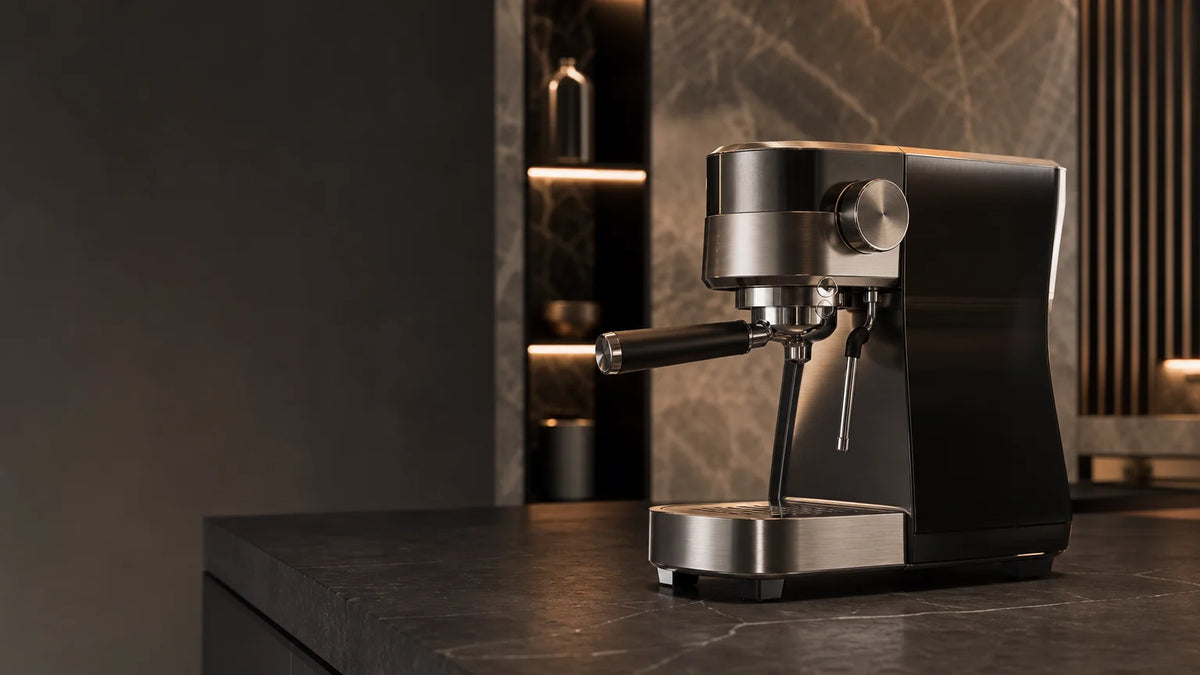
Our Espresso Veloce Flat Six RS Black Edition illustrates how an espresso machine can be considered within a wider culture of design-led machines. The important principle is not to buy decoration instead of performance. It is to choose an object where design and function support each other.
Choose the machine you will enjoy using
The strongest luxury coffee machine buying guide does not lead every reader to the same format. It helps you match your drink preferences, technical expectations, space, water, electrical setup, maintenance habits, and service requirements. Prioritize stable brewing, a suitable grinder, credible support, and an object that feels right in your environment. When those elements align, a premium machine becomes more than an appliance. It becomes a durable part of your daily ritual.
Make Your Coffee Setup More Distinctive
If your priorities extend beyond convenience, you may be looking for a coffee machine that functions as both a brewing instrument and a considered design object. TheArsenale connects collectors and enthusiasts with rare, future-oriented machines through curated online and physical experiences.

Explore the luxury Aurum espresso machine when you want to assess a distinctive centerpiece for your coffee environment. Review its product information, availability, and suitability alongside the practical criteria in this guide before making your decision.
Frequently Asked Questions
What should define a luxury coffee machine?
A luxury machine should combine reliable brewing performance, high-quality materials, thoughtful ergonomics, and a design that suits its setting. Serviceability and long-term support matter as much as visual appeal.
Is a manual or automatic machine better for a luxury home?
Choose a manual machine if you enjoy controlling grinding, dosing, extraction, and milk preparation. Choose an automatic machine if repeatable drinks and minimal daily effort are more valuable to you.
Do I need a separate grinder?
A separate grinder can provide more control, easier replacement, and a clearer upgrade path. An integrated grinder may be preferable when simplicity, compactness, and a unified appearance are your priorities.
How important is water quality?
Water quality affects flavor, scale formation, boiler health, and maintenance requirements. Always follow the machine maker’s water guidance and use suitable filtration when necessary.
Can TheArsenale help me choose a distinctive espresso machine?
Yes, TheArsenale’s curated marketplace and sales assistance support discovery and sourcing for rare, design-led machines. Its range includes distinctive espresso objects such as the Espresso Veloce Flat Six RS Black Edition and the Aurum model.