Submarine for Superyacht: A Guide to Luxury Submersibles

The global personal submarine market reached roughly USD 1.47 billion in 2024, and demand keeps climbing among owners who want to explore beneath their hulls. A private submarine for a superyacht transforms a vessel from a floating platform into a gateway to the deep. Instead of gazing at the waterline, you descend through it. If you are weighing your first acquisition, our Super Yacht Sub-3 illustrates how compact engineering now delivers genuine depth performance.
Interest in these vessels tracks a broader luxury shift. According to a personal submarine market report, high-net-worth individuals increasingly invest in submersibles as luxury assets that complement superyachts and private island resorts. The result is a maturing category where privacy, exploration, and engineering credibility now define the purchase decision.
Why yacht owners are heading below the waterline
Ownership of a large yacht once peaked at the tender garage. Today the frontier has moved down. The same market analysis projects the personal submersible sector to grow at a 9.2% compound annual rate through 2033, reaching an anticipated USD 3.28 billion. This rise mirrors the wider yachting industry, which continues to expand on the back of growing ultra-high-net-worth wealth.
A submersible answers a desire that surface toys cannot satisfy. It offers private deep-sea exploration with no crowds, no dive schools, and no compromise on comfort. For owners chasing experiences rather than possessions, the appeal is straightforward: access to a world that very few people ever witness in person.

What a submersible adds to the onboard experience
Picture stepping from the sun-drenched aft deck into a climate-controlled cabin, then sinking silently past schooling fish into blue darkness. Modern compact submersibles prioritise comfort as much as capability. Leading three-person models feature a hyper-hemispherical acrylic viewport that gives every occupant an almost unimpeded panorama of the surrounding water.
Interiors now rival yacht saloons. Owners can expect air conditioning with adjustable airflow, high-fidelity sound, and cold storage for refreshments. If you value a refined, guest-friendly dive, the Nemo submarine by U-Boat Worx shows how a smaller two-seat design can still deliver an intimate underwater lounge. Comfort, not endurance, is what most owners cite as the deciding factor.
Depth, occupancy, and the specifications that matter
How deep do you actually need to go? Most reef and wreck exploration happens well within 300 meters, which is why many luxury submersibles in the yacht segment target that band. A representative three-person craft weighs around 3,800 kg, carries a pilot plus two passengers, and offers roughly 12 hours of endurance on lithium-ion power.
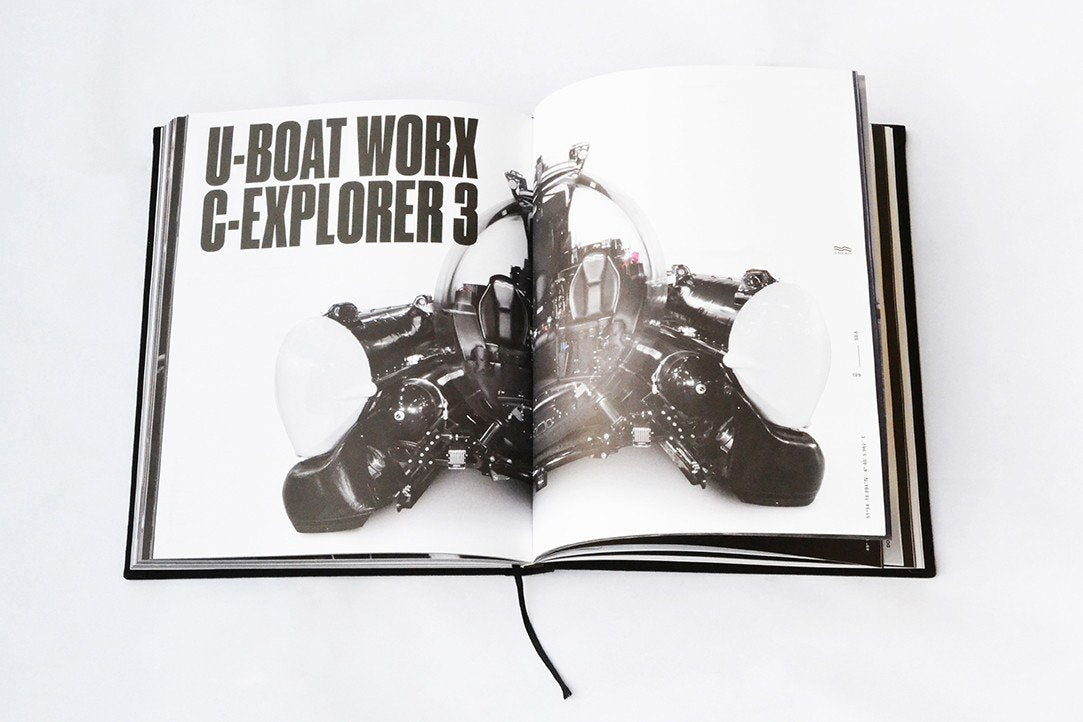
For owners with scientific or expedition ambitions, deeper-rated vessels extend the envelope considerably. Our U-Boat Worx C Researcher personal submarine is built for serious descent and extended observation. Before committing, weigh four variables together: maximum depth, number of seats, weight relative to your crane, and battery endurance. Each one influences where the submersible can be stored and how it is deployed.
Comparing submersible options at a glance
Not every underwater vessel serves the same purpose. Compact submersibles are carried aboard a mother yacht, whereas submersible superyachts are themselves the vessel. The table below sets out how several well-known designs differ on the metrics that count. The first row reflects the compact model we offer for owners who want a practical, garage-ready choice.
| Model | Type | Max depth | Occupancy |
|---|---|---|---|
| Super Yacht Sub-3 (our selection) | Compact yacht submersible | 300 m | 1 pilot + 2 passengers |
| Nautilus | Yacht submarine | 150 m | Up to 10 guests, 7 crew |
| Migaloo M5 | Submersible superyacht | Approx. 250 m | 14 to 20 guests |
The contrast is instructive. A compact submersible slots into an existing yacht programme, while a 165-meter submersible superyacht represents an entirely separate class of vessel with its own price tag and infrastructure demands.

Storage, launch, and recovery on board
A submersible is only useful if you can deploy it easily. Space is the first constraint. Clever features such as a freeboard extender, a sliding barrier that raises the distance between the water and the hatch, allow a craft to be stored in low-height garages yet still operated in rougher conditions. Many compact models are also engineered to fit inside a standard shipping container for transport between cruising grounds.
Launch and recovery deserve equal attention. A single lifting point simplifies crane work and creates a safer deck environment, while wireless surface controllers let crew position the vessel without a pilot aboard. When you evaluate a candidate, confirm that its weight matches your crane rating and that your tender garage can accommodate its dimensions.
Certification, safety, and diving with confidence
Would you dive in a vessel that has not been independently verified? Reputable submersibles carry classification from a recognised society such as DNV, which imposes stringent design rules and rigorous testing overseen by independent surveyors. This certification is the clearest signal that a craft has been engineered and validated to a professional standard.
Layered safety systems reinforce that assurance. Expect maximum depth protection, a deadman's switch that resurfaces the craft if a pilot becomes incapacitated, a manually released drop weight, and a marker buoy on a rope strong enough to raise the submersible. Safety and standards are non-negotiable, which is precisely why they are shaping demand. Industry analysis from Business Research Insights notes that deep-water research and underwater tourism together account for 40 to 45% of private submarine demand, a segment where verified reliability is essential.
Cost, ownership, and where the market is heading
What should you budget? Prices span a wide range, from single-seat submersibles costing several hundred thousand dollars to multi-person vessels priced in the tens of millions, with customisation a significant driver. Ownership costs extend beyond purchase to include crew training, maintenance, insurance, and the crane or garage modifications your yacht may require.
The direction of travel is clear. The broader superyacht market is projected to keep expanding, with one 2026 forecast placing it on a path toward USD 32.21 billion by 2035, and submersibles are becoming a defining accessory within it. For owners drawn to something faster and more unconventional, the Jet Shark submarine (first look) hints at where surface-to-subsurface hybrids may head next.
Bringing it all together
Choosing the right submarine for a superyacht comes down to matching depth, occupancy, and deployment to how you actually intend to explore. A compact, DNV-certified three-person submersible suits most owners who want comfort and reliability within roughly 300 meters, while deeper or larger craft serve expedition and research ambitions. Prioritise certification, confirm your crane and garage compatibility, and factor in the full cost of ownership. Do those things well, and your vessel becomes a genuine gateway to the world beneath the waterline.
Take action with TheArsenale
If the idea of descending beneath your own hull appeals to you, the next step is choosing a submersible that matches your yacht, your depth ambitions, and your appetite for discovery. We curate ocean-exploration vessels alongside a wider luxury mobility collection, so you can compare credible options in one place rather than piecing the search together yourself.

Explore our submarines for superyachts to review the models we offer, and reach our sales team directly when you are ready to move from research to acquisition. Private Membership also provides access to select vehicles before they are listed publicly, giving early sight of the newest submersible designs.
Frequently Asked Questions
How deep can a superyacht submarine dive?
Compact submersibles carried aboard a yacht commonly reach around 300 meters, which covers most reef and wreck exploration. Deeper research-oriented models descend well beyond that, while full submersible superyachts typically operate to roughly 250 meters over extended periods.
How many people can a yacht submersible carry?
Popular compact models seat one pilot and two passengers inside a pressurised acrylic cabin. Larger yacht submarines and submersible superyachts accommodate many more guests, but they represent a separate and considerably more expensive class of vessel.
Do private submarines need certification?
Reputable submersibles are certified by a recognised classification society such as DNV, which enforces strict design rules and independent testing. This verification is the clearest evidence that a craft meets professional safety standards before delivery.
How much does a submarine for a superyacht cost?
Prices range from several hundred thousand dollars for single-seat submersibles to tens of millions for larger, highly customised vessels. Ongoing ownership costs include crew training, maintenance, insurance, and any crane or garage modifications your yacht requires.
Where can I compare available submersible models?
You can review curated options through our submarines collection, which brings together several ocean-exploration vessels in one place. Comparing depth rating, occupancy, and deployment requirements side by side helps you match a craft to your yacht and cruising plans.