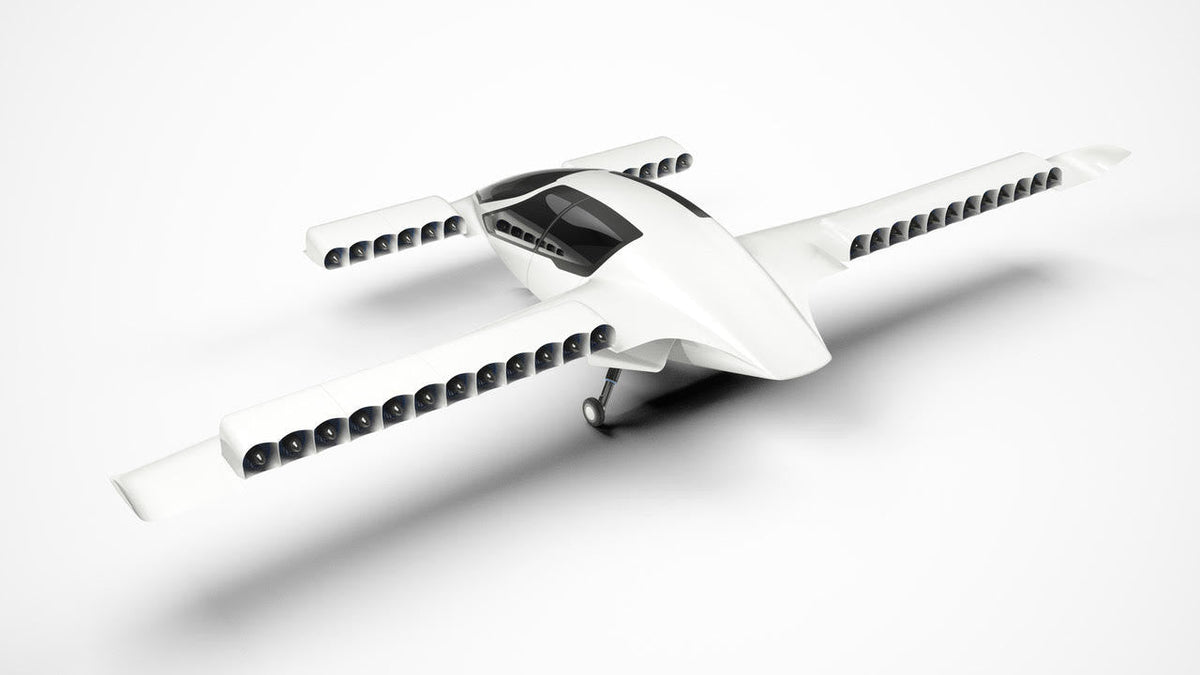
Lilium Jet by Lilium Aviation
The Lilium Jet made history as one of the first electric VTOL aircraft to complete full-scale flight testing, validating a radical approach to personal air mobility that stripped away gearboxes, hydraulics and conventional propellers in favour of an all-electric, ducted-fan propulsion system. Developed by Munich-based Lilium Aviation, the five-seat jet demonstrated a top speed of 300 km/h across a range of up to 300 kilometres, figures that positioned it as a genuine alternative to urban road transport.
How the Lilium Jet Works
VTOL stands for Vertical Take-Off and Landing, which means the Lilium Jet requires no runway and can operate from any flat surface. The aircraft's rigid winged body carries 36 electric ducted fans, grouped across 12 moveable flaps. Those flaps tilt between vertical and horizontal positions to transition the aircraft from hovering to forward flight, replacing the complex mechanical systems found in conventional helicopters.
There are no gearboxes, no water-cooling loops, no aerodynamic steering flaps and no foldable pitch propellers. The electric motors generate differential thrust directly, eliminating the need for a stabilising tail. A 1 MW lithium-ion battery pack powers the entire system, yet cruise conditions require less than 150 kW, making the energy budget surprisingly lean for a five-person aircraft. The 5-seat configuration weighs approximately 1,300 kg, comparable to a small conventional aircraft, and carries four passengers plus a pilot at speeds five times faster than typical urban road travel.
A New Category of Air Taxi
Lilium's core thesis was that electric aviation and the air taxi model are inseparable: a quiet, low-maintenance aircraft that can land at rooftop vertiports transforms urban mobility in ways that ground transport cannot match. The design team prioritised ultra-redundancy so the aircraft can execute a safe vertical landing even with multiple engine failures, a critical requirement for commercial passenger certification.
The unmanned Eagle prototype flew its first tests in April 2017, and the full five-seat Lilium Jet completed its maiden flight in May 2019 at Oberpfaffenhofen, near Munich. By October 2019, 100 flights had been completed, with the aircraft transitioning from hover to horizontal cruise above 100 km/h. Former Tesla engineers joined the programme, reinforcing Lilium's ambition to industrialise electric flight the way Tesla industrialised electric cars. eVTOL.news followed the jet's evolution through successive design generations, including a planned seven-seat variant aimed at commercial launch in 2024.


The Future of Electric Personal Aviation
The Lilium Jet belongs to a growing family of electric personal aircraft redefining what flight looks like. The EHang AAV autonomous passenger drone and the XPENG X2 eVTOL flying car represent parallel approaches to the same challenge: getting people into the air efficiently, safely and quietly. For those interested in personal aviation beyond the concept stage, the TheArsenale air and eVTOL collection brings together the most compelling electric aircraft available today, alongside broader coverage of airplanes, drones and flying cars.