Meet XTND, the Tesla of Longboards
The XTND electric longboard was a concept-stage AI-powered smart board designed to bring intelligent features to electric personal transport for the first time: an integrated machine learning system that adapts to the rider's habits, GPS security, automatic lighting, regenerative braking, and a 1,800 W brushless motor capable of reaching 45 km/h. At 3 kg, built from carbon fibre and titanium-grade materials, the XTND aimed to redefine what an electric longboard could be.
What Was the XTND Electric Longboard?
The XTND presented itself as the most technically ambitious electric longboard ever designed. Where most electric boards focused on adding a motor and a remote to a standard deck, the XTND built intelligence into every system on the board. The team behind it drew a direct parallel to Tesla in the automotive world: a product that uses technology to deliver an experience fundamentally different from anything that came before.
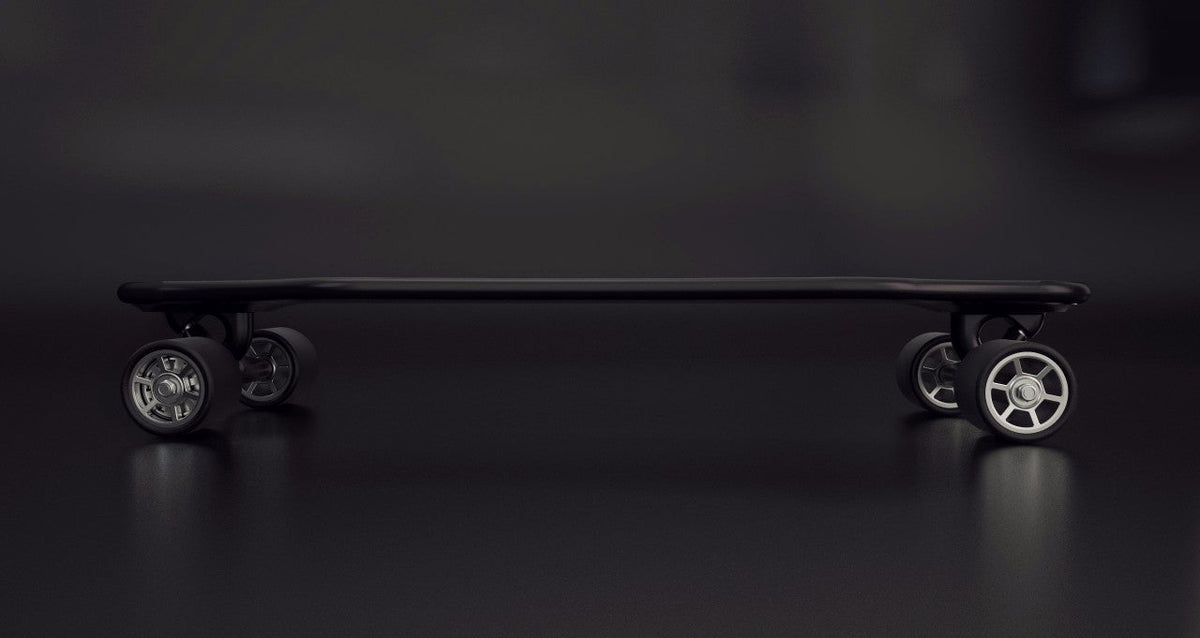
The carbon deck was designed with no visible bolts or hardware. The battery pack sits flush with the board surface, creating a clean, uninterrupted profile. Wide tyres give the board a low stance and a stable feel even at high speed. The overall impression is a product built to the industrial design standard of a consumer electronics device rather than a sporting goods item.

AI and Machine Learning on a Longboard: How XTND Worked
The defining feature of the XTND was its integrated AI and machine learning software. The board collected data during each ride and used it to build a personalised riding profile. Early in the learning curve, the system protected the rider by detecting incorrect stance through the carbon deck's pressure sensors: if the rider's posture was wrong, the board would not move. As the board accumulated more ride data, it progressively adapted its performance calibration to the specific rider, eventually learning preferred routes and optimising ride quality by analysing road surface feedback.
This approach treated the board as a companion that develops over time rather than a fixed product with static settings. Digital Trends covered the AI system in detail in their XTND AI electric skateboard feature. GrumpyFoot also published a full technical breakdown: XTND Board: a smart and capable electric skateboard.


Safety Features: Lights, Sensors and GPS Tracking
The XTND built a comprehensive safety system into every aspect of the board. An ambient light sensor automatically activated the integrated front and rear lights as conditions darkened, making the rider visible to traffic in the same way a car's running lights do. The rear light functioned as a brake light, activating on deceleration to warn following traffic. Pressure sensors throughout the carbon deck detected when the rider stepped off and triggered automatic braking to prevent the board from rolling away unmanned. After ten minutes without a rider, the board would also shut itself off to preserve battery charge.
GPS security added another layer: the board's location was trackable at all times through the mobile app. If the board was locked via the remote and then moved without authorisation, it would not restart, and the owner could track its position in real time.

XTND Performance Specs: Motor, Range and Charging
The brushless hub motors used neodymium magnets, a rotating drum, and hall sensors to produce 1,800 W of combined output, propelling the board to a top speed of 45 km/h. Regenerative braking recovered energy on every deceleration, returning charge to the battery during descents and stops. A full charge delivered 20 km of range and took approximately one hour from flat. A partial charge to 75 percent capacity could be achieved in 30 minutes. The battery was designed to be swappable, allowing riders to carry a spare for double the range without any tools. The motor system handled inclines up to 20 percent gradient without performance degradation.


The Remote: Magnetic Charging and Ergonomic Design
The XTND remote was designed as an extension of the board's overall design language. Shaped to fit the hand naturally, it integrated LED status indicators and vibration feedback for speed and system alerts. Speed control was handled directly through the remote. Charging the remote required no cable: placing it on the logo printed on the board's deck activated a magnetic connection that held it in position and transferred charge. The entire system was designed to eliminate accessories, cables, and friction from the ownership experience.

Explore Electric Boards and Urban Rides at TheArsenale
The XTND represents a vision of intelligent electric mobility that continues to inspire designers working in this space. TheArsenale curates the most forward-thinking boards and electric personal transport available. The WLWC Croc Skate brings premium craftsmanship to board design, while the G2X Jetboard TheArsenale Edition pushes electric board technology into the water. The Mako Slingshot Jetboard extends the electric board concept into yet another terrain. Browse the full TheArsenale skateboard collection for more exceptional board designs.