Peugeot’s RCZ Vision Brings Back the Driver’s Car—with a Digital Twist
By Patrice Meignan — TRANSMISSION
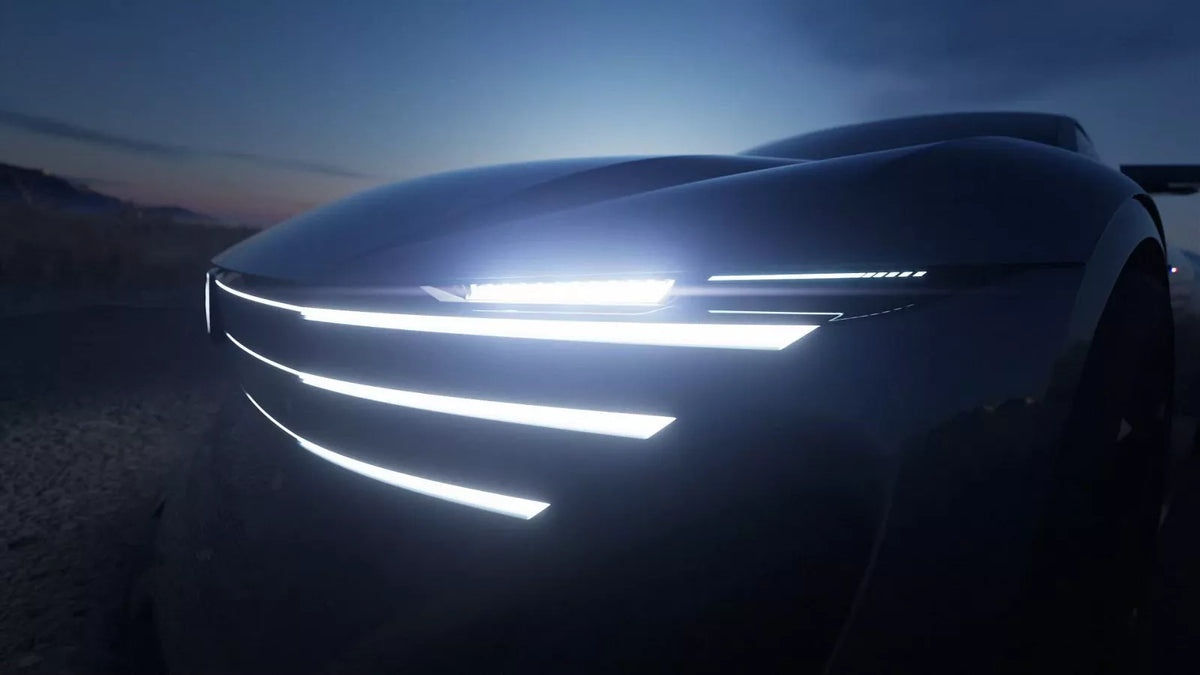
Peugeot has brought the RCZ name back to Paris, and it has not done so quietly. The RCZ Vision is low, broad and feline, with a glass canopy that recalls the original coupé’s double-bubble roof. But the real question is not whether Peugeot can draw a beautiful sports car. It can. The question is whether a car can remain desirable when the act of driving is increasingly mediated by software.
I have always believed that a concept car should leave you with an image in your head. The RCZ Vision does that. Its proportions carry the confidence of a proper grand tourer; its details—thin horizontal light signatures, an active rear spoiler and those floating cockpit arches—make clear that this is a new Peugeot, not a retro exercise. The original RCZ, produced from 2009 to 2015, earned its place by being distinctive. This one understands that memory is useful only when it gives designers permission to move forward.
A new steering gesture
Inside, the familiar Peugeot i-Cockpit idea moves into unfamiliar territory. The rectangular Hypersquare replaces the conventional steering wheel, while transparent MicroLED displays are intended to keep information in the driver’s line of sight without filling the cabin with screens. Peugeot says the concept pairs the Hypersquare with steer-by-wire: there is no mechanical connection between the steering control and the front wheels, and the steering ratio varies with speed. Brake-by-wire is also part of the proposal.
That is where the RCZ Vision becomes more than a styling exercise. These systems could make low-speed manoeuvres easier and give the driver a more direct, configurable interface. They also place a new responsibility on the engineers: the sensation must feel natural, legible and trustworthy. A sports car cannot ask its driver to admire its technology while forgetting the road. The technology has to disappear into the pleasure.
Peugeot’s answer is not simply “more digital.” The brand describes a cabin in which information can be reduced or even switched off, leaving the driver with only what matters. I like that instinct. The future cockpit does not need to be louder; it needs to know when to be quiet.
A word for Arnaud Belloni — and a campaign that deserved its own page
During the Paris Motor Show, Peugeot took the Hypersquare into print. That matters. A square steering control is not an idea people can absorb from a specification sheet; its shape has to be seen, then questioned. The campaign gave this unfamiliar gesture a life beyond the stand and put it in front of readers who might never have expected a steering control to look this way.

And I want to make this personal. Arnaud Belloni is a friend, and this was his first print campaign. Arnaud, bravo. It takes confidence to make an unfamiliar gesture the hero of a page and trust people to stay with it. You gave the Hypersquare a voice before anyone had even touched it. That is a lovely first, and I am proud of you.
Big numbers, with a concept-car asterisk
Peugeot gives the RCZ Vision a 500-horsepower electric powertrain, up to 600 kilometres of range and a 1,000-volt architecture. The company also says its solid-state battery, developed with Factorial Energy, could charge from 10 to 80 per cent in ten minutes. Those are manufacturer-stated concept figures, not independently verified production specifications; Peugeot itself marks the projected 11.5 kWh/100 km WLTP consumption as subject to confirmation.
The distinction matters. The RCZ Vision is a brand manifesto, not a production announcement. Its solid-state battery and charging claims point to Peugeot’s ambitions, rather than a car customers can order today. Still, the engineering story gives the design a purpose: a thin battery pack is part of the reason the silhouette can sit so low and remain so elegant.
Emotion still has to lead
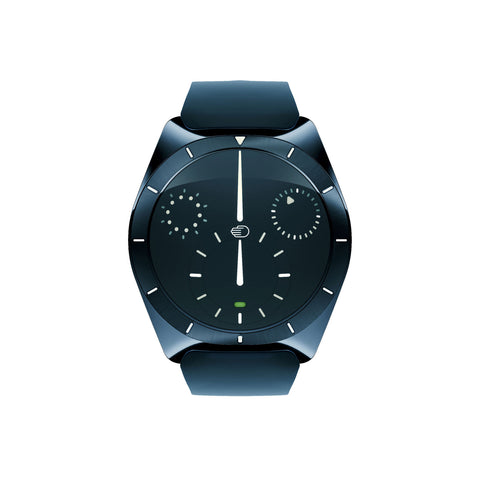
Peugeot calls this design language “Feline Future,” built around freedom, courage, elegance, strength and instinct. The name may sound like a manifesto—and it is—but the car gives it a convincing form. The sculpted body has muscle without turning aggressive; the cabin’s glass bubble and four-seat layout suggest a grand tourer rather than a single-minded track toy. Even a Serica Parade watch integrated into the dashboard is a reminder that Peugeot wants this future to feel crafted, not merely calculated.
I am glad the RCZ is back as an idea. The steer-by-wire question is a serious one, and Peugeot should have to prove that the new interface can preserve the small, physical rewards that make a driver’s car worth wanting. But a concept is allowed to ask that question before it answers it. The RCZ Vision says that technology can change the gesture without taking the emotion away. Now I want to know what it feels like from behind that Hypersquare.
For another Peugeot concept exploring a different kind of performance heritage, read our story on the Peugeot E‑T16.
Sources: Peugeot / Stellantis Media — RCZ Vision press release · Stellantis — Paris Motor Show concepts · Peugeot — RCZ Vision concept