SIRIUS AVIATION'S HYDROGEN-POWERED CEO JET TAKES TO THE SKIES

Sirius Aviation's CEO Jet is the world's first liquid-hydrogen-powered eVTOL aircraft designed for executive transport, combining a 1,150-mile range, 323 mph cruise speed, and near-silent 60 dB operation with the vertical take-off capability of a helicopter. Developed in collaboration with BMW Designworks for exterior and interior styling and the Sauber Group for aerodynamic engineering, the CEO Jet made its global debut at the MOVE Expo in London, signalling a new chapter in sustainable private aviation.
How the Hydrogen Propulsion System Works
The CEO Jet's propulsion architecture centres on a hydrogen fuel cell stack fed by liquid hydrogen storage, supplemented by battery packs and a booster battery for peak-demand phases such as take-off and landing. The system drives 28 electric ducted fans, each 300 mm in diameter, distributed across a V-tail aircraft platform that is 36 metres in length with an identical wingspan. The canards tilt to redirect thrust during VTOL transitions, while the main wing fans remain fixed and assist forward flight. Because the only combustion byproduct is water vapour, the aircraft produces zero carbon emissions throughout the flight. Noise output sits below 60 dB at 100 metres, a level comparable to a quiet domestic appliance, which has significant implications for urban operations where noise is a key regulatory hurdle. As New Atlas reported at the debut, the combination of range and emission-free propulsion puts the CEO Jet in a category of its own among current eVTOL proposals.

Interior: Executive Luxury at Altitude
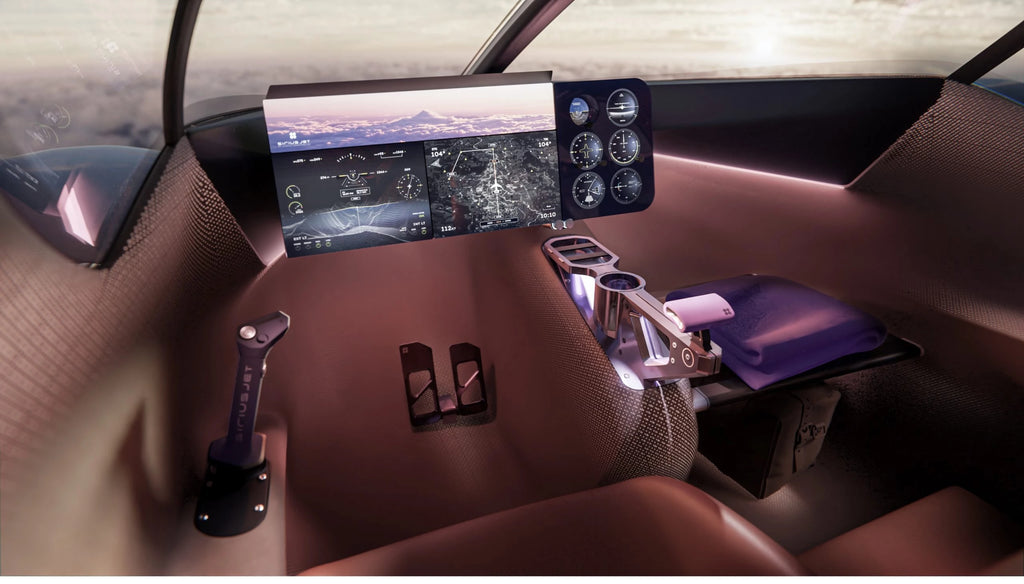
The CEO Jet seats a pilot and three passengers in a cabin designed by BMW Designworks. Each passenger position has individual side tables with cup holders, storage pockets, reading lights, and device charging trays. Seat-back displays show real-time flight data. Upon landing, the cabin releases a burst of perfume to help passengers feel refreshed for what follows. The attention to sensory detail reflects a clear effort to position the CEO Jet not just as an air taxi but as a genuine executive transport product, one that competes with business helicopter and short-haul private jet experiences in terms of onboard comfort.

The Adventure Jet Variant and Production Timeline
Alongside the CEO Jet, Sirius Aviation revealed a second variant: the Adventure Jet, designed for versatile operations including water landings, which opens applications in remote and island destinations unreachable by conventional aircraft. Both platforms share the same hydrogen-electric foundation but differ in passenger capacity and mission profile. Production is slated for 2028, a timeline that aligns with the industry-wide expectation that hydrogen-electric aviation will require the latter half of this decade to clear regulatory and infrastructure hurdles. Flying Magazine noted that refuelling costs are projected at approximately $500 per flight, a figure that, combined with the per-unit acquisition cost, targets ultra-high-net-worth private aviation customers from day one.

Private Aircraft and Advanced Air Mobility at TheArsenale
The CEO Jet represents exactly the direction private aviation is heading: zero-emission, VTOL-capable, and designed to the same standard of finish as a luxury automobile. Explore the Air collection at TheArsenale for some of the most forward-thinking personal aircraft available today. Among the standouts is the ICON A5 amphibious light sport aircraft, and the brand collections at Ascendance and Centauri Aircraft offer further perspectives on how design-led aviation is evolving.
Photo: SIRIUS AVIATION