SKAI: The Hydrogen eVTOL BMW Designworks Helped Shape
Hydrogen has always promised aviation something batteries struggle to deliver: time. More time in the air, faster energy replenishment and the potential to make electric vertical flight work beyond the shortest urban hop. Skai, developed by Alaka’i Technologies with BMW Group’s Designworks, remains one of the most distinctive expressions of that idea.
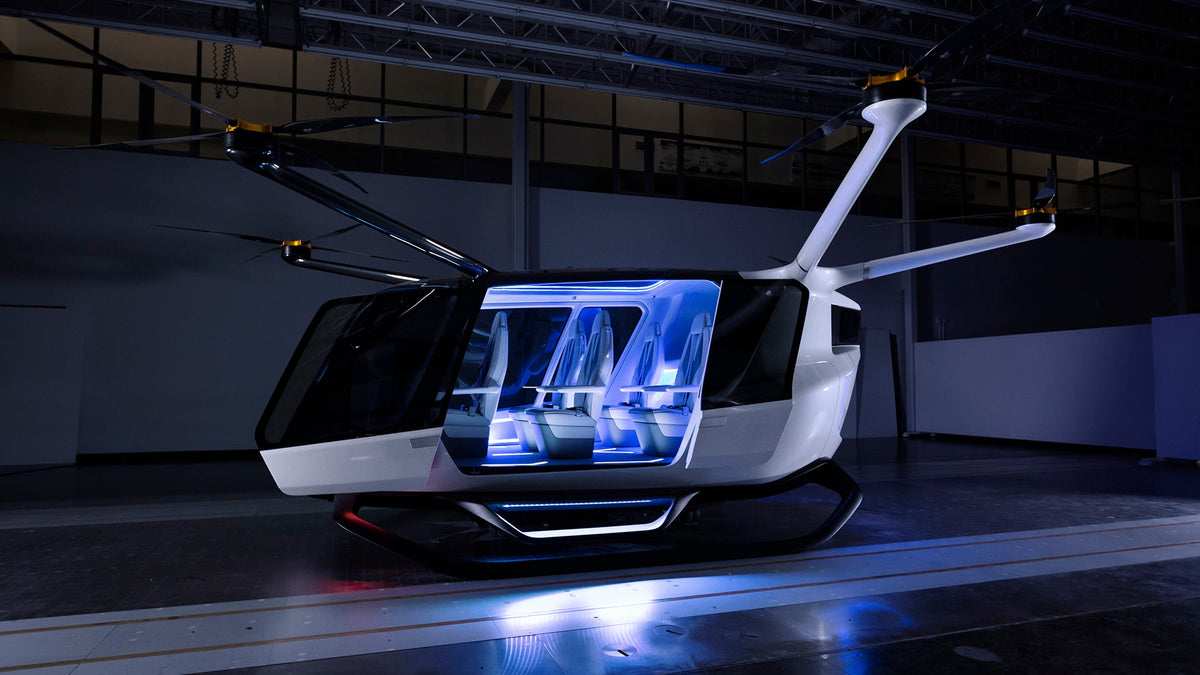
First revealed in 2019, Skai is a hydrogen fuel-cell-powered eVTOL conceived as a complete air-mobility system, rather than simply another futuristic aircraft. Its ambition was direct: make vertical flight feel understandable, spacious and human from the first encounter.
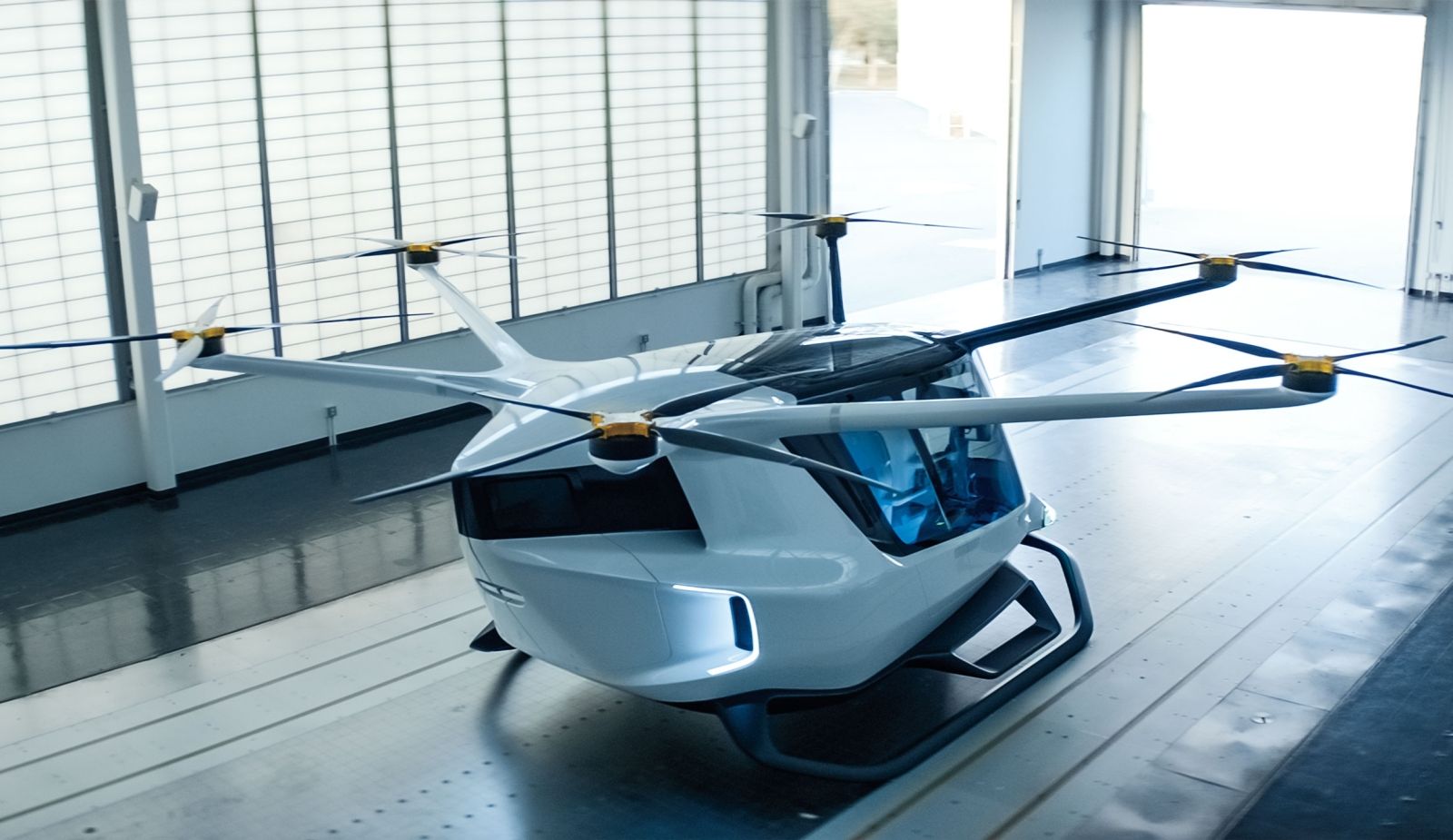
Skai concept — image and design credit: BMW Group Designworks.
A mobility idea designed from the cabin out
BMW did not build the aircraft. Its Designworks studio collaborated with Alaka’i on the vehicle experience, from its passenger cabin to the wider service model. That distinction matters. The project shows what a serious design partner can bring to advanced mobility: not automotive styling applied to a rotorcraft, but an attempt to rethink the whole journey around people.
Designworks says the concept began with the interior. A physical mock-up and virtual-reality process were used to assess multiple cabin configurations, leading to a delta seating layout. In the envisioned piloted format, Skai carries four passengers and a pilot; the autonomous or ground-piloted concept is intended for five passengers. The aircraft’s service vision also included a Skai Cab app, with pooled or private journeys.
Why hydrogen changes the conversation
Most eVTOL programmes have centred on batteries. Skai takes a different route: hydrogen fuel cells supply electricity to the aircraft’s motors. The attraction is easy to understand. Hydrogen can offer a path to longer missions and rapid refuelling, while the aircraft itself operates electrically. The challenge, as ever, is the infrastructure: producing low-carbon hydrogen at scale, transporting it, storing it safely and making it available where aircraft actually operate.
Alaka’i continues to present Skai as part of its hydrogen-powered eVTOL programme. Its current materials frame the mission around simplicity, fault tolerance and a cleaner energy chain, while the 2019 launch material described a five-seat aircraft with six rotors and a triply redundant architecture. Those figures belong to the published concept and should be read as development targets, not a certification or delivery promise.
The important part is not the silhouette
Skai is memorable because it refuses the usual visual language of a personal aircraft. It is broad, open and almost architectural. That was deliberate. Designworks describes the brief as a premium vehicle experience that extends beyond the passenger into the infrastructure around it.
This is the real lesson of Skai. Advanced aviation will not be won by propulsion alone. It will be won when design, energy, regulation, operations and trust begin to work as one system. A quiet, clean aircraft is only meaningful if people understand where it can land, how it is fuelled, who is responsible for its operation and why it improves life on the ground.
A concept still worth watching
In a sector full of electric-air-taxi renderings, Skai remains relevant because it asked a harder question early: what if zero-emission flight needs an energy architecture different from the car industry’s battery-first model? Hydrogen may not be the answer everywhere, but it is an important answer to investigate for higher-utilisation, longer-range vertical aviation.
At TheArsenale, we follow projects like Skai because they widen the definition of mobility. This is not a promise that tomorrow’s commute will happen in the sky. It is a reminder that the next generation of vehicles will emerge where aerospace discipline, energy innovation and exceptional industrial design meet.