Project MAYBACH: luxury off-script
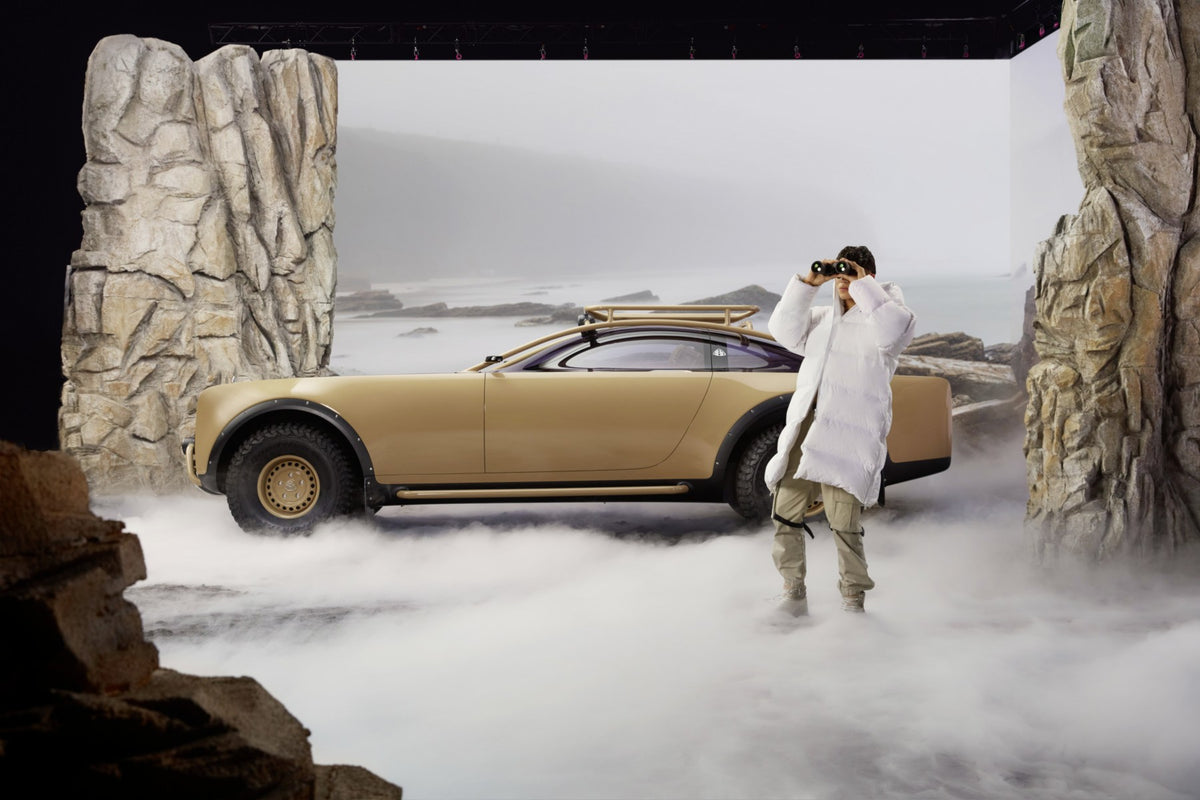
Luxury is usually given familiar surroundings: an arrival, a city, a carefully managed interior. Project MAYBACH placed a different possibility in view. The electric show car associated with Virgil Abloh and Gorden Wagener was presented at Miami’s Rubell Museum in December 2021, bringing an expansive, exploratory setting into the visual language of Maybach.
Mercedes-Benz’s subsequent archive distinguishes that show car from the limited-edition Maybach by Virgil Abloh S-Class introduced in 2022. Keeping the two separate matters. A speculative design object and a production edition have different purposes, even when they share references and form part of the same creative relationship.
The show car’s enduring interest lies in the change of context. Its scale, contrasting surfaces and adventure imagery ask the audience to imagine luxury away from the expected setting. The question is not whether every unusual feature should become a production specification. It is whether a brand can remain recognisable while being placed somewhere unfamiliar.
That is a demanding brief for a collaboration. An external creative voice must have enough room to alter the proposition, while the manufacturer contributes the means to make the idea tangible. If the result merely repeats existing codes, little has been gained. If it loses every connection to the brand, the exercise becomes arbitrary.
Project MAYBACH can be read as an attempt to work within that tension. Its usefulness today is not a claim that it produced a measurable commercial outcome; none is established here. It is a reference for thinking about creative permission.
A meaningful collaboration can begin by changing the scene in which a product belongs. That change may prove more revealing than adding another recognisable signature to an otherwise familiar object.
Source: https://media.mercedes-benz.com/article/2ff2c13e-2cf3-4a5e-855c-6b5e6ad4393b Image credit: Mercedes-Benz / Project MAYBACH.