Where to Buy High-End Engine Art: A Collector’s Guide
A high-end engine artwork might be a sculpture, a furniture piece built around a mechanical assembly, or an image of an engine. Each format calls for different questions about materials, scale, and care. To refine your criteria, our automotive art buying guide offers a starting point. The key is to understand exactly what you are buying and how the work’s history can be checked.
For collectors considering high-end engine art, the right source depends on whether you want an original component, a custom-made object, or a print. A gallery or artist’s studio may be suited to a one-off commission, while a curated mobility collection can bring design-led objects together. In either case, ask specific questions about the maker, materials, documentation, dimensions, and delivery before committing.
Where should you begin your search?
If you want an artwork that features a real engine or mechanical assembly, start with galleries and studios that specialize in automotive, industrial, or sculptural work. Look closely at descriptions and photographs. They should help you distinguish an actual component incorporated into a work from an object that merely reproduces an engine’s appearance.
Museum collection records can offer useful reference points for the range of forms this art can take. The Hood Museum’s record describes Eric van Hove’s V12 Laraki as a nonfunctional sculpture made with 53 materials, including an imported Mercedes-Benz V12 engine. Its collection record illustrates why a collector should ask which parts are original components and which are sculptural interpretations.
Consider contacting the artist or gallery directly when you have a particular engine type, vehicle history, size, or finish in mind. Ask whether the work is available as shown, made to order, or offered as a commission. A clear answer helps you understand whether the final object can meet your practical requirements as well as your aesthetic ones.
How can you tell an original from a reproduction?
A work made with a real engine component is different from a print or a cast that represents one. Neither format is automatically preferable, but the distinction affects what you should expect to receive. Ask for a written description of the materials, whether parts are original or reproduced, and what changes were made during fabrication.
For older works or pieces with a collector history, request whatever documentation the seller has, such as an artist statement, invoice, prior ownership records, or exhibition history. The Getty Museum explains artwork provenance as the history of an object’s origin, ownership, sales, and locations. This record can provide context, though documentation should be assessed in light of the specific work.
Where possible, compare the description with detailed photographs and inspect the object in person. If a component is identified as coming from a particular engine or vehicle, ask what supports that attribution. For a commission, agree in writing on the materials, finish, dimensions, and any included documentation before work begins.
Which material and format suit your space?
For a compact display area, a small sculpture or framed engine artwork may be easier to place than a large mechanical assembly. A furniture piece can give an engine component a functional role, but you will need to consider its footprint, weight, stability, and how it will be moved into the room. Ask for measurements and installation requirements rather than estimating from photographs.
Art inspired by engines can also use materials that do not include a complete engine. The Detroit Institute of Arts catalogues Fumio Yoshimura’s 1973 Motorcycle as carved wood laminate, while its collection record identifies engine gears among the work’s tags. The museum object record is a reminder to check the stated medium instead of assuming a mechanical-looking work contains functional automotive parts.
Finish and maintenance matter, too. Ask how surfaces should be cleaned, whether the object is intended for indoor display, and whether it needs a plinth, protective case, or specialist handling. If you are weighing sculpture against functional furniture, our art made from car parts article explores how mechanical components can become design objects.

What should you settle before committing?
Before agreeing to a commission or purchase, request a written specification covering price, payment schedule, completion timing, and what happens if the finished work differs from the agreed design. Confirm whether the piece is one of a kind, part of an edition, or made using a repeatable design. These details help you compare the object you expect with the one being offered.
International purchases need additional planning. Ask who arranges packing and transport, whether insurance is available, and which party is responsible for any applicable import costs. Request the packed dimensions and weight if these affect your delivery arrangements. Do not assume that shipping, insurance, or import charges are included unless the seller confirms them in writing.
A museum example can show why recording an artwork’s details matters. The Chrysler Museum’s record for John Chamberlain’s Fancy identifies its approximate date, medium, dimensions, and collection history. Its artwork record is a useful model for the kinds of object details a collector may want to document, even when purchasing a different type of work.

Where does a curated mobility source fit?
When you want to explore design-led objects connected to mobility, a curated collection can be a useful place to start. Our business-reported network includes more than 250 builders, designers, suppliers, and brands. That breadth does not confirm that a particular engine artwork is available, so ask our team about current listings or sourcing options before making plans.
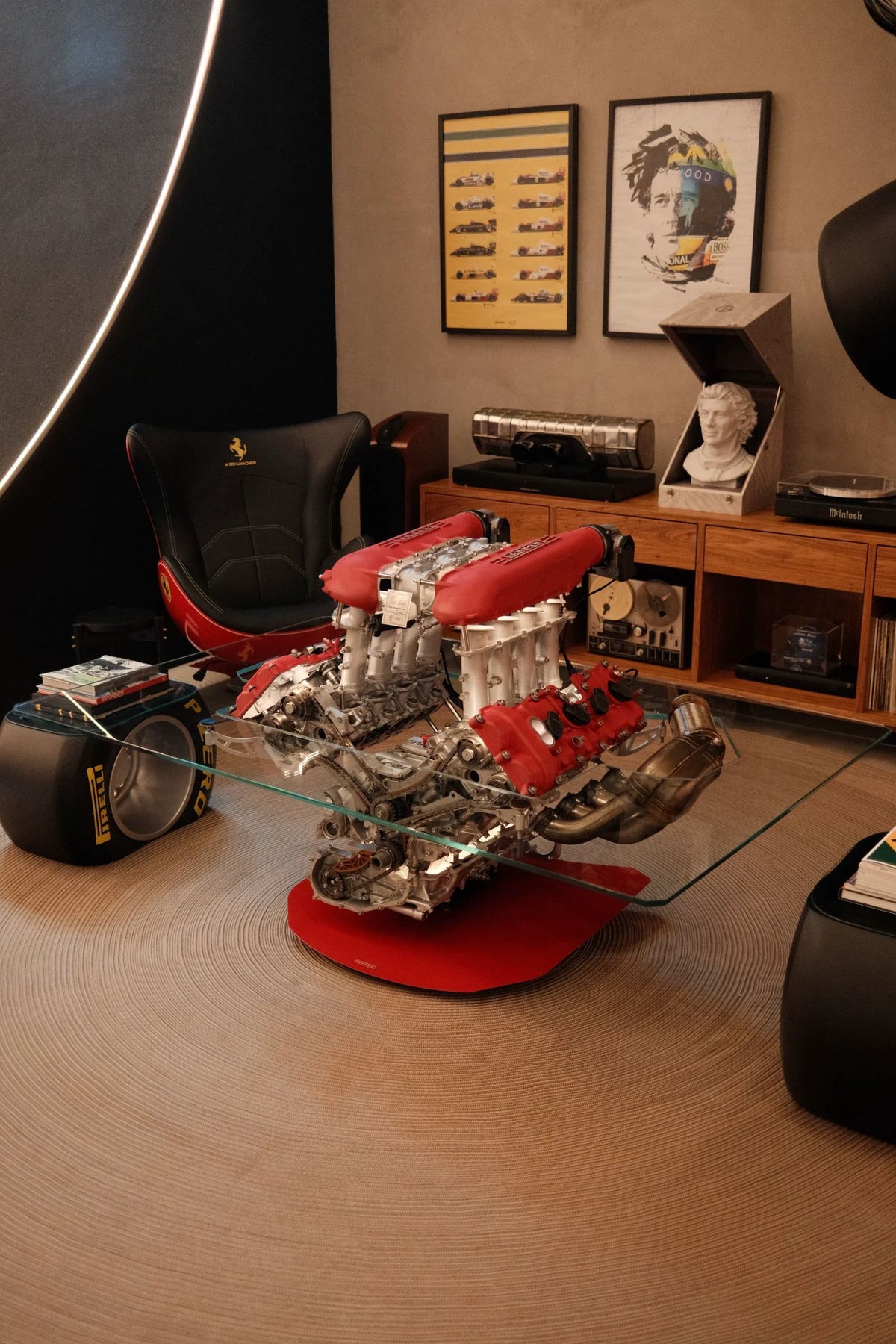
For a purchase that requires personal attention, our sales team can assist with high-value acquisitions. If your interest is in furniture made around a mechanical assembly, you can also review our engine coffee tables for sale page and confirm the specific object’s availability and terms directly.
One example in this category is our Ferrari engine coffee table. Review its product page and ask us for any details you need before deciding whether its design, dimensions, and purchase arrangements suit your space.
Make the object’s story part of the purchase
Finding the right piece starts with identifying the format you want, then checking its maker, materials, provenance, scale, and practical requirements. Ask direct questions about what is original, what documentation is available, and how international delivery will be handled. With those details in writing, you can choose automotive engine art that fits both your collection and its intended setting.
Explore Engine Art for Your Collection
A distinctive engine artwork can bring engineering and design into a room, but the details matter as much as the visual impact. Consider the piece’s material, scale, and provenance, then confirm availability and purchase arrangements before proceeding.

Our curated mobility marketplace connects collectors with design-led objects, and our team can provide personal assistance with high-value acquisitions. To explore furniture built around engine forms, shop high-end engine coffee tables, then contact us to discuss the specific piece and any questions about sourcing.
Frequently Asked Questions
Where can you find original engine art?
Start with specialist galleries, automotive-art studios, and curated mobility collections. Ask each seller to clarify whether the work contains real engine components, reproduced parts, or only engine-inspired imagery.
What documentation should you request?
Ask for a written materials description and any available artist statement, invoice, ownership history, or exhibition record. For a commission, agree on the design, materials, dimensions, and included documentation before work begins.
Is a print considered engine art?
A print can depict an engine, but it is not the same as a sculpture or furniture piece made with mechanical components. Check the medium and description so the work matches your expectations.
What should you check before buying internationally?
Confirm who arranges transport and packing, whether shipping insurance is available, and whether import costs may apply. Get the relevant costs and responsibilities in writing before paying.
Can TheArsenale help with an engine-art purchase?
Our curated mobility marketplace and sales team can help collectors explore design-led objects and discuss high-value acquisitions. Ask us directly about current availability or sourcing, since a specific engine artwork is not guaranteed to be listed.