Designer Watch for Sale: How to Choose with Confidence
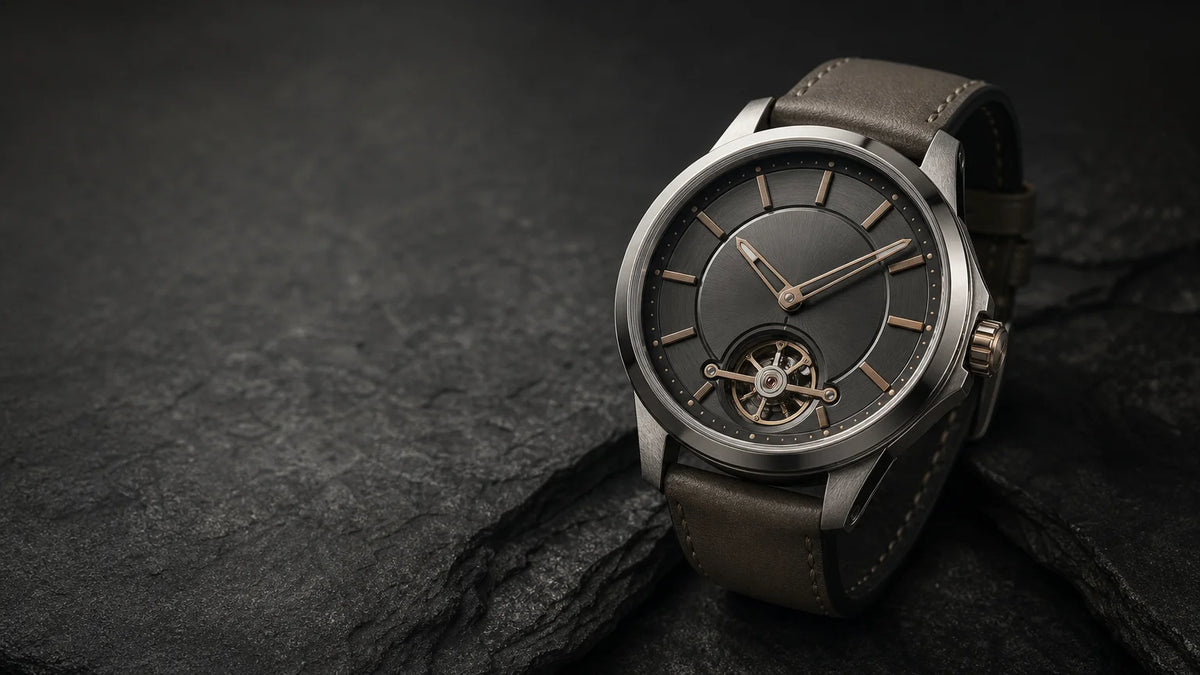
A designer watch for sale can be easy to locate, but finding one worth owning requires more than an attractive dial. Look for a timepiece that reflects your taste, fits your daily use, and comes with information you can verify. For a design-led example, explore our Tempus designer watch while considering the broader criteria below.
Online supply data can create a misleading impression of market size. A 2026 trade dataset lists hundreds of thousands of watch-related import shipments, but those figures describe customs activity rather than retail demand or the value of a particular timepiece. That distinction makes product-level evaluation essential when you are comparing listings.
What makes a designer watch worth buying?
Start with the watch’s design identity. A strong piece should have a coherent relationship between its case, dial, hands, markers, crown, strap, and finishing. The result may be restrained, technical, architectural, vintage-inspired, or expressive. What matters is consistency rather than visual complexity.
Design identity also affects how often you will wear the watch. A highly distinctive piece may be ideal for collectors or special occasions. A simpler design may offer greater versatility across professional, casual, and formal settings. Consider whether you are buying a daily watch, a statement accessory, or a future collection piece.
Do not treat the word “designer” as a technical specification. It describes a creative or stylistic position, not necessarily the movement, materials, durability, accuracy, or service support. Those details must be assessed separately.
Match the movement to your priorities
Automatic and manual-winding movements offer mechanical interest and a traditional ownership experience. Quartz movements generally prioritize convenience and consistent timekeeping. Neither category is automatically superior, because the better choice depends on your tolerance for winding, servicing, accuracy, and mechanical complexity.
Ask whether the listing identifies the movement type, power reserve, frequency, accuracy information, and service requirements. If those details are absent, request them before purchase. A polished product photograph cannot replace a clear technical description.

Should you buy new or pre-owned?
The condition decision should come before the price decision. A new watch usually offers the latest design, untouched surfaces, and the possibility of manufacturer documentation. A pre-owned watch may provide access to discontinued designs, limited editions, or unusual references that are no longer available through ordinary retail channels.
For pre-owned pieces, inspect the case edges, crystal, bezel, dial, hands, bracelet, clasp, crown, and strap. Ask whether the watch has been polished, modified, serviced, or fitted with replacement parts. These changes do not automatically make a watch undesirable, but they should be disclosed clearly.
Service history deserves particular attention for mechanical watches. Request the service date, the service provider, the work completed, and any available invoice or report. If no records exist, treat the absence as an ownership consideration rather than proof of a defect.
A vintage watch requires additional care. Older components may be harder to replace, water resistance may be limited, and original condition can matter more than cosmetic perfection. If you prefer lower maintenance, a newer watch with straightforward specifications may be more suitable.
How do you verify authenticity and documentation?
Authenticity is not established by a luxury-sounding description. Review the reference number, serial number, movement, dial printing, case construction, clasp, and accompanying documentation. The numbers should be consistent with the watch and should not appear altered, removed, or mismatched.
A historical consumer warning about a “designer” watch for sale illustrates the central risk: a label can create confidence without proving origin. Use an archived consumer warning as a reminder to verify the object itself, not only the language used in its listing.
Ask for photographs of the actual watch rather than generic campaign images. Useful views include the dial, case sides, case back, lugs, clasp, bracelet links, movement when appropriate, serial area, and included accessories. Images should be sharp enough to reveal wear and finishing.
Documentation may include an invoice, warranty card, service record, instruction manual, presentation box, spare links, and provenance information. Not every watch needs a complete set to be desirable, but missing items can affect future service, resale, and confidence in the purchase.
When the seller cannot answer basic questions about condition or origin, pause the transaction. Personal assistance is valuable, but it should support clear evidence rather than replace it.
How should you assess price and sale status?
Compare like with like. The relevant variables include the exact reference, movement, case material, condition, production period, accessories, service history, and seller protections. Comparing only the brand name or case color can produce a false sense of value.
Be careful with unusually low prices. Some supplier listings combine low unit prices with minimum order quantities, which means the displayed figure may describe wholesale sourcing rather than a finished retail purchase. Review the distinction in supplier listings before treating a low online price as a realistic benchmark.
A genuine sale should identify the original price, current price, currency, discount conditions, and applicable exclusions. Check whether the advertised amount includes taxes, delivery, insurance, duties, sizing, or service. International purchases can involve additional costs that are not visible in the headline price.
Do not assume that a discount indicates a problem. A seller may be clearing older inventory, changing collections, or pricing a pre-owned watch according to condition. The important question is whether the price is explained and whether the protections remain clear.
Which specifications affect comfort and daily use?
Case diameter is only one part of fit. Case thickness, lug-to-lug length, lug shape, bracelet articulation, strap flexibility, and crown position can change how a watch sits on the wrist. Two watches with the same diameter may feel completely different.
Measure your wrist and compare it with the listed dimensions. If measurements are unavailable, request them. A photograph on a model’s wrist can help with scale, but it does not replace exact case and lug dimensions.
Material selection also affects ownership. Stainless steel may offer practical durability. Titanium can reduce weight. Ceramic may provide a distinctive surface and scratch resistance, but it can be more vulnerable to impact. Precious metals create a different visual and tactile experience, with different weight and maintenance considerations.
Check the crystal type, water resistance, clasp design, strap width, and replacement options. Water resistance is not a permanent guarantee. Seals age, crowns can be damaged, and a watch intended for swimming should have appropriate testing and care.
What should you check about the seller?
The seller should provide a clear product description, realistic photographs, contact details, payment information, delivery terms, and a written returns policy. You should also know who handles service questions after the purchase.
Ask five practical questions before paying:
- Is the watch new, pre-owned, vintage, or refurbished?
- What documentation and accessories are included?
- Has the watch been serviced or modified?
- What warranty applies, and what does it exclude?
- What happens if the watch arrives differently from the description?
A reputable purchasing process should make those answers easy to obtain. If the seller avoids direct answers, uses only stock photographs, or creates urgency without documentation, consider the risk carefully.
Our broader business combines online commerce with personal assistance and curated design-led experiences. Watches sit within our apparel and lifestyle commerce, while our wider network includes more than 250 builders, designers, suppliers, and brands. This context can be useful when you want a watch connected to a wider design culture rather than an isolated product listing.
For additional context, our editorial selection of independent watchmaker watches for sale focuses on maker identity and design perspective. It can help you think beyond familiar labels and assess what makes a timepiece visually and conceptually distinctive.
Use this final buying checklist
| Criterion | What to verify | Why it matters |
|---|---|---|
| Identity | Brand, model, reference, and production period | Confirms that the listing describes the correct watch |
| Condition | Wear, polishing, modifications, and service history | Helps estimate ownership needs and fair value |
| Specifications | Movement, case size, thickness, materials, crystal, and water resistance | Shows whether the watch suits your lifestyle |
| Documentation | Serial information, warranty card, invoice, box, papers, and accessories | Supports confidence, servicing, and future resale |
| Protection | Warranty, returns, delivery insurance, taxes, duties, and support | Clarifies your recourse after purchase |
For a broader framework, our luxury watch buying guide can help you organize the decision around style, ownership, and practical use. You may also benefit from reviewing our editorial perspective on best luxury watch brands before narrowing your search.
Make the purchase fit your ownership goals
The best designer watch for sale is not necessarily the most expensive or technically complex option. Choose the piece whose design identity, condition, specifications, fit, documentation, and seller protections align with how you intend to wear and maintain it. Take time to verify the details, especially when the listing relies more on styling than evidence.
Explore Design-Led Timepieces
If you value distinctive design and want to browse beyond ordinary retail categories, our approach connects watches with a wider world of mobility, engineering, apparel, and contemporary lifestyle objects.

Browse our curated selection of designer watches online, then contact our team with questions about available products, sourcing, or the broader collection.
Frequently Asked Questions
What is a designer watch?
A designer watch is defined primarily by its visual identity, creative direction, and relationship to a design house or distinctive maker. The term does not by itself confirm movement quality, materials, authenticity, or service coverage.
Is a pre-owned designer watch worth considering?
Yes, if the condition, provenance, service history, and purchase protections are clear. Pre-owned buying can provide access to discontinued or unusual designs, but it requires closer inspection than a standard new purchase.
What documents should accompany a luxury watch?
Useful documents include an invoice, warranty card, service records, reference information, and serial details. Original packaging, manuals, spare links, and other accessories can also support future servicing and resale.
Does TheArsenale sell watches online?
Watches are included within our apparel and lifestyle commerce, and eligible products can be purchased through our online shop. Watch-specific inventory, pricing, availability, warranty, and return terms should be checked on the individual product page or confirmed with our team.
How can I avoid overpaying for a designer watch?
Compare the exact reference with similar listings and account for condition, service history, documentation, taxes, delivery, and warranty coverage. Avoid judging value from the headline discount alone, because two watches with similar appearances may have very different ownership costs.