Electric Bike vs Electric Scooter: Which Ride Fits You?
Urban travel has shifted decisively toward small electric vehicles, yet many riders still hesitate at the same crossroads. The choice of an electric bike or an electric scooter shapes your comfort, your monthly costs, and how easily you move through a crowded city. Before you compare specifications, it helps to understand how these two machines behave in real conditions. For a closer look at the numbers that matter, our electric scooter range comparison breaks down what to expect on a single charge.
The stakes are not trivial. According to a market report, the micro-mobility sector reached 75.14 billion dollars in 2025 and is projected to climb to 90.72 billion in 2026. That momentum reflects a simple truth: more people than ever are replacing short car journeys with electric two-wheelers, and choosing well is now a practical financial decision.
What Sets an Electric Bike Apart from an Electric Scooter
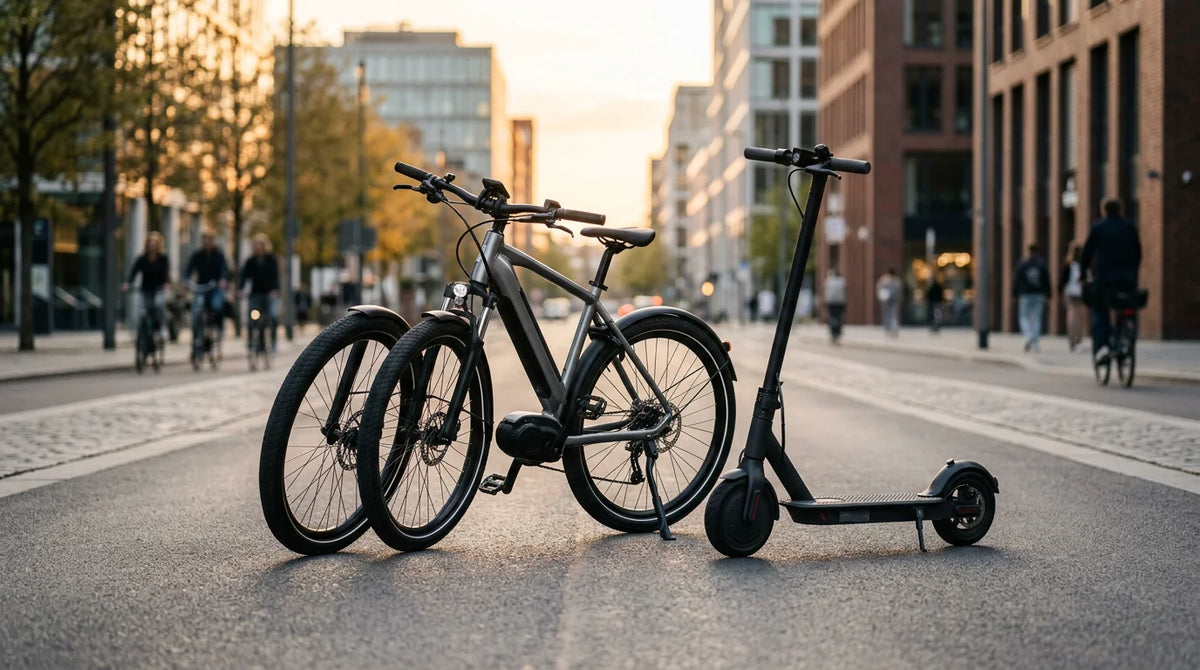
The core distinction is mechanical. An electric bike pairs human pedaling with motor assistance, so you remain seated and control gears while the battery extends your effort. An electric scooter stands upright, offers no pedals, and depends entirely on its motor. That single design gap creates a chain of trade-offs, which is why the electric bike vs electric scooter question rarely has one universal answer.
Market behavior reflects this preference gap. According to Grand View Research, the electric bicycle segment held the largest share of the micro-mobility market in 2025, at 89.1 percent, driven by versatility, comfort, and longer range. Scooters remain popular for a different reason: they excel at compact, spontaneous travel rather than sustained distance.

Range and Speed: How Far and How Fast
Consider a fifteen-kilometer commute across mixed terrain. Most commuter electric bikes deliver 50 to 100 kilometers on a charge, and because pedaling shares the load, battery consumption stays efficient. In Europe, pedal assistance is typically capped at 25 km/h with a 250W motor, which keeps the ride legal and predictable.
Electric scooters vary far more widely. Entry-level models usually reach 20 to 40 kilometers and lose power noticeably as the battery depletes, since there is no mechanical backup. High-performance scooters now rival mid-range bikes on paper, yet they add weight and cost. If your route runs long and hilly, an electric bike offers a genuine safety net: when the battery fades, you can still pedal home. If you are weighing a purchase, our guide on how to buy an electric bike covers the specifications that matter most.
Comfort, Stability, and Safety in Traffic
Comfort becomes obvious within minutes of riding. An electric bike provides a seated position with an adjustable saddle, which reduces back strain and distributes weight evenly. Larger wheels absorb potholes, cobblestones, and curbs, and stronger braking systems, often hydraulic discs, add confidence in dense traffic.
An electric scooter keeps you standing throughout the ride. That posture feels natural in stop-start city conditions, where frequent braking and stepping off are common. However, smaller wheels amplify road vibration and offer less shock absorption, so rough pavement feels harsher. For urban stability across uneven surfaces, the bike generally holds the advantage, while the scooter rewards agility in tight spaces.
Portability and Storage
Here the scooter earns its reputation. Most quality models fold in seconds and slide under a desk, into a hallway, or onto a train. Commuter scooters typically weigh between 12 and 25 kilograms, which makes multi-modal journeys, scooter to train to office, remarkably practical.
Electric bikes occupy more floor space and are harder to carry up stairs, even in folding form. Modern lightweight urban models have narrowed the gap, yet a folded scooter remains easier to store in a small apartment. If limited space and public-transport connections define your day, portability may outweigh every other factor. To match a scooter to your routine, review our advice on how to choose an electric scooter.

Cost and Long-Term Value
Budget often tips the first decision. Entry-level electric scooters start low, with capable mid-range models landing in a moderate bracket, while quality commuter electric bikes require a larger upfront investment. Yet purchase price tells only part of the story.
Electric bikes reward that investment with serviceable components, replaceable drivetrains, sturdier frames, and stronger resale value. Scooters carry fewer moving parts and lower maintenance, but budget units can suffer shorter lifespans and limited repair options. The broader market rewards durability: according to a 2025 forecast, the global micro-mobility market is expected to reach 91.2 billion dollars by 2030. As demand grows, well-built machines that hold value become the smarter long-term purchase.
Matching the Machine to Your Lifestyle
Regional adoption shows how context shapes the right ride. According to Fortune Business Insights, Asia Pacific dominated the micro-mobility market with a 49.8 percent share in 2025, reflecting dense cities where compact vehicles thrive. Your own environment, distance, storage, and terrain, should guide the decision more than any single specification.
The table below summarizes where each option leads, and where a curated selection fits riders who value quality above compromise.
| Criteria | Electric Scooter | Electric Bike | Our curated e-bike selection |
|---|---|---|---|
| Typical range | 20 to 40 km | 50 to 100 km | High-end models chosen for extended range |
| Comfort | Standing, short trips | Seated, longer rides | Premium ergonomic builds |
| Portability | Foldable, very compact | Larger footprint | Practical daily-use designs |
| Best for | Last-mile, multi-modal | Longer commutes, cargo | Buyers seeking curated quality |
| Added value | Low upfront cost | Durability, resale value | Free shipping and early access via Private Membership |
If comfort, range, and long-term value guide your choice, we can help you skip the guesswork. Our curated collection focuses on high-end electric bikes selected for daily reliability, so you invest once and ride confidently.
Choosing Between Two Strong Options
The comparison of an electric bike against an electric scooter is not a contest of which vehicle is more modern. It is a question of fit. If your days involve short, spontaneous trips, tight storage, and train connections, a scooter delivers unmatched convenience for last-mile travel. If you prioritize comfort, distance, stability, and lasting value, an electric bike rewards the larger investment across years of use. Measure your real commute, weigh your storage reality, and choose the machine that matches your rhythm rather than the specification sheet alone.
Take action with TheArsenale
Once you understand how these machines differ, the next step is selecting one that truly matches your standards. If you value comfort, range, and lasting build quality, an electric bike deserves a curated shortlist rather than an overwhelming catalog. We bring the selection to you.

Explore our curated electric bike collection, where each model is chosen for daily performance and premium engineering. As a luxury mobility marketplace, we offer free shipping and, through our Private Membership, access to vehicles before they are listed publicly. Reach our team any time, and you will usually receive a reply in less than thirty minutes, so your next ride begins without delay.
Frequently Asked Questions
Is an electric bike faster than an electric scooter?
In Europe, both are commonly limited to 25 km/h, so top speeds are similar. An electric bike usually feels more stable at that speed because of its larger wheels and stronger braking systems.
Which option is cheaper to buy?
An electric scooter generally has a lower upfront cost and simpler mechanics. Over time, however, an electric bike often delivers better durability and resale value, which narrows the gap for daily riders.
Which is safer in city traffic?
Electric bikes tend to offer greater stability thanks to larger wheels, sturdier frames, and hydraulic disc brakes. Scooters remain agile but are more sensitive to potholes and rough pavement.
Can an electric scooter replace an electric bike?
For very short, highly portable trips, a scooter can be an excellent primary vehicle. For daily rides beyond five kilometers, most riders find an electric bike more comfortable and more capable.
How do I choose the right electric bike?
Match range, motor, and frame comfort to your real commute and storage situation. Our curated collection focuses on high-end models selected for reliability, which simplifies the decision considerably.