Electric Scooter Price: What You Should Pay in 2026
If you are comparing an electric scooter price, the right number depends on how you ride, not only on the sticker. Our best electric scooters selection shows why portability, range, braking, suspension, and design can matter more than a headline discount. A $350 commuter and a $2,500 performance machine serve different purposes, so the cheapest option may not be the most economical choice.
For a 2026 international benchmark, an EU market analysis reproduces an average unit price of $521.28 for electric kick scooters. That figure describes a broad market average rather than a universal retail rule. Taxes, shipping, certification, local distribution, battery capacity, and product positioning can change the final price substantially.
What is the typical electric scooter price in 2026?
A 2026 database covering 352 tracked models places the average electric scooter price at $1,113. The same RiderGuide price index places budget models below $500, the main commuter range between $500 and $1,500, performance scooters between $1,500 and $3,000, and specialist models above $3,000.
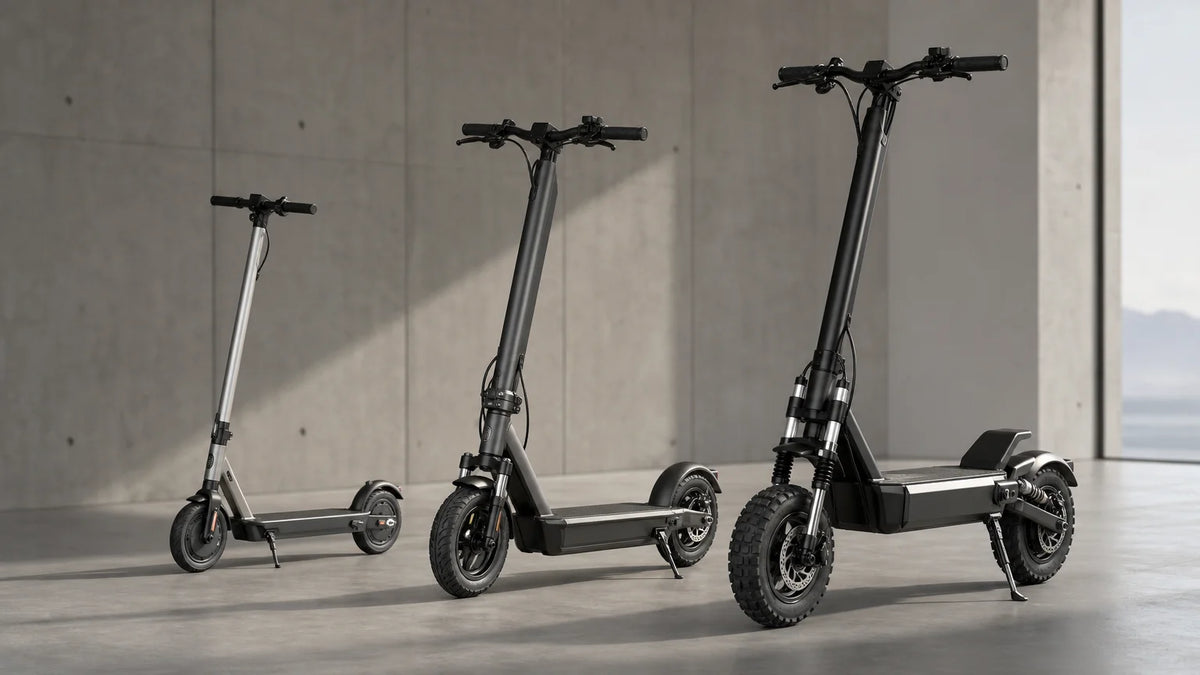
| Option | Typical price framing | Suitable use | What the price generally supports |
|---|---|---|---|
| Our curated TheArsenale marketplace | Quote-based for machines | Rare, future-oriented mobility objects | Curation, sourcing, acquisition advice, private access, and physical experiences |
| Entry-level scooter | Under $500 | Short, flat trips | Basic range, modest motors, lighter construction, and limited ride hardware |
| Commuter scooter | $600 to $1,100 | Regular urban travel | More practical range, improved braking, better tires, and greater comfort |
| Performance scooter | $1,500 to $3,000 | Hills, rougher routes, and recreational riding | Higher output, larger batteries, stronger brakes, and more substantial suspension |
| Specialist high-performance scooter | $3,000 and above | Enthusiast or specialist use | Very high speed, large battery systems, advanced suspension, and heavier construction |
These categories are useful for planning, but they are not formal industry standards. Some models are priced higher because of design, software, materials, or brand positioning. Others cost less because they prioritize portability and simplicity over long range or high output.
Which price tier matches your riding pattern?
Imagine that you need a scooter for a two-mile flat commute. A compact entry-level model may cover the distance, fold easily, and cost less to purchase. However, that same scooter may feel limited if you ride every day, carry additional weight, encounter poor pavement, or need reliable braking in changing conditions.
For occasional short trips
A lower electric scooter price can make sense when your journeys are short and infrequent. This category typically favors lower weight, straightforward controls, modest speed, and simple maintenance. You should still check the load rating, tire design, braking equipment, lighting, and battery condition before buying.
For daily commuting
Daily riders usually benefit from spending more on commuter range, dependable braking, larger tires, and a sturdier folding mechanism. A mid-range model can reduce compromises without moving into specialist performance territory. Our electric scooter buying guide can help you compare those practical requirements before you focus on headline speed.
For hills and longer routes
Hilly routes place greater demands on motor output and battery capacity. A scooter with a larger battery may cost more initially, but it can provide a useful range buffer and reduce the need to recharge during the day. Dual-motor systems can add traction and acceleration, although they also increase weight, complexity, and price.
For performance-focused riding
Once your budget moves beyond the commuter tier, you are often paying for stronger acceleration, higher speeds, larger batteries, hydraulic braking, and more advanced suspension. Those features can improve control in suitable conditions, but they may be unnecessary for a short urban commute. Higher performance also requires more attention to local rules, protective equipment, storage, and transport.
Why do some electric scooters cost much more?
The largest price differences usually come from the relationship between the motor, battery, chassis, and ride hardware. A low-cost scooter can work well on smooth, flat streets, while a more expensive model may be designed to manage higher loads, longer distances, rougher surfaces, or repeated intensive use.
Battery capacity is central to the buying decision. A larger battery generally adds cost and weight, but it can provide a greater range reserve. You should judge the battery in watt-hours where possible, rather than relying only on the manufacturer’s maximum range claim. Speed, rider weight, hills, temperature, tire pressure, and acceleration all influence real-world results.
Motor output also affects price. A modest single motor may be adequate for flat streets, while a higher-output or dual-motor system can provide more assistance on hills. Peak power figures should be treated carefully because they describe temporary output, not necessarily the power available continuously.
Ride hardware creates another substantial difference. Suspension, pneumatic or tubeless tires, stronger brakes, wider decks, adjustable handlebars, and reinforced stems can improve comfort and control. They can also increase weight and maintenance requirements, so more equipment is not automatically better for every rider.

Design and connectivity contribute to the electric scooter price as well. Integrated displays, mobile applications, electronic locks, tracking functions, lighting systems, and customized finishes can improve usability. You should decide which features solve a real problem for you before paying for technology that may remain unused.
To organize these trade-offs, use our how to choose an electric scooter guide as a decision framework. The objective is not to find the most powerful specification sheet. It is to find a coherent combination of range, performance, comfort, portability, and design.
What should you add to the purchase budget?
A $700 scooter is not a $700 transport system. Your total budget may also include a certified helmet, lock, lights, reflective equipment, weather protection, replacement tires, brake adjustments, and occasional service.
Battery health deserves particular attention when you buy used. Ask about charging habits, storage temperatures, mileage, previous repairs, and periods of inactivity. Inspect the frame, folding mechanism, wheels, brakes, cables, display, and charging port. A lower purchase price is less attractive if the battery or structural components need early replacement.
Range should also be considered as a cost factor. If your normal journey uses nearly all the available battery capacity, you may charge more often and place greater demands on the battery. Comparing claimed range with battery size can provide a clearer picture than comparing marketing figures alone. Our electric scooter range comparison offers a practical way to assess this trade-off.

Local requirements can add another layer of expense. Depending on your location, you may need specific lighting, equipment, registration, insurance, or compliance with speed and road-use rules. You should verify requirements with your local transport authority before purchasing a high-speed model.
How do location and market context affect electric scooter price?
International prices are difficult to compare without considering taxes, exchange rates, import costs, distribution, warranty coverage, and certification. The same battery and motor specification can therefore appear at different retail prices in different countries.
The wider market also contains several product categories that should not be confused. Grand View Research valued the global electric scooter market at $47.4 billion in 2025 and projected a value of $52.9 billion for 2026. Its market analysis describes a broad sector that includes personal and commercial uses, so its market value is not an average retail price.
Regulation can influence practical value as much as hardware. A model that is legal on private land may not be suitable for public roads in your city. A 2026 Massachusetts report illustrates how micromobility policy and market conditions are evaluated together, while local requirements can differ elsewhere.
For international buyers, after-sales support and access to parts can be just as important as the initial electric scooter price. A slightly higher purchase cost may be reasonable when it provides clearer service arrangements, better documentation, and stronger confidence in long-term ownership.
Choose the price that matches the mission
The most sensible electric scooter price is the one that supports your actual route and riding habits. Entry-level scooters can suit short, occasional journeys, while mid-range models often provide a more balanced solution for regular commuting. Higher prices become easier to justify when you genuinely need longer range, stronger hill performance, advanced suspension, or specialist design. Before buying, compare the complete ownership cost, local requirements, battery capacity, and practical storage conditions, not only the advertised speed.
Take action with TheArsenale
If your decision is shaped by design, rarity, and the future of movement, the purchase should feel considered from the beginning. We connect mobility enthusiasts and collectors with carefully selected machines, builders, and designers across an international marketplace.

Explore our curated approach to personal mobility and discover an object that fits your expectations for engineering, aesthetics, and character. For a distinctive option, view our electric scooter and contact our team if you require further information about the machine or the acquisition process.
Frequently Asked Questions
How much should you spend on your first electric scooter?
For occasional short trips, a basic model may be sufficient. For regular commuting, a mid-range scooter usually offers a more practical balance of comfort, braking, durability, and range.
Is a cheaper electric scooter worth buying?
It can be worthwhile when your routes are short, flat, and infrequent. You should be more cautious if you need daily reliability, hill climbing, longer range, or consistent comfort on uneven pavement.
What affects an electric scooter’s price most?
Battery capacity, motor output, suspension, braking equipment, materials, tire design, connectivity, and build quality are major factors. Weight, portability, warranty coverage, and local distribution can also influence the final price.
Should you buy a used electric scooter?
A used scooter can reduce the initial cost, but battery health and structural condition require careful inspection. You should verify the charging history, test the brakes, inspect the frame, and confirm that replacement parts are available.
Can TheArsenale help with a mobility purchase?
Yes. We curate rare and future-oriented mobility objects and provide access to sales assistance for high-value acquisitions. Our marketplace and specialists can help you explore machines according to your interests and expectations.