How to Choose a Steering Wheel: A Complete Buyer's Guide
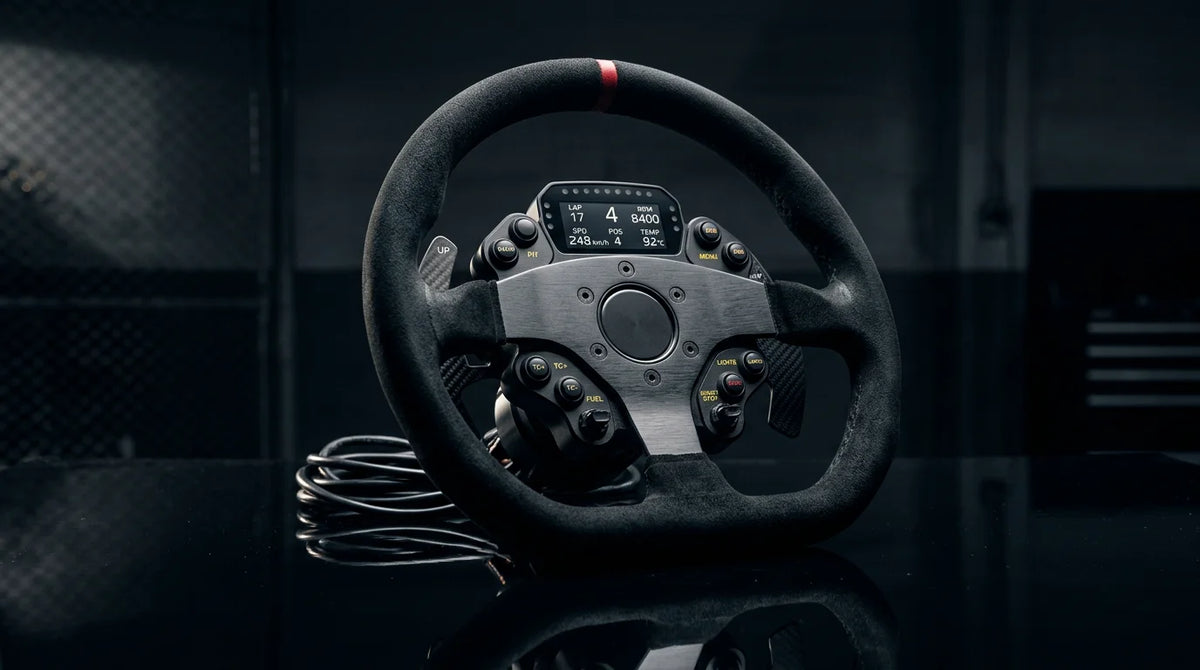
The steering wheel is the single component your hands never leave, yet it is often the last part a driver considers upgrading. Every input you make, from a gentle highway correction to an aggressive apex turn, passes through that rim. Understanding how to select the right steering wheel is therefore less about aesthetics and more about the physical relationship between you and your machine. For inspiration at the very top of the craft, consider a piece such as our Lewis Hamilton W05 steering wheel.
Diameter alone changes steering effort and response dramatically, and it is only one of several variables. Passenger cars, race cars, and sim rigs each demand different geometry. According to Engineer Fix, most modern sedans and compact cars fall between 14 and 15 inches in diameter, a narrow band engineered to balance comfort and quickness. Knowing where your needs sit within that spectrum is the foundation of every good decision.
Why the Wheel Deserves Your Attention
Ask any experienced driver what defines a car's character, and the answer frequently returns to feel. The rim translates rotational input into directional control, and small differences in its dimensions are felt instantly. This is precisely why understanding how to choose a steering wheel matters as much as selecting tires or suspension. A rim that is too large slows your reactions; one that is too small can fatigue your arms without power assistance.
There are two broad categories to weigh. Original equipment (OEM) wheels arrive from the factory and prioritize safety systems and everyday comfort. Aftermarket wheels, by contrast, allow you to tailor grip, shape, and materials to a specific purpose, whether that is track precision or classic restoration. Your choice depends on how honestly you assess your own driving.

Getting the Diameter Right
Diameter is the first number you should settle. It governs the trade off between effort and precision: larger wheels reduce the force needed to turn, while smaller rims feel quicker but can demand more muscle. For everyday driving, a buying guide from Alibaba notes that a diameter between 14.5 and 15.5 inches offers optimal control and ergonomics for most daily drivers.
Purpose shifts those numbers considerably. Track and sim enthusiasts often prefer smaller wheels, roughly 12 to 13.5 inches, for sharper responsiveness, while full size trucks and SUVs sometimes reach 15.5 to 17 inches for leverage and glove comfort. A reliable rule is to position the rim so your arms fall naturally at 9 and 3 o'clock, with a slight bend at the elbow. If your wrists overextend or your knees crowd the rim, the diameter is wrong for your seating position.
Grip, Shape, and Materials
Once size is settled, turn to the surface your hands actually hold. Grip circumference typically ranges from roughly 2.75 to 4.25 inches. A thicker rim spreads pressure and reduces fatigue on long journeys, whereas a slimmer rim can feel more agile in quick transitions. Material matters just as much as thickness.
- Leather offers a natural, warm feel and durability, though it benefits from regular conditioning.
- Suede or Alcantara delivers excellent non-slip grip in performance settings, but it wears faster and demands care.
- Polyurethane resists stains and wear, making it common in hard working fleet vehicles.
Shape is the final layer. A traditional round rim suits balanced everyday use, a flat-bottom design frees leg room and adds a sporting character, and a D-shaped rim improves access in tight cockpits. If you are personalizing a build, our custom car parts & accessories can help you align the rim with the rest of your interior.
Dish Depth and Fitment: The Details That Decide Success
Here is where many purchases go wrong. Dish depth, the distance from the mounting face to the rim closest to you, changes how far the wheel sits from your chest. According to a Demon Tweeks guide, a fully dished wheel typically measures between 70 and 95mm, while flatter profiles suit open cockpits and upright seating. Deep dish rims are favored in rally and drifting for their leverage and clearance.
Fitment is non-negotiable. Aftermarket rims commonly use a six-bolt pattern, most often 6x70mm, and can range from around 270mm to 380mm in diameter depending on the boss kit. Before you commit, confirm three things: the bolt pattern of your hub, the presence of a compatible quick release if desired, and, on road cars, that any change preserves airbag and column function. A rim that looks perfect but fails on fitment is simply an ornament.

Matching the Wheel to Your Use Case
Every specification finally resolves into one question: what will you actually do with the car? The table below distills the trade offs into a quick reference, with our own curated approach included for those seeking collectible-grade craftsmanship.
| Use case | Suggested diameter | Grip material | Preferred shape |
|---|---|---|---|
| Daily road driving | 14.5 to 15.5 in | Leather | Round or flat-bottom |
| Track and performance | 12 to 13.5 in | Suede / Alcantara | Flat-bottom |
| Trucks and SUVs | 15.5 to 17 in | Polyurethane | Round |
| Collector and heritage builds (our curation) | Model-specific | Original-spec materials | Authentic reproduction |
If your goal is authenticity rather than a generic upgrade, a faithful reproduction of an iconic racing rim carries both engineering intent and provenance. That is the niche we serve, pairing collectible pieces with the technical fidelity enthusiasts expect.
Bringing It All Together
Knowing how to select the right steering wheel is a process of matching four measurable traits, diameter, grip, dish, and fitment, to the way you genuinely drive. Start with diameter and seating position, refine the grip material for your climate and use, then verify dish depth and bolt pattern before purchase. Resist choosing on looks alone; the form factor influences your hands on every journey. When each variable aligns with your purpose, the rim disappears from conscious thought and simply becomes an extension of your intent.
Take action with TheArsenale
Once you understand the geometry and materials that define a great rim, the natural next step is acquiring a piece that unites engineering fidelity with genuine motorsport heritage. That is exactly where our curation of collectible mobility comes in.

Explore our 1988 McLaren MP4-4 steering wheel re-creation, a faithful tribute to a legendary Formula 1 era, curated within our luxury mobility marketplace. As part of our offering, members gain early access to sought-after machines and collectible pieces before they are listed publicly. Our sales team is available around the clock, and we usually reply in under thirty minutes.
Frequently Asked Questions
What is the most common steering wheel diameter?
Most modern sedans and compact cars use a diameter between 14 and 15 inches. This range balances comfort, steering quickness, and instrument visibility. Larger vehicles and performance cars deviate from it based on their specific needs.
How do I measure my current steering wheel?
Measure the outer diameter edge to edge across the center with a tape or caliper. For grip thickness, wrap the tape snugly around the rim where your hands rest. Note the dish by measuring from the hub face to the rim.
Does a smaller steering wheel improve handling?
A smaller rim translates minor hand movements into quicker steering inputs, which favors responsiveness at speed. However, smaller wheels often require more physical effort without power assistance. The right choice depends on your car and driving style.
Can I fit any aftermarket wheel to my car?
No, fitment depends on the bolt pattern, boss kit, and, on road cars, airbag and column compatibility. Confirm your hub specification before purchasing. Choosing an incompatible rim creates safety risks and installation problems.
Where can I find a collectible or heritage steering wheel?
For collectible-grade rims with genuine motorsport provenance, our curated marketplace offers faithful reproductions and iconic pieces. Each is selected for engineering fidelity and heritage value. You may also request early access to items before they are listed publicly.